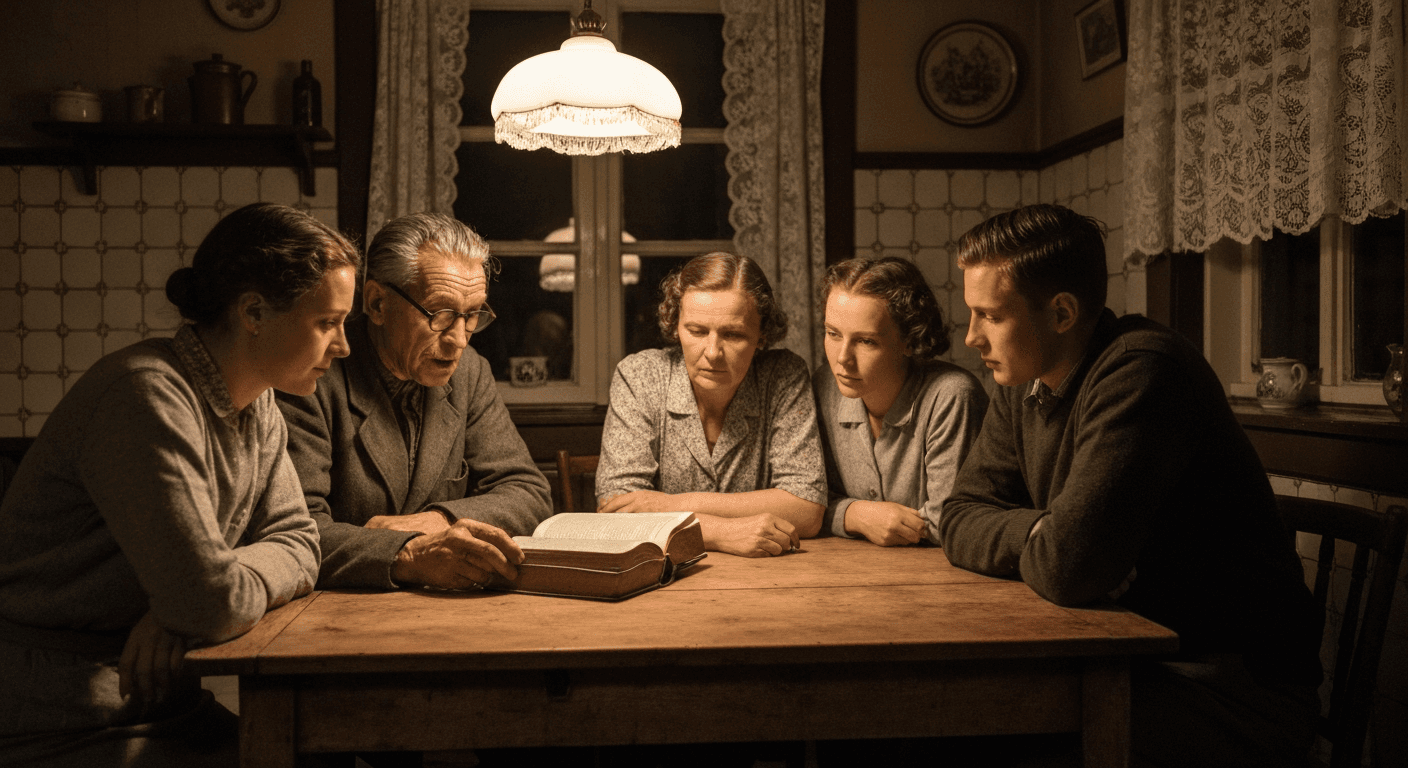
Casper ten Boom was a Dutch watchmaker. Every evening, he gathered his family and read the Bible aloud. It was the most ordinary thing in the world. And it formed the theology that would lead his family to risk everything during the darkest chapter of the 20th century.
The Hundred-Year Tradition
The ten Boom family had been praying for the Jewish people for a hundred years before World War II started. Casper's grandfather began the tradition. Casper continued it, reading Scripture nightly and instilling in his children a conviction that the Jewish people were God's covenant people — and that to stand with them was to stand with God.
This wasn't academic theology. It was the family's identity.
The Hiding Place
When the Nazis occupied the Netherlands, the ten Booms didn't deliberate. They built a hidden room behind Corrie ten Boom's bedroom wall. Over the course of the war, they hid approximately 800 Jewish people — cycling them through their home to safe locations.
They weren't soldiers. They weren't resistance fighters by training. They were a watchmaker and his adult children. But decades of Bible reading had built something in them that couldn't stay silent when their neighbours were being taken.
The Price
The Gestapo raided the house on 28 February 1944. The family was arrested. Casper, 84 years old, died in custody just 10 days later. His daughter Betsie died in Ravensbruck concentration camp. Corrie survived and spent the rest of her life telling the story.
When the soldiers arrested him, Casper was asked if he knew he could die for helping Jews. He replied: "It would be an honour to give my life for God's ancient people."
What This Means for You
Casper ten Boom wasn't a theologian or a hero by any conventional measure. He was a father who read the Bible to his kids every night. That practice — so simple, so easy to dismiss — built the moral architecture that saved 800 lives. The things you teach your children around the dinner table have consequences you will never fully see.
