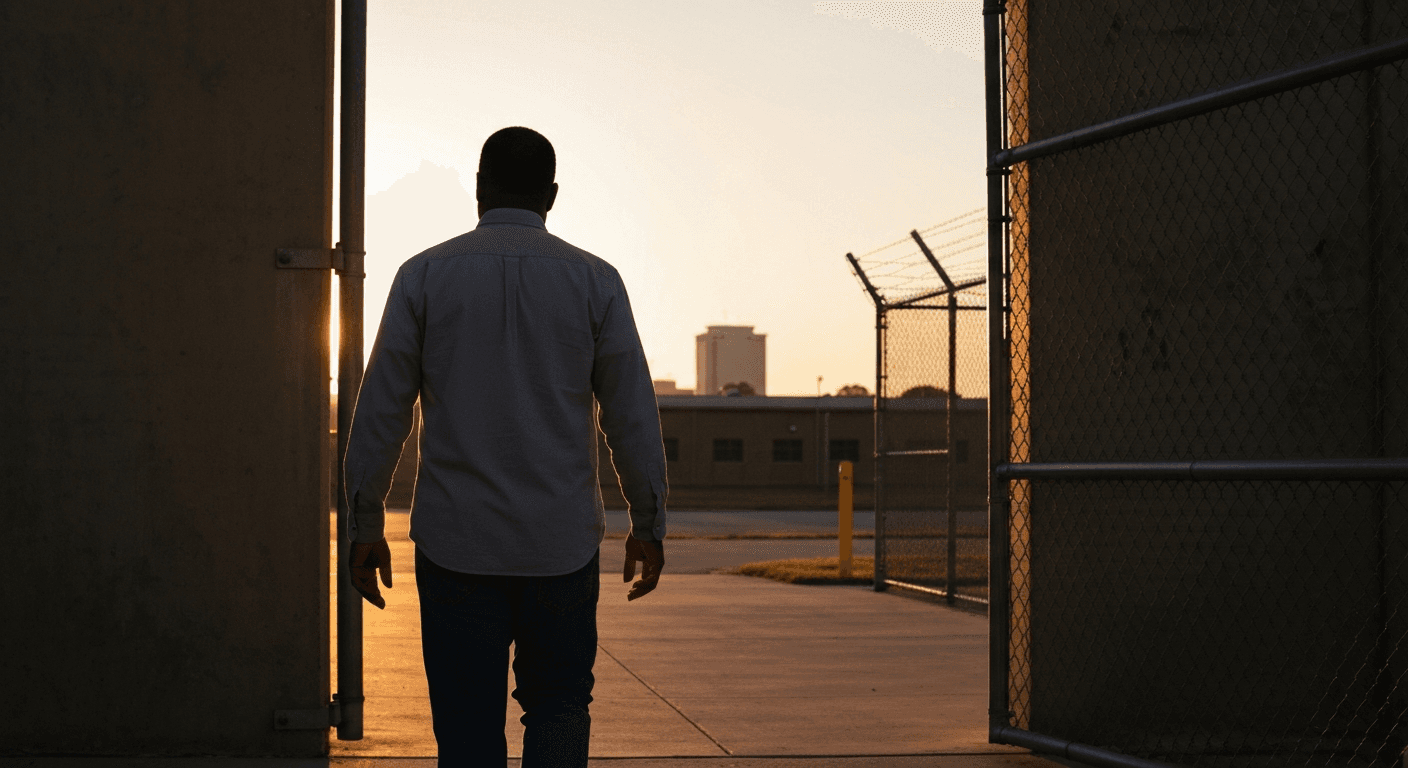
In 1985, Anthony Ray Hinton was arrested in Birmingham, Alabama for two restaurant murders. He was at work — clocked in, witnessed by his supervisor — when the killings happened. It didn't matter. His court-appointed lawyer spent the equivalent of a few hundred dollars on a ballistics expert whose analysis was later shown to be flawed. Hinton, a Black man in Alabama, was convicted and sentenced to death.
Thirty Years in a Five-by-Eight Cell
For three decades, Hinton lived on Alabama's death row. He watched 54 men walk past his cell to their executions. He heard the sounds. He smelled the aftermath. He never stopped insisting he was innocent.
What kept him sane, he said later, was an interior life that the state couldn't reach. He prayed. He read. He formed deep friendships with other death row inmates — including men he knew were guilty. He made a decision early on that bitterness would kill him faster than the electric chair.
Bryan Stevenson and the Long Road Out
In 2002, Bryan Stevenson and the Equal Justice Initiative took on Hinton's case. New ballistics tests — using modern technology — proved the bullets from the crime scenes could not have come from the gun found at Hinton's mother's house. The original expert analysis was demolished. But it took another 13 years of legal battles before the U.S. Supreme Court ruled unanimously in 2014 that Hinton's trial was unconstitutional. In April 2015, all charges were dropped.
Hinton walked free at the age of 58. He had entered prison at 28.
What This Means for You
Hinton's story is a reckoning. The system that was supposed to protect him nearly killed him — and the thing that actually kept him alive was a refusal to become what his circumstances demanded. Thirty years of choosing compassion over rage. That's not passive. That's the hardest kind of strength there is.