The Fall That Changed Everything
In 1996, Bear Grylls was a twenty-one-year-old soldier in the British Special Air Service. During a freefall parachute exercise over southern Africa, his canopy ripped at 16,000 feet. He hit the ground with his parachute only partially deployed. The impact fractured three vertebrae in his spine.
Doctors told him he might never walk normally again. Grylls spent months in military rehabilitation, staring at the ceiling, wondering if the adventure life he had always imagined was over before it had properly started.
The Mountain That Said Otherwise
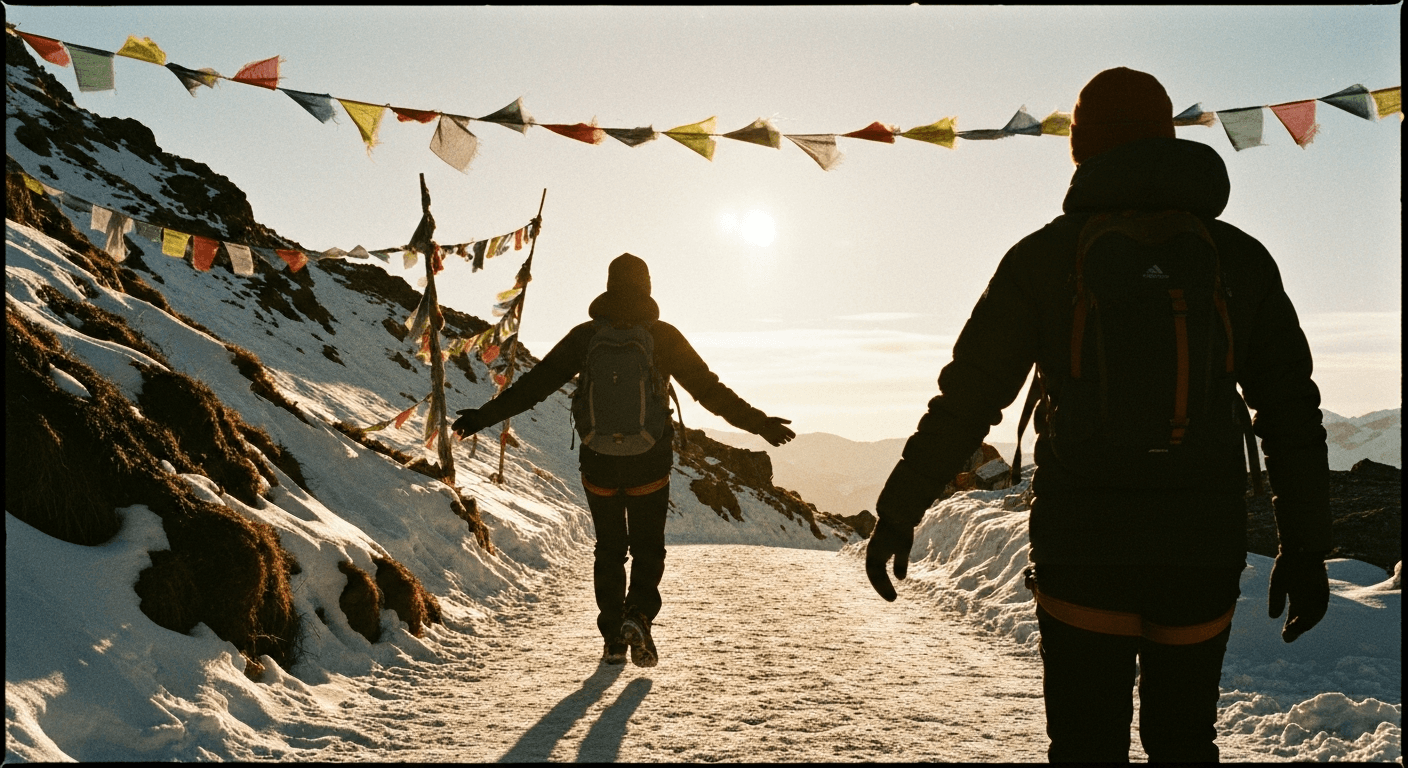
Eighteen months after the accident, Grylls stood on the summit of Mount Everest. He was twenty-three years old — at the time, one of the youngest Britons to reach the top. The climb was brutal: altitude sickness, crevasse fields, temperatures that dropped below minus forty. Grylls later said he prayed his way up every step.
"Faith has been the backbone of my life," Grylls wrote in his autobiography. "Not in a religious way, necessarily, but in a real, raw, personal way. On the mountain, there is no pretending. You are stripped bare."
The summit moment was not a celebration. It was quiet. Grylls described kneeling in the snow at the highest point on earth and thanking God for letting him get there.
A Life Built on Wild Ground
Grylls went on to become one of the most recognised adventurers on the planet, but he has been consistently open about the role faith plays in everything he does. He reads the Bible daily, often outdoors. He has spoken publicly about praying before every expedition.
"The wild has taught me that God is not a concept to be debated in comfortable rooms," Grylls has said. "He is a reality to be encountered when everything else has been stripped away."
What This Means for You
You do not need to climb Everest to understand what Grylls is describing. The principle is the same whether you are on a mountain or in your back garden: when the noise drops and you are face to face with creation, something else has room to speak. Grylls found that the places where he was most physically vulnerable were also the places where his faith became most real.