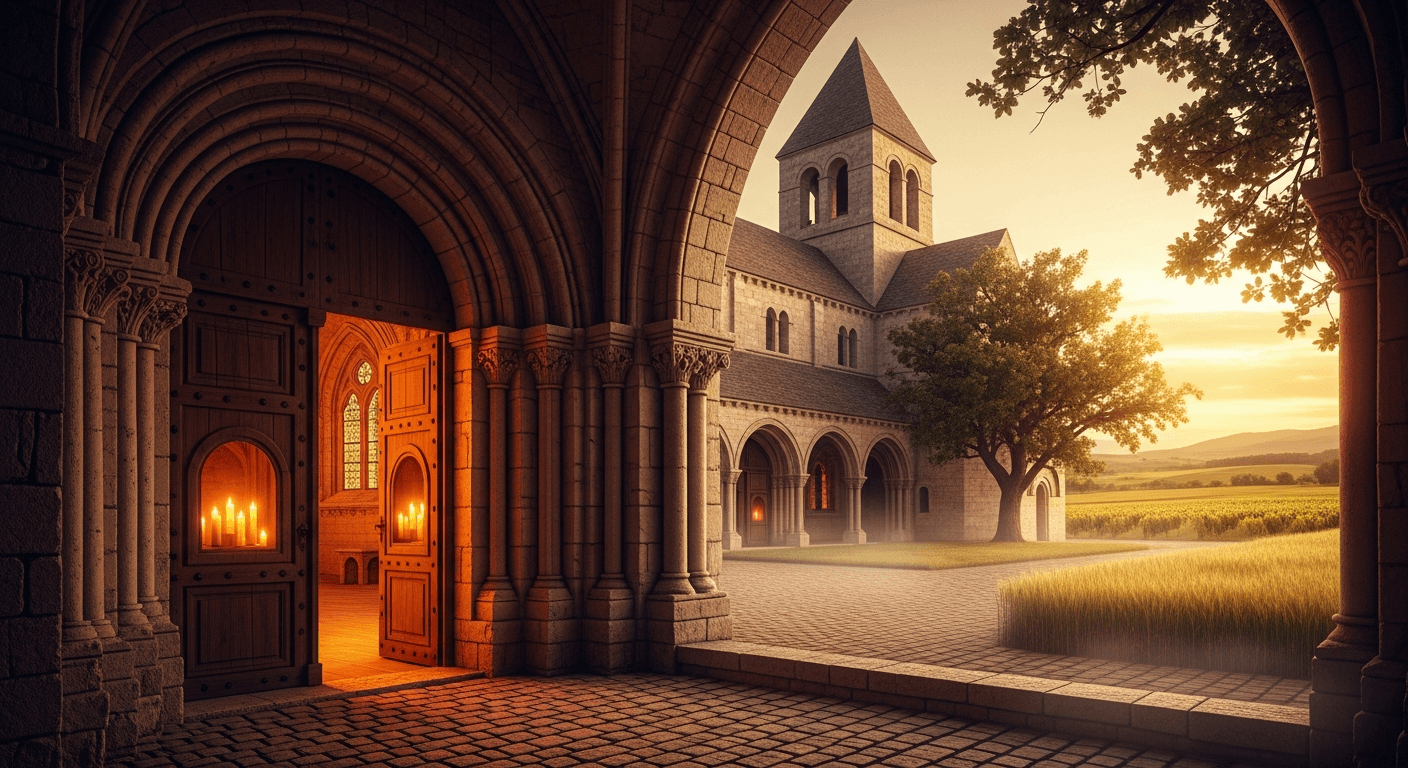
In the year 1113, a young French nobleman named Bernard arrived at the gates of the struggling monastery of Cîteaux. He was twenty-two years old, brilliant, charismatic—and he did not come alone. Behind him stood thirty other young men, including his own brothers and several relatives, all of whom he had persuaded to abandon wealth, titles, and promising futures to become monks.
The monastery at Cîteaux had been on the verge of extinction, its austere life attracting few recruits. Bernard's arrival with his band of followers was nothing short of a resurrection.
The Young Nobleman's Crisis
But what had brought this gifted young man to such a radical decision?
Bernard's mother, Aleth, had died when he was in his late teens, and her death shook him deeply. She had been a woman of profound piety who had dedicated each of her seven children to God before their births. Her memory haunted Bernard as he tried to navigate the pleasures and ambitions of aristocratic life.
Bernard's Radical Conversion Begins
The turning point came when Bernard began to feel the pull of worldly desires—the seductions that surrounded any young nobleman of his station. Rather than negotiate with temptation, Bernard chose total war. If he could not trust himself in the world, he would leave it entirely.
But Bernard was incapable of doing anything halfway. Before entering Cîteaux, he spent months systematically convincing his friends and family to join him. His persuasive power was so extraordinary that mothers reportedly hid their sons and wives guarded their husbands when Bernard came to town.
"He was so effective," writes one historian, "that the monasteries filled up and the cities were emptied of young noblemen."
Transforming Medieval Europe's Monasteries
Within three years, the community had grown so large that Bernard was sent to establish a new foundation at Clairvaux—the "Valley of Light"—where he would serve as abbot for the next thirty-eight years. Under his leadership, Clairvaux spawned sixty-eight daughter houses. By the time Bernard died, the Cistercian order had grown to over 350 monasteries across Europe.
Bernard became the most influential churchman of his age—advising popes, settling disputes, preaching crusades. But he never forgot what had brought him to Cîteaux: a hunger for God that no worldly success could satisfy.
"You wish to hear from me why and how God should be loved?" Bernard once wrote. "My answer is: the reason for loving God is God Himself, and the measure of that love should be to love Him without measure."
The young man who had emptied the nobility to fill the monasteries had discovered the one treasure worth possessing.
