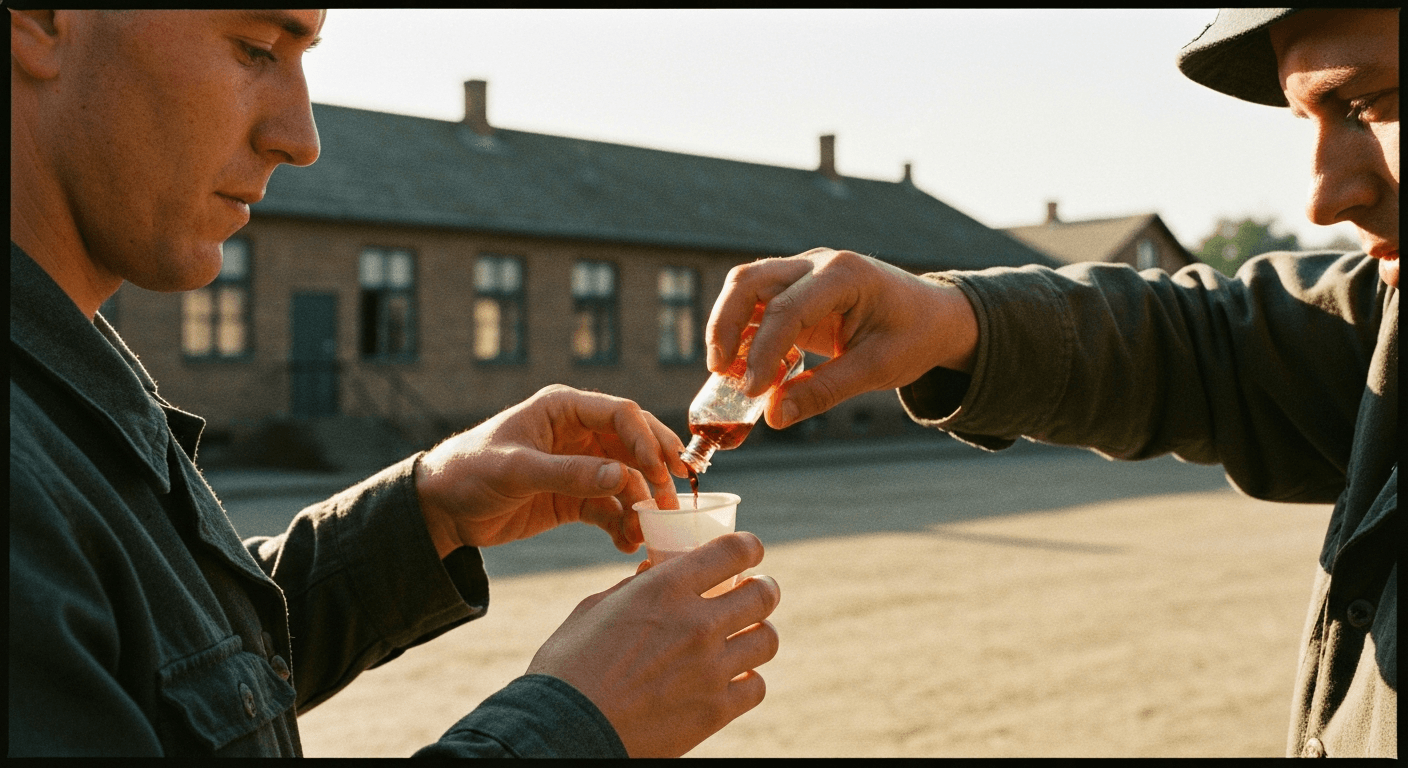
Corrie ten Boom and her sister Betsie were arrested in February 1944 for hiding Jewish families in their home in Haarlem, the Netherlands. They were transported to Ravensbruck, a women's concentration camp north of Berlin, where conditions were designed to strip every prisoner of humanity, dignity, and hope.
The Hidden Bread
Corrie had managed to smuggle a small bottle of vitamin drops into the camp. But it was bread that became the centrepiece of something no one expected. In the barracks — Barracks 28, overflowing with women packed so tightly they slept in shifts — Betsie and Corrie began holding communion services. They used scraps of bread stolen from the camp kitchen and a few drops from the vitamin bottle as a substitute for wine.
The Physical Act That Defied the Camp
The act of breaking bread together in Ravensbruck was more than a religious observance. It was a physical act of defiance against a system designed to reduce human beings to numbers. When women from different nations and languages gathered in that barracks to tear a crust of bread and pass it hand to hand, they were doing something the guards could not touch — they were insisting, with their bodies, that they were still whole.
The communion services grew. Women who had not prayed in years began to weep. Women who spoke no common language held each other's hands over the broken bread. The physical act of eating together, of choosing to share when there was not enough, became the most powerful sermon any of them had ever experienced.
Betsie's Final Words
Betsie ten Boom died in Ravensbruck in December 1944, twelve days before Corrie was released due to a clerical error. Betsie's final words to her sister were: "We must tell people what we have learned here. We must tell them that there is no pit so deep that God's love is not deeper still." Those words were forged in the same barracks where bread was broken.
What This Means for You
Communion is not a performance for comfortable settings. It is an act designed for exactly the moments when everything has been taken from you. Breaking bread is the body's way of saying: I still believe. I still belong. I am still here.