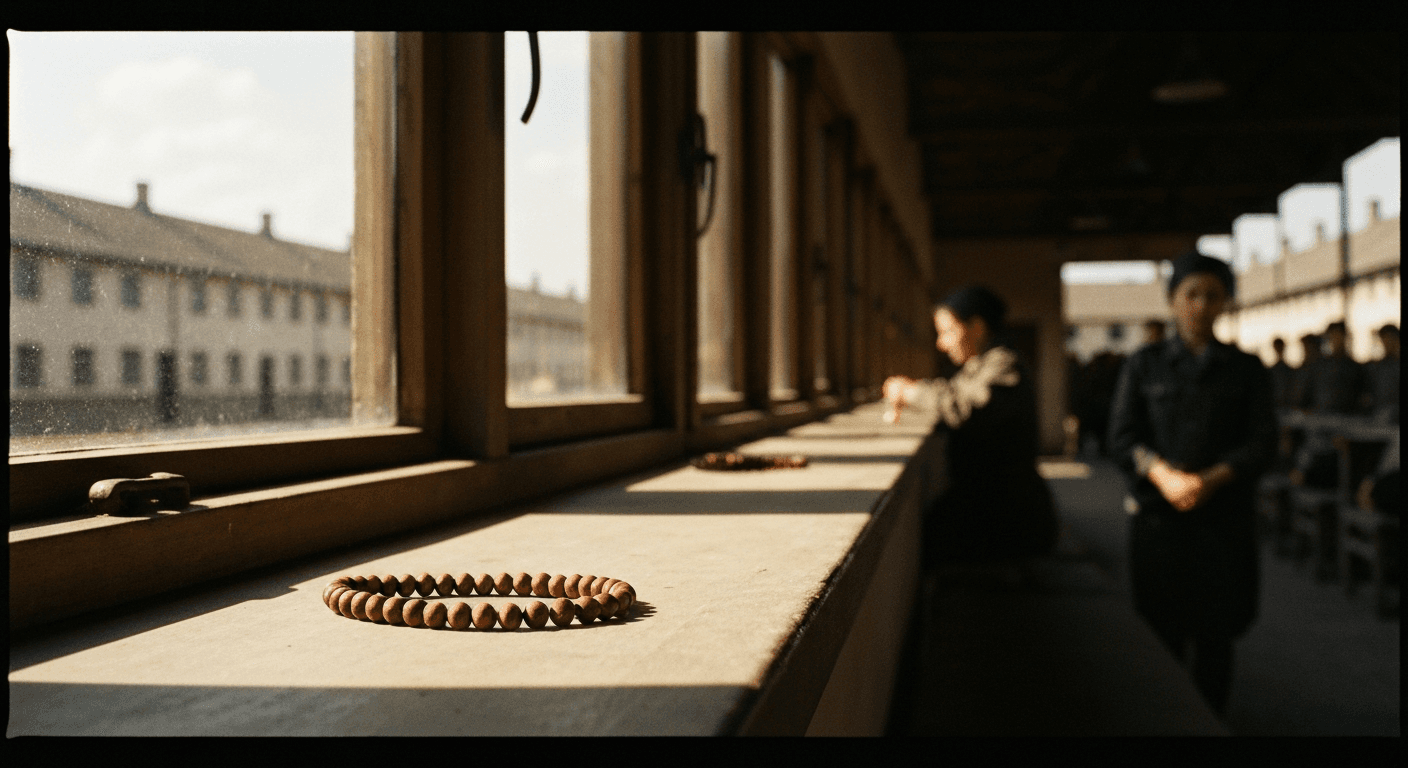
In 1944, Corrie and Betsie ten Boom were arrested for hiding Jewish families in their home in Haarlem, the Netherlands. They were sent to Ravensbruck concentration camp in Germany — a place designed to strip human beings of every shred of dignity and hope. They lost everything: their home, their father (who died shortly after arrest), their freedom, their health. But they never lost each other.
The Bible in the Barracks
The sisters managed to smuggle a small Bible into the camp. Every evening, in the lice-infested barracks where women were packed so tightly they could barely move, Betsie and Corrie would read aloud. What started as private devotion became something communal — women from different countries, different backgrounds, different faiths would crowd around to listen. In a place built to dehumanize, friendship and faith became acts of resistance.
Betsie was the one who astounded Corrie most. While Corrie struggled with anger toward their captors, Betsie consistently responded with compassion. "We must tell people what we have learned here," Betsie would say. "We must tell them that there is no pit so deep that God's love is not deeper still." This wasn't naivety. Betsie was watching friends die. She was starving, sick, beaten. She said these things while fully aware of the horror around her.
Gratitude for Fleas
One of the most remarkable moments came when Betsie suggested they thank God for the fleas in their barracks. Corrie thought she'd lost her mind. But Betsie insisted. Weeks later, they discovered the guards refused to enter their barracks because of the fleas — which meant the women could read the Bible, pray, and support each other without interference. The very thing that tormented them became their protection.
This detail captures something essential about the friendship between these two sisters: Betsie saw what Corrie couldn't. Where Corrie saw only suffering, Betsie saw an invitation to trust. Their friendship wasn't just companionship — it was a partnership in perception. Together, they could see more of God than either could alone.
Betsie's Death and Corrie's Mission
Betsie died in Ravensbruck in December 1944, just days before Corrie was released due to a clerical error. Corrie later learned that all women her age in the camp were killed the week after her release.
But Betsie's vision didn't die with her. Before she passed, she told Corrie about a dream — a home where people damaged by the war could come to heal, surrounded by gardens and beauty. After the war, Corrie was given a former concentration camp in Germany for exactly that purpose. She spent the next decades travelling the world, sharing the story of how faith and friendship survived the worst humanity could do.
What This Means for You
You don't choose the circumstances that test your friendships. But you choose how you show up in them. Betsie and Corrie's friendship didn't just sustain them — it sustained hundreds of others who were watching. Your friendships in hard seasons have a reach you can't see. The way you love each other, encourage each other, and hold on to hope together — people notice. And it matters more than you know.
