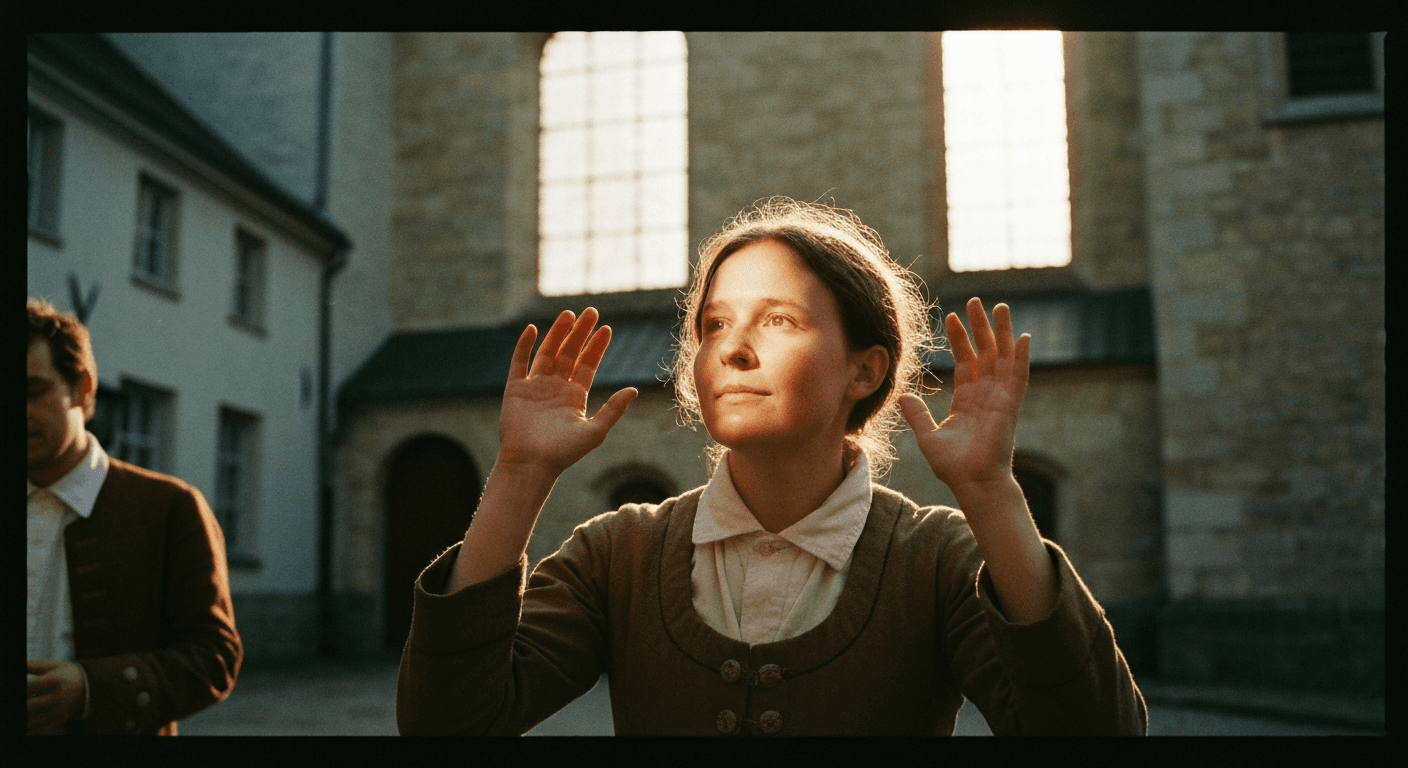
A Watchmaker's Daughter in Occupied Holland
Corrie ten Boom was a fifty-two-year-old watchmaker living above her family's shop in Haarlem, the Netherlands, when the Nazis occupied her country in 1940. Along with her father Casper and sister Betsie, Corrie helped hide Jewish families in a secret room built behind a false wall in their home.
In February 1944, the ten Booms were betrayed by an informant. The Gestapo raided the house. Corrie, Betsie, and their eighty-four-year-old father were arrested. Casper died ten days later in custody. Corrie and Betsie were sent to Ravensbruck concentration camp in Germany.
The Garden After the Horror
Betsie died in Ravensbruck in December 1944, just days before Corrie was released through what turned out to be a clerical error. Corrie was fifty-three years old, emaciated, grieving, and free.
In the years that followed, Corrie travelled the world telling her story. But she always returned to one practice: gardening. Wherever she stayed, she sought out a garden. She planted flowers. She sat among trees. She prayed outdoors.
"If you look at the world," Corrie said, "you will be distressed. If you look within, you will be depressed. If you look at God, you will be at rest."
Friends reported that Corrie's most peaceful moments were in gardens — tending roses, watching birds, sitting quietly in the sun. After the systematic horror of Ravensbruck, the natural world became the place where she could breathe again. The garden was where forgiveness grew — not quickly, not easily, but organically, the way all living things grow.
The Moment That Tested Everything
In 1947, Corrie was speaking at a church in Munich when a man approached her. She recognised him instantly: he had been one of the guards at Ravensbruck. He extended his hand and asked for forgiveness.
Corrie described the moment as one of the hardest of her life. She could not lift her arm. She prayed silently: "Jesus, I cannot forgive this man. Give me your forgiveness." She felt something she described as a current running down her arm into her hand. She shook his hand. She forgave him.
What This Means for You
Corrie ten Boom found that the hardest spiritual work — forgiveness, healing, learning to trust God again after unimaginable suffering — happened best in the simplest settings: a garden, a quiet bench, sunlight on leaves. The outdoors does not fix everything. But it creates the conditions where the deepest work can begin. If you are carrying something heavy, step outside. Let the garden do what gardens do.