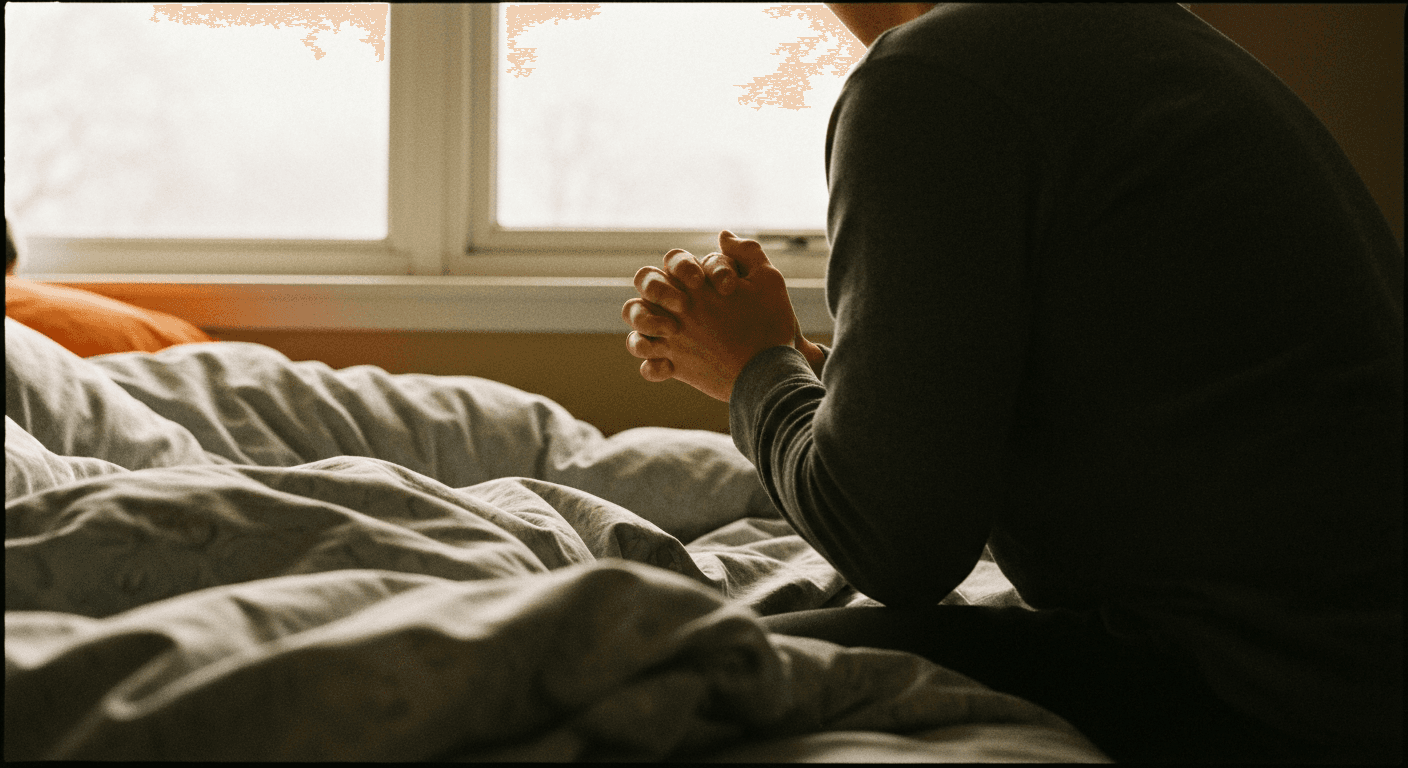

David Trombly was a young man when the diagnosis came. Testicular cancer. The kind of news that makes a man feel like his body has betrayed him in the most personal way possible. Cancer in the most private, most vulnerable part of his anatomy.
The Diagnosis
The doctors were clear. The tumour was there. It showed up on the scans. It was confirmed through testing. There was no ambiguity. Testicular cancer. The next step was surgery — the tumour needed to come out.
David processed the news the way most people do. Shock first. Then fear. Then the slow, grinding realisation that his life was about to be interrupted by something he never saw coming.
A surgery date was set. The clock started ticking.
The Prayer Chain
But David was not processing this alone. He was part of a church. And in his church, there was something called a prayer chain. Not a formal programme. Not a committee. A network of people who, when someone in their community was in trouble, passed the word along and prayed.
David's name went out on the prayer chain. And it did not stop at his church. The request spread. Friends told friends. Family told family. Prayer groups that David did not even know existed picked up his name and brought it before God.
Dozens of people. Maybe hundreds. All praying for the same thing: that God would remove the tumour from David Trombly's body.
There was no coordination. No strategy meeting. Just ordinary people in living rooms and kitchens and parked cars, closing their eyes and asking God to do what only God can do.
The Pre-Surgery Scan
Standard procedure before cancer surgery is to run a final scan. The medical team needs to confirm the tumour's exact location and size so the surgeon knows what to expect. It is routine. It is necessary. It is usually just a formality before the real work begins.
David went in for the pre-surgery scan. He was prepared for the operation. His family was prepared. The surgeon was prepared.
But the scan was not prepared for what it did not find.
The tumour was gone.
Not smaller. Not shifted. Not "reduced in size." Gone. The scan showed a clean result where weeks earlier there had been a confirmed cancerous tumour. The surgeon looked at the images, compared them with the earlier scans, and made a call that no one was expecting.
Surgery cancelled.
There was nothing to remove.
What Happened in the Gap
Between the diagnosis and the pre-surgery scan, no medical treatment was administered. No chemotherapy. No radiation. No experimental drugs. The only thing that happened in that gap was prayer.
A prayer chain of ordinary people asking an extraordinary God to intervene. And He did.
David's doctors could not explain the disappearance. Tumours do not resolve on their own, especially confirmed cancerous tumours scheduled for surgical removal. Something happened that medical science could not account for.
What This Means for You
If you are scheduled for surgery — if the date is set and the fear is building — David Trombly's story is for you. Not to tell you to cancel your surgery. Not to tell you that faith replaces medicine. But to remind you that between now and the operating theatre, God is at work.
Mobilise your people. Activate the prayer chain. Let your church, your family, your community know what you are facing. You do not know what God will do in the gap between the diagnosis and the procedure.
David's surgeon planned to remove a tumour. But when he got there, God had already done the work.