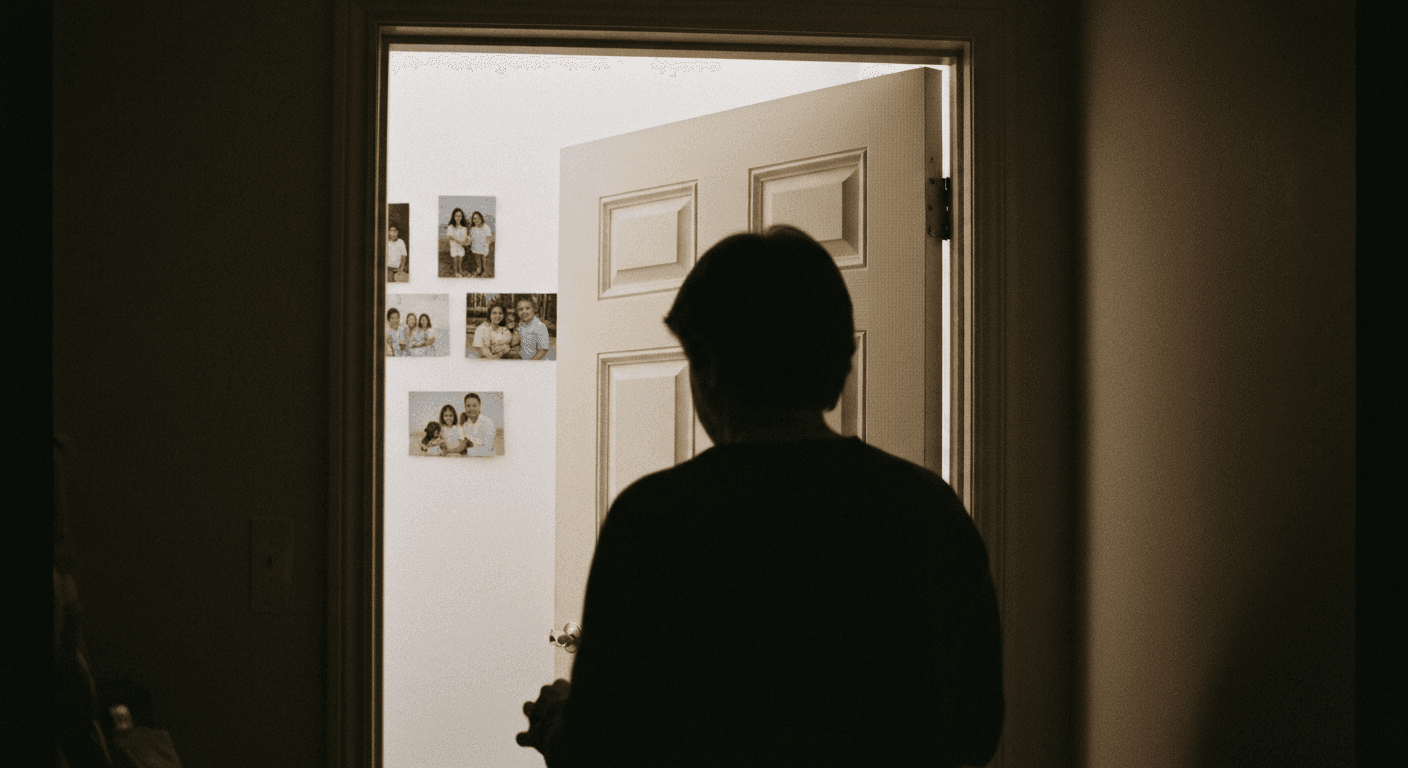
Sophea Chhin was seventeen when the Khmer Rouge took power in Cambodia in 1975. Over the next four years, she lost her parents, two brothers, and her first husband to the regime's brutality. She was imprisoned at a re-education camp near Battambang, where a guard named Vannak subjected her and other prisoners to systematic abuse. When the Vietnamese liberated Cambodia in 1979, Sophea walked to Phnom Penh with nothing but the clothes she wore and a silence that would last for decades.
The Silence of Thirty Years
Sophea married again in the 1990s, raised three children, and built a small tailoring business in Phnom Penh's Toul Tom Poung market. She never spoke about the camp. She never sought counselling. She never reported Vannak. She simply walled off the years between 1975 and 1979 and lived as though they had not happened. But the nightmares never stopped. And the hatred — cold, patient, constant — sat in her chest like a stone.
The Encounter at Tuol Sleng
In 2010, Sophea visited the Tuol Sleng Genocide Museum — the former S-21 prison — for the first time. She had avoided it for thirty years. She went because her granddaughter, a university student, asked her to come. Standing in the courtyard, surrounded by photographs of the dead, Sophea saw a face she recognised: Vannak. He was not in a photograph. He was standing across the courtyard, a small, aged man with grey hair, weeping in front of a wall of victims' portraits. A church had brought him as part of a reconciliation programme. Vannak had become a Christian in the 1990s and had spent years trying to find the people he had harmed.
The Forgiveness That Took Everything
Sophea's first instinct was to leave. Her second was violence. Her third — and she does not know where it came from — was to walk toward him. She stood in front of Vannak and said: "I am Sophea. You hurt me in Battambang." Vannak fell to his knees and sobbed. He did not make excuses. He did not defend himself. He said: "I am sorry. I have been looking for you to say I am sorry." Sophea stood over him for a long time. Then she extended her hand and helped him stand. She did not forgive him in that moment — forgiveness came later, slowly, over months of meetings facilitated by the reconciliation programme. But she took the first step. Today, Sophea and Vannak serve as volunteer guides at the Tuol Sleng memorial. They tell their story together — victim and perpetrator, standing side by side, showing visitors that forgiveness is not forgetting. It is choosing life over death, even when death feels easier.