Born Into Slavery, Raised in Wonder
George Washington Carver was born into slavery in Diamond, Missouri, around 1864. Kidnapped as an infant along with his mother by Confederate raiders, he was recovered but his mother was never found. Raised by the white couple who had owned his family, Carver grew up with two things that shaped his entire life: an insatiable curiosity about plants and a deep, quiet faith.
As a child, neighbours called him "the plant doctor." He would nurse sick plants back to health in a secret garden in the woods. That garden — hidden away in the trees — was where Carver first learned to listen to the natural world with a patience that bordered on prayer.
The God of the Garden
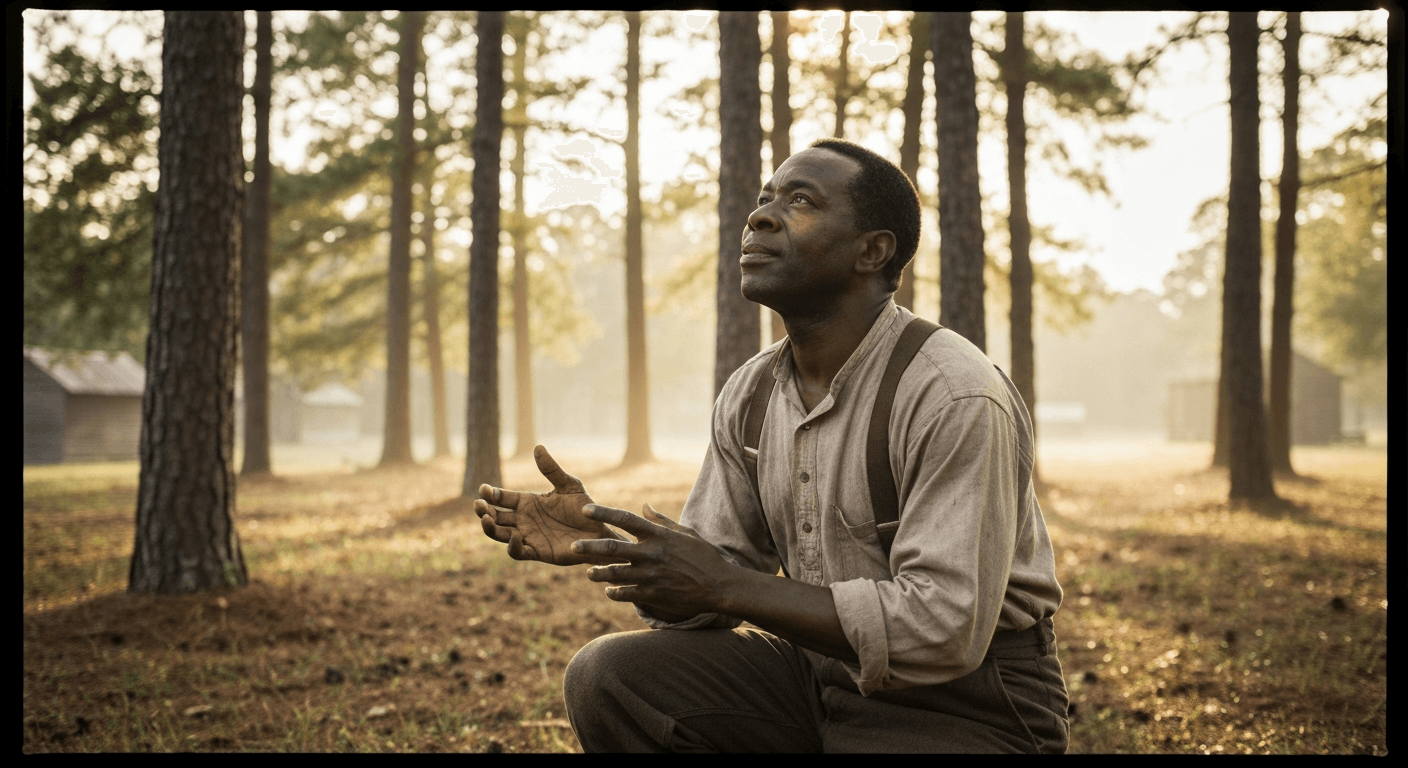
Carver earned a master's degree in agricultural science from Iowa State and then joined Tuskegee Institute in Alabama, where he spent the next forty-seven years. His daily routine was extraordinary: he woke every morning at four o'clock, walked alone into the woods, and asked God to show him what he was supposed to do that day.
"I love to think of nature as an unlimited broadcasting station," Carver said, "through which God speaks to us every hour, if we will only tune in."
His discoveries changed agriculture across the American South. He found over three hundred uses for the peanut, more than a hundred for the sweet potato, and dozens for the pecan. He taught impoverished farmers how to rotate crops, rebuild depleted soil, and feed their families. All of it, he insisted, came from those morning walks in the woods.
A Testimony Before Congress
In 1921, Carver testified before the United States Congress about the potential of the peanut. He was given ten minutes. He spoke for nearly two hours. When asked where his ideas came from, he pointed to God and to the garden.
He turned down lucrative offers from Thomas Edison and Henry Ford. He never patented most of his discoveries, choosing instead to give them away freely. He lived in a single room at Tuskegee until his death in 1943.
What This Means for You
Carver's method was radically simple: go outside early, pay attention, and ask God what he wants to show you. He did not separate his science from his faith, and he did not separate either of them from the natural world. If you want to hear from God, a morning walk might be the most underrated spiritual practice available.