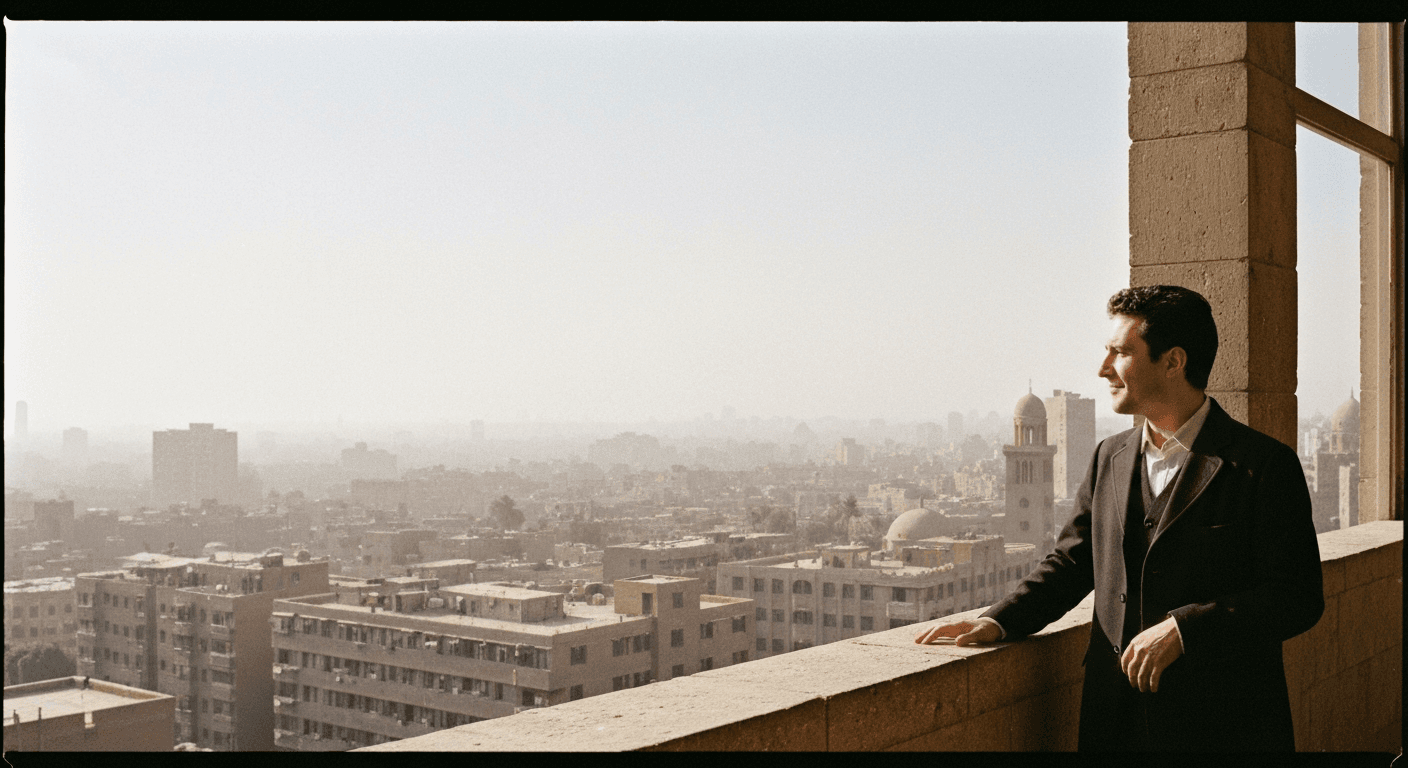
In the late nineteenth century, the Coptic Orthodox Church of Egypt—one of Christianity's oldest communities—was in crisis. Centuries of marginalization had taken their toll. Religious education had all but collapsed. When Pope Kyrillos V opened the Clerical College in 1893, it was the first Coptic theological institution since the ancient School of Alexandria.
Among the first forty students was a seventeen-year-old named Habib Girgis.
A Young Man's Bold Challenge
Girgis quickly discovered the institution's limitations. Almost none of the instructors had formal theological training. The dean simply read aloud from religious materials. Four years into his studies, the young man stood before his fellow students and asked a question that would define his life's work:
"Is there among us anyone who is capable of responding to those who ask him about his religion and why he is a Christian?"
Transforming Coptic Church Education
Rather than despair, Girgis decided to act. He devoted his life to education, becoming dean of the Clerical College and transforming it into a true center of theological learning. But his most revolutionary idea came in 1898: the Sunday School Movement.
In an era when religious education was virtually nonexistent for ordinary Copts, Girgis created a system to teach the faith to children and adults alike. He wrote textbooks. He trained teachers. He established curricula. He personally visited parishes to help launch Sunday School programs.
The Coptic Revival Spreads
The movement spread across Egypt and eventually throughout the Coptic diaspora. It produced an entire generation of educated believers—including a young man named Nazeer Gayed, who would later become Pope Shenouda III.
Looking back decades later, Pope Shenouda called Girgis "the light" that God sent to illuminate a dark time: "Our teacher started his life in an age that was almost void of religious education and knowledge. Then, God said, 'Let there be light,' and there was light. And the light was Habib Girgis."
A Saint's Lasting Legacy
Girgis died in 1951, but his legacy lived on. In 2013, the Coptic Orthodox Church declared him a saint—the first in centuries. Historians believe that without his work, the Coptic Church as it exists today might not have survived.
"If he didn't come onto the scene, would there even be a Coptic church today?" one scholar asked. "It is debatable."
