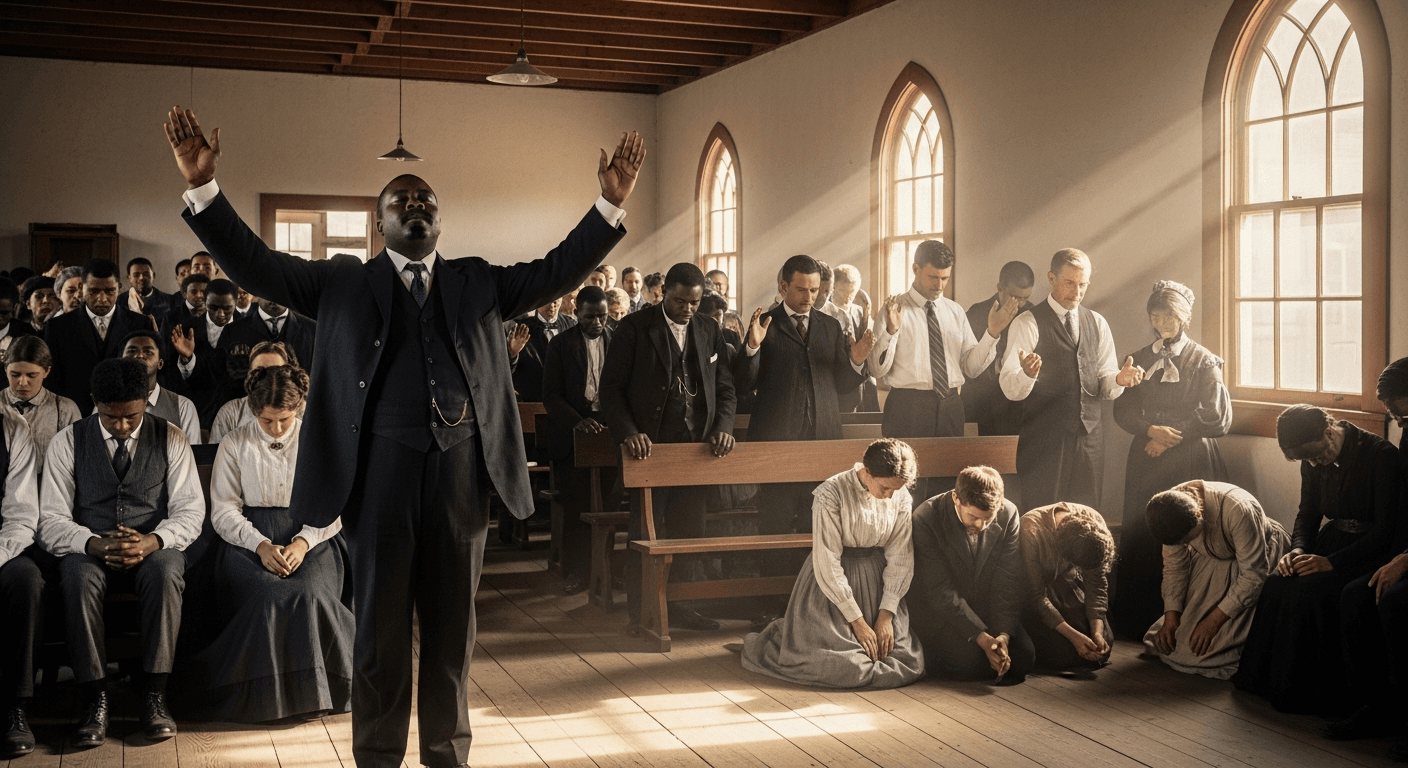
A Beacon of Hope
In the early 1900s, the Azusa Street Revival in Los Angeles, California, became a beacon of hope and transformation. Led by William J. Seymour, the revival began on April 9, 1906, in a humble mission at 312 Azusa Street. This movement was known for its radical inclusivity, drawing people from all ethnic backgrounds to worship together. Seymour passionately believed that the Holy Spirit was breaking down racial and social barriers, stating, 'The color line was washed away in the blood.'
Miraculous Healings
One of the most striking aspects of the revival was the testimonies of miraculous healings. Eyewitness accounts describe crutches left hanging on the walls as evidence of those who had been healed. People reported that the blind regained their sight and diseases were instantly cured. The spontaneous worship and prayer created an atmosphere where faith and healing flourished.
A Humble Setting
Frank Bartleman, an eyewitness to these events, observed, 'In that old building, with its low rafters and bare floors, God took strong men and women to pieces, and put them together again, for His glory.' It was in this humble setting that many found not only physical healing but also a deep spiritual renewal.
The revival emphasized not only healing but also unity and empowerment. Attendees were often deeply convicted of their sins and sought to live more holy lives. This conviction led to a newfound zeal to share their faith and spread the message of God's love and power.
A Global Movement
The revival ultimately sparked a global Pentecostal movement, sending many out as missionaries. The Azusa Street Revival stands as a testament to the power of faith and the transformative potential of unity. It reminds us that when barriers are broken and people come together in love and faith, miraculous things can happen.
