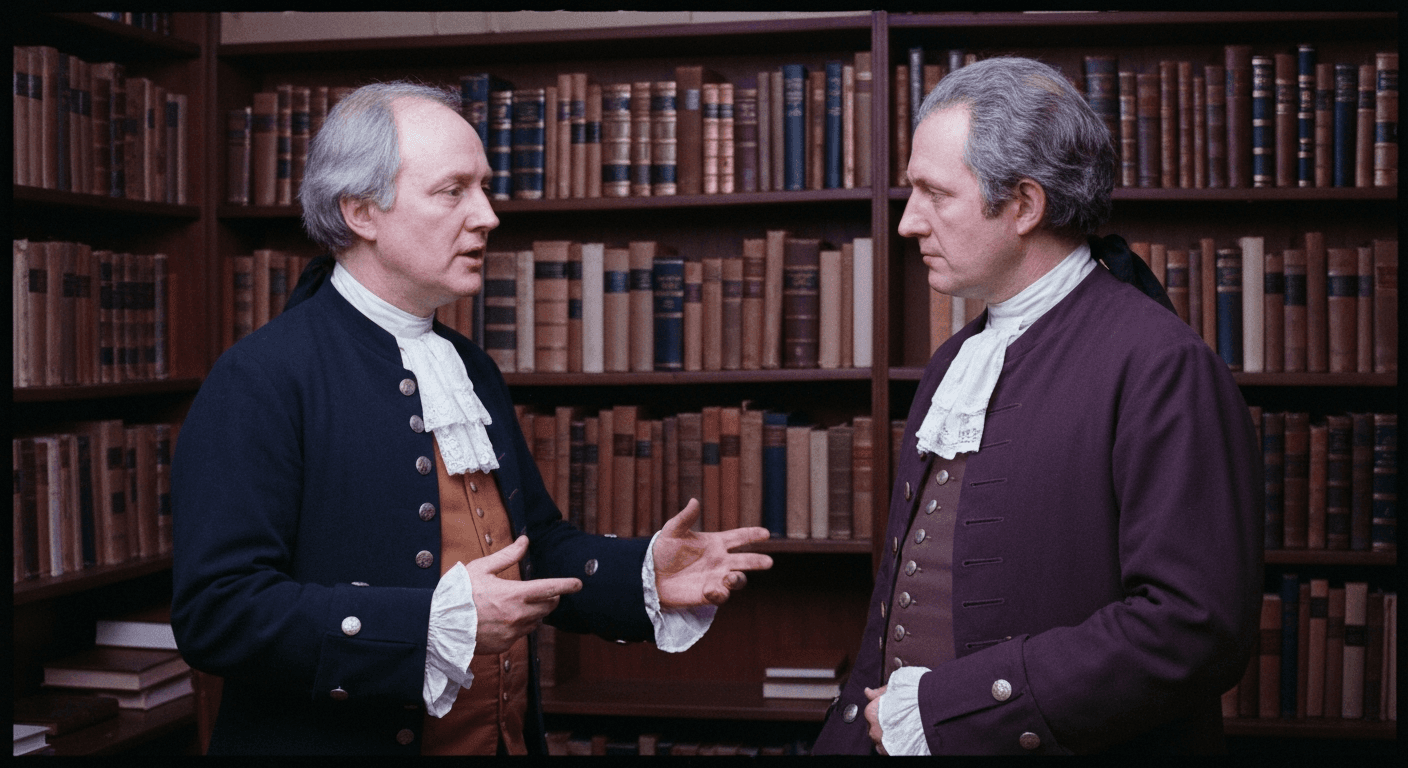
In 1739, John Wesley and George Whitefield were the closest of friends. They had prayed together at Oxford, wept together in ministry, and shared a vision for a faith that reached ordinary people outside the stained-glass walls of the established church. They were both brilliant, both passionate, and both convinced they were right — which is exactly why things got complicated.
The Fracture
Their disagreement was theological and it went deep. Whitefield held to Calvinist ideas about predestination; Wesley was firmly Arminian, believing in free will and the possibility that anyone could respond to God's invitation. This wasn't an abstract debate for either of them — it shaped how they preached, how they understood salvation, and how they saw the people in front of them.
The split went public. Followers took sides. Letters were exchanged that both men later wished they could take back. Wesley published a sermon that Whitefield took as a direct attack. Whitefield responded publicly. For a period, these two friends who had once been inseparable became symbols of division. People who loved one felt obligated to oppose the other.
What the Followers Missed
But here's what their respective camps often missed: Wesley and Whitefield never stopped loving each other. Behind the public disagreements, they continued to correspond privately. Whitefield wrote to Wesley: "Though I hold particular election, yet I offer Jesus freely to every individual soul." Wesley, despite his public positions, continued to speak of Whitefield with deep respect and affection.
They disagreed. They said so openly. But they never dehumanized each other. They never reduced the other to a theological position. Even at their most frustrated, they remembered that the person on the other side was someone they'd prayed with, served with, and genuinely loved.
The Funeral Request
When George Whitefield died in 1770, he had already made his wishes known: he wanted John Wesley to preach his funeral sermon. Think about that. After decades of public disagreement, after their followers had splintered into opposing camps, Whitefield trusted no one more than Wesley to speak over his life.
Wesley accepted. Standing before a packed congregation, many of whom had spent years pitting the two against each other, Wesley spoke with profound tenderness about his friend. He didn't paper over their disagreements. He simply said that they would be resolved in eternity, and that what mattered most was that Whitefield had been faithful. "Have you the spirit of George Whitefield?" Wesley asked the congregation. It wasn't a theological question. It was a friendship one.
Beyond Their Time
The Wesley-Whitefield friendship is remarkable because it models something that remains rare: the ability to disagree deeply without discarding the person. They held convictions passionately while holding each other closely. Their friendship outlasted their disagreement — and their mutual respect did more for the faith than their arguments ever did.
Historians note that the revivals both men led transformed English-speaking Christianity forever. What's less often noted is that their friendship — imperfect, strained, but stubbornly maintained — modelled the kind of unity that makes transformation possible.
What This Means for You
You will disagree with people you love. About important things — things that matter to both of you. The question isn't whether you'll face that tension. The question is whether you'll let it end the friendship or deepen it. Wesley and Whitefield show us that you can hold firm convictions and a tender heart at the same time. You can say "I think you're wrong" and also "I want you to preach my funeral." That's not weakness. That's the hardest kind of strength.
