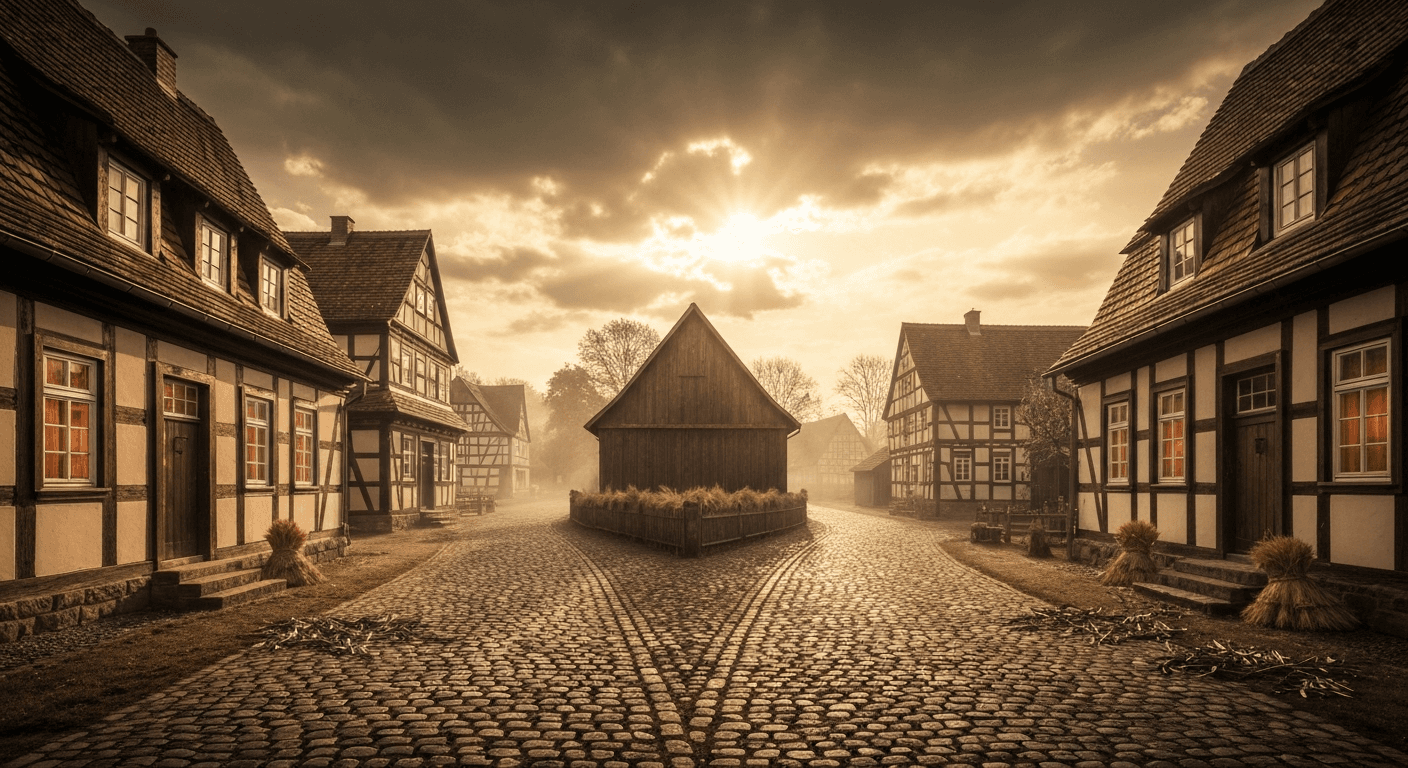
The Fractured Community at Herrnhut
On August 13, 1727, something happened in the small German village of Herrnhut that would shape the course of Christian history. Count Nikolaus Ludwig von Zinzendorf had welcomed a group of persecuted Moravian refugees onto his estate. But these refugees were quarreling - Lutherans, Reformed, Moravians, and others could not agree on theology.
Zinzendorf, only 27 years old, desperately sought unity for his fractured community. They began meeting together for prayer and confession.
The Moravian Pentecost of 1727
Then came August 13. The community gathered for a communion service at the nearby church in Berthelsdorf. As they partook of the Lord's Supper, the Holy Spirit fell upon them with overwhelming power.
"We were all under the cloud, baptized with His Spirit," one witness recorded. Another wrote: "A sense of the nearness of Christ was given to all that was so overwhelming that we all fell upon our faces."
Immediate Unity Through Revival
The effect was immediate and lasting. Former enemies embraced one another weeping. Theological disputes that had seemed insurmountable melted away. Many compared it to the Day of Pentecost.
The 100 Year Prayer Meeting
From this outpouring was born the Moravian missionary movement - the first Protestant missionary movement in history. Within twenty years, these small communities had sent missionaries to the West Indies, Greenland, South Africa, and North America.
Most remarkably, the Moravians began a prayer meeting that very month that continued around the clock for over one hundred years - 24 hours a day, 7 days a week, for a century. Their burning commitment to prayer and missions influenced John Wesley (who was deeply impacted by Moravian missionaries) and through him, the Methodist movement and eventually the entire modern missionary enterprise.

