Burning the Bible
At fourteen, Peter Hitchens burned his Bible on the playing fields of his Cambridge boarding school. It was a deliberate act — he wasn't rebelling for attention, he was making a philosophical statement. God was a fairy tale, and the Bible was its prop. He set fire to it with the certainty that only a teenager can muster, and walked away from faith completely.
His older brother Christopher would become the world's most famous atheist. Peter took a quieter path to the same destination: foreign journalism. He became a correspondent for the Daily Express, reporting from some of the most brutal places on earth.
The Soviet Collapse
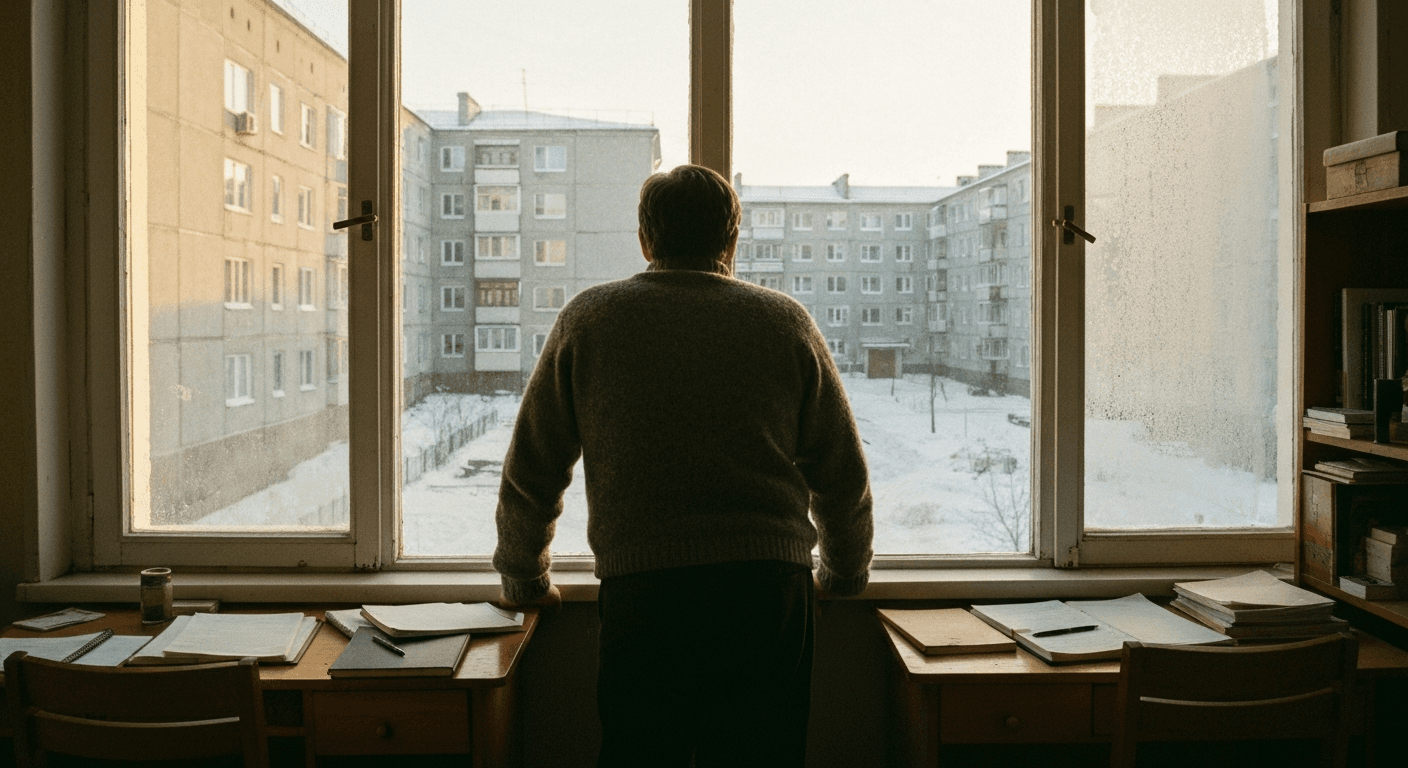
It was the job that undid him. Reporting from Moscow during the collapse of the Soviet Union, Hitchens watched what happened when a society fully committed to atheism reached its logical conclusion. The architecture of a godless state was everywhere — not in abstract philosophy, but in broken people, surveillance, cruelty, and the systematic crushing of human dignity.
He didn't have a single dramatic moment of conversion in Moscow. What he had was a slow, professional realisation that the worldview he'd held since fourteen didn't match the evidence in front of him.
Somalia and Rogier van der Weyden
Later, reporting from Somalia, Hitchens witnessed famine and violence that pushed him even further. Not toward anger at God — toward an awareness that the moral categories he was using to judge these situations had to come from somewhere. The idea that cruelty was genuinely wrong required a foundation that pure materialism couldn't provide.
The final piece was strange and beautiful. Standing in front of Rogier van der Weyden's painting "The Last Judgement" in a museum in Beaune, France, Hitchens found himself confronted by a 15th-century artist's vision of accountability. He realised, with the shock of honest self-assessment, that he was afraid of judgement — and that this fear made no sense unless there was a judge.
The Rage Against God
Hitchens documented his journey in "The Rage Against God," a direct and often blunt account of how professional observation dismantled his atheism. He didn't become religious in a sentimental way. He became a committed Anglican in the same way he became a journalist — by following where the evidence led, even when it was uncomfortable.
What This Means for You
Peter Hitchens didn't find faith through a feel-good moment. He found it through honestly looking at the world through his professional lens and admitting that what he saw didn't match what he believed. Sometimes the evidence for God isn't in a book — it's in what happens when he's removed.
