Lilias Trotter was one of the most gifted artists in Victorian England. John Ruskin — the most influential art critic of the age — told her she could be the greatest living painter if she devoted herself to art full-time. She chose North Africa instead.
An Afternoon in Algiers
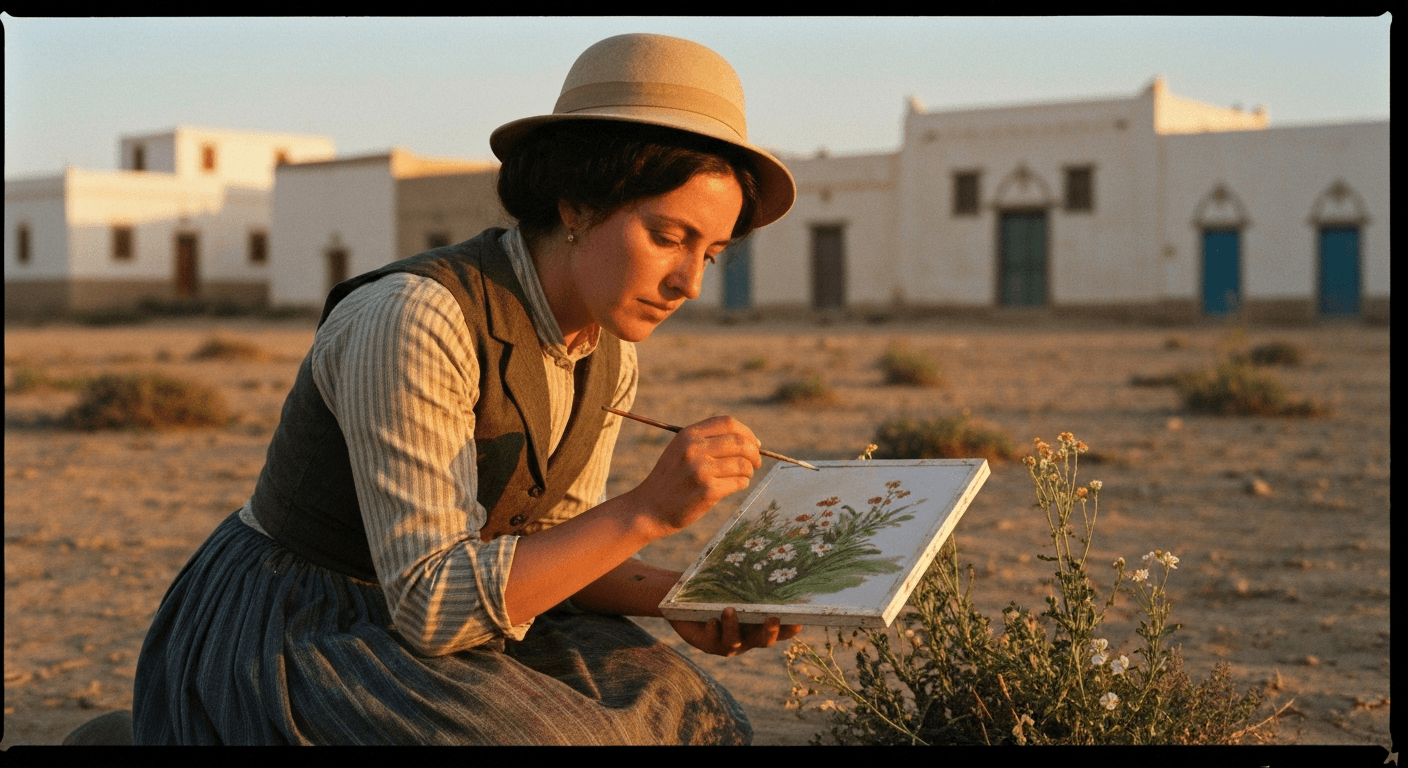
In the early 1890s, Trotter was living in Algiers, working with local communities and painting the landscape when she could. One afternoon, she was doing what she'd done hundreds of times: sitting outside, sketching wildflowers that grew in the arid soil. Nothing dramatic was happening. The light was good. The flowers were unremarkable. She was just painting.
But as she studied the flowers — really looked at them, the way an artist must — she was struck by something she hadn't expected. The way these small, fragile things pushed through dry ground. The way they turned toward the sun without effort. She wrote in her journal that the flowers became a message: that life could push through anything if it was rooted properly, and that God was showing her something about her own work through a handful of desert weeds.
Art as Attention
Trotter's journals are filled with watercolours and sketches alongside theological reflections. She didn't separate the two. For her, painting was a form of paying attention, and paying attention was a form of prayer. The ordinary act of mixing pigment and studying light became the channel through which she heard God most clearly.
She never became the famous painter Ruskin predicted. Instead, she spent forty years in Algeria, learning Arabic, building friendships across cultures, and painting everything she saw. Her journals — rediscovered in the 21st century — reveal a woman who found more of God in a wildflower than most people find in a lifetime of religious activity.
What This Means for You
Trotter heard God through paying attention to something small and overlooked. A flower in dry ground. Not a sermon, not a miracle, not a sign in the sky. If you slow down enough to really look at what's in front of you — a sunset, a child's laugh, the pattern on a leaf — you might find that God has been speaking through the ordinary all along. You just need the eyes to see it.
