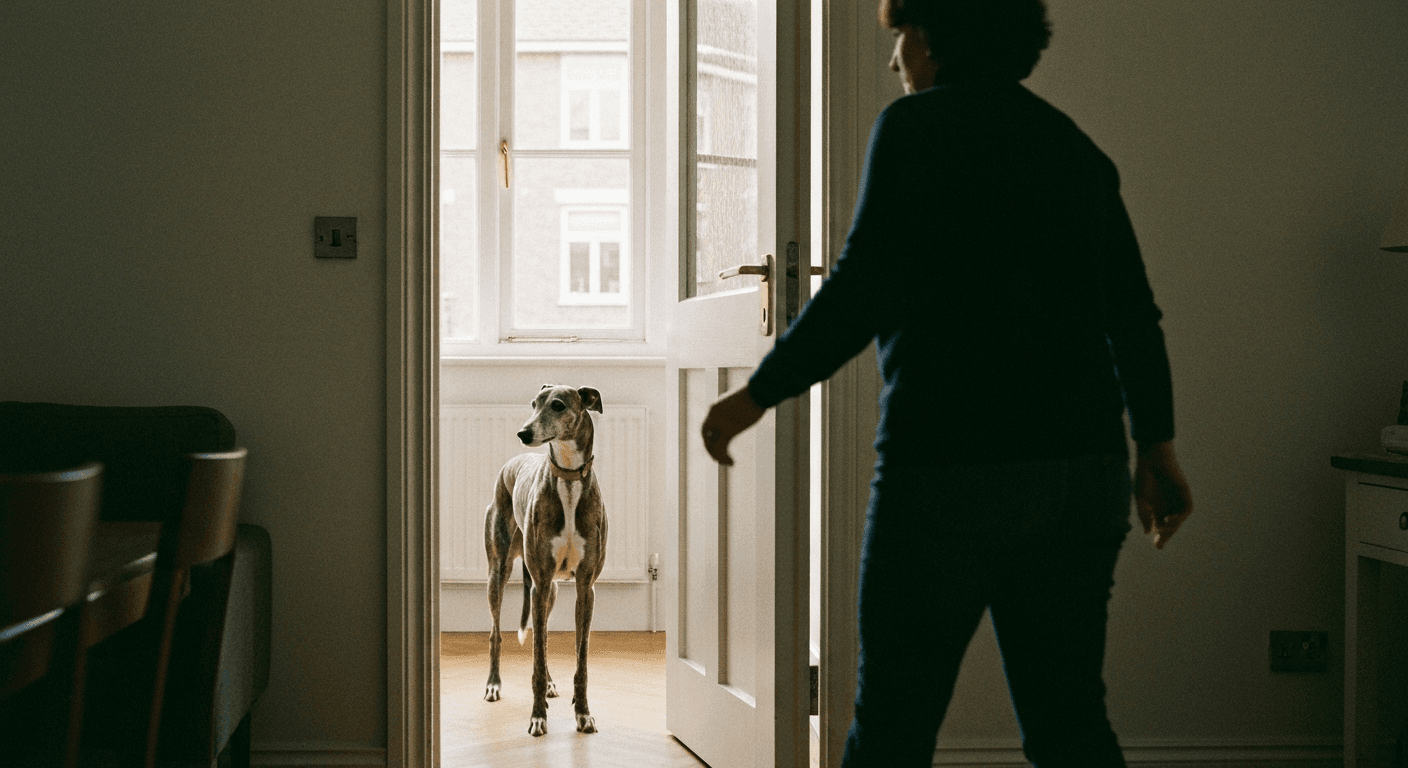
Sarah had walked away from faith at 22. By 30, she'd built a successful career in London's financial sector, but the emptiness was getting louder. She wasn't depressed exactly -- she was just numb. Work, wine, Netflix, repeat. She'd stopped feeling anything deeply.
An Impulse Decision
In November 2019, she adopted a rescue greyhound from Battersea Dogs Home. His name was Moses (the shelter had named him, and she kept it -- she said she wasn't spiritual enough to care about the irony). Moses had been a racing dog. He was retired, scarred, and terrified of everything. He wouldn't make eye contact. He flinched when she reached toward him.
Sarah said later: "Looking at this broken animal, I recognised myself. He'd been used, discarded, and now he didn't trust anyone. I thought: if I can learn to love this dog, maybe I can learn to feel something again."
The Slow Work
Over six months, Moses transformed. He learned to sleep on her bed. He stopped flinching. He'd press his body against her legs when they walked. And something shifted in Sarah too. The act of caring for something damaged -- patiently, daily, without demanding results -- cracked something open in her.
She started crying during walks. Not sad crying. Relief. Like a thaw. One Sunday morning in June 2020, she passed a church in Kensington and felt a pull she couldn't explain. She went in. She sat in the back with Moses (the vicar allowed dogs). She wept through the entire service.
"I didn't come back to faith because someone preached at me," she said. "I came back because a broken greyhound taught me what unconditional love looks like in practice. And once I felt it, I recognised it. It was what God had been offering all along."
What This Means for You
Sometimes the path back to God doesn't run through a church or a book or a conversation. Sometimes it runs through a rescue shelter. Through the daily discipline of caring for something that can't pay you back. If you've walked away from faith, pay attention to what softens you. It might have four legs.
