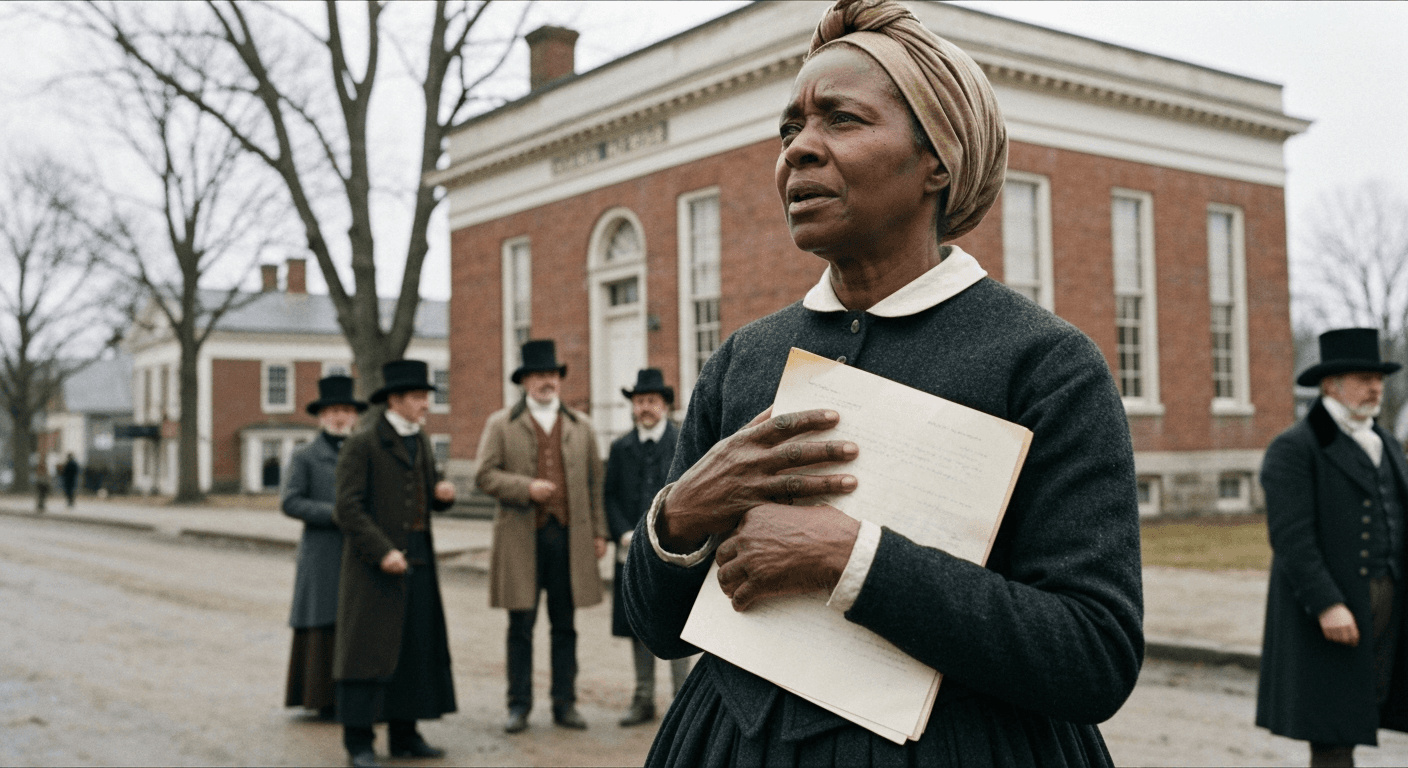
In 1826, Isabella Baumfree — later known as Sojourner Truth — escaped enslavement in Ulster County, New York with her infant daughter. She found refuge with the Van Wagenen family, who paid her enslaver twenty dollars for her services for the remainder of the year. When New York's gradual emancipation law took effect in 1827, she was legally free.
A Mother in Court
But her five-year-old son Peter was not. Her former enslaver, John Dumont, had illegally sold Peter to a man in Alabama — a state where slavery would continue for decades. Selling enslaved people out of New York was already illegal under state law. Truth went to the courts.
This was 1828. A Black woman, formerly enslaved, illiterate, with no resources, walking into a courtroom and demanding that the legal system recognise her rights as a mother. It was nearly unprecedented. With help from Quaker allies who provided legal support, Truth persisted through the courts. The case was decided in her favour. Peter was ordered returned.
Sojourner Truth became one of the first Black women in American history to win a case against a white man in a U.S. court.
What Came After
That courtroom victory didn't just return her son. It proved something — to Truth herself and to anyone watching — about what was possible when you refused to accept that the system had nothing for you. She went on to become one of the most powerful abolition and women's rights voices of the nineteenth century. Her 1851 speech, often called "Ain't I a Woman," became a foundational text of both movements.
What This Means for You
Truth's story isn't about a system that worked. It's about a woman who made a system work — a system that was designed to exclude her entirely. She walked into a courtroom that had never imagined someone like her would enter it, and she won. Sometimes justice means showing up in the room where no one expects you.