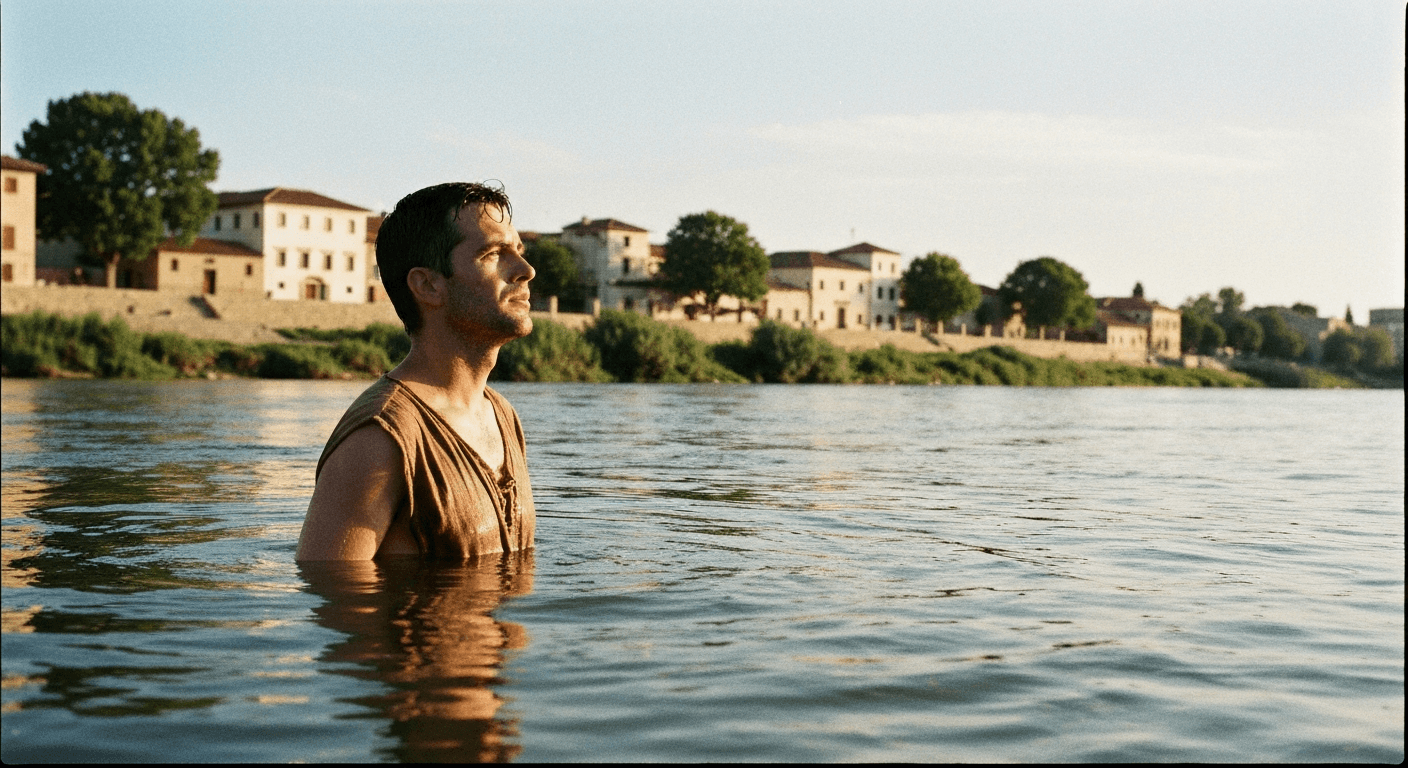
Naaman was the commander of the Syrian army — a decorated general, a man who answered to the king and commanded thousands. He was also covered in leprosy, a disease that was slowly stripping him of everything his rank could not protect.
The Instruction That Insulted Him
When Naaman arrived at the prophet Elisha's door in Israel, he expected ceremony. He expected Elisha to come out, stand before him, wave his hand over the diseased skin, and call on the name of his God. He had brought gold, silver, and ten sets of clothing. He was ready for a transaction — something befitting his status.
Instead, Elisha didn't even come to the door. He sent a messenger with a single instruction: go wash in the Jordan River seven times. Naaman was furious. The Jordan was a muddy, unremarkable stream compared to the rivers of Damascus. The instruction felt beneath him. He turned to leave.
The Servants Who Changed His Mind
It was Naaman's servants — the people with the least power in the situation — who stopped him. "If the prophet had told you to do some great thing, wouldn't you have done it?" they asked. "How much more when he simply says, wash and be clean?" The logic was devastating in its simplicity.
Naaman went to the Jordan. He stepped into the muddy water — a five-star general standing in a stream, stripping away his armour and his dignity in front of his entire entourage. He dipped once. Nothing. Twice. Three times. Four, five, six times — still leprous. On the seventh dip, his skin came back like that of a child. Clean. Completely restored.
The Physical Act as the Turning Point
The healing did not happen in the water. It happened in the obedience. Each dip was a surrender — of pride, of expectation, of the belief that he deserved something more sophisticated. The physical act of immersing himself was the mechanism through which Naaman let go of control and submitted to something outside his understanding.
What This Means for You
The thing God asks you to do might seem too simple, too undignified, or too ordinary. That is often exactly the point. The physical act of obedience is not about the act itself — it is about what it costs you to do it.