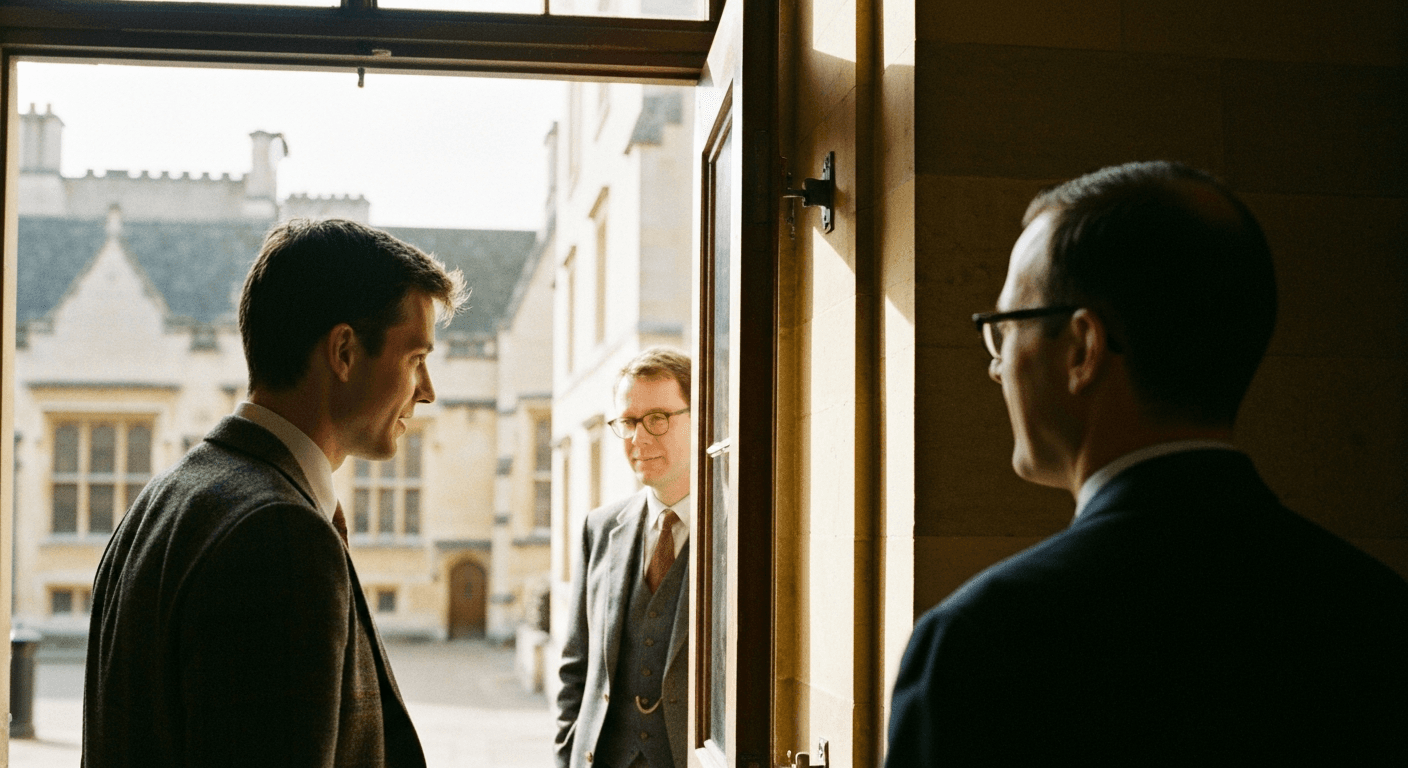
The most famous atheist at Oxford didn't plan on meeting God through a friend who wrote about hobbits.
The Unlikely Pair
C.S. Lewis was brilliant, bitter, and absolutely certain God didn't exist. J.R.R. Tolkien was a devout Catholic who kept his faith mostly quiet. They met in 1926 at an English faculty meeting at Oxford and became fast friends — bonding over Norse mythology, medieval literature, and late-night arguments about everything that mattered.
For years, Tolkien chipped away. Not with pamphlets or altar calls, but with stories. With questions asked over pints at the Eagle and Child pub. With the kind of patience that only real friendship produces. Lewis later wrote that Tolkien was the one person whose arguments he couldn't dismiss, because Tolkien never argued like someone trying to win.
The Night Everything Shifted
September 19, 1931. Lewis, Tolkien, and their friend Hugo Dyson walked the grounds of Magdalen College after dinner. Somewhere along Addison's Walk, past midnight, Tolkien made an argument that pierced through every intellectual defence Lewis had built.
Christianity, Tolkien said, was the "true myth" — the one story that actually happened. Every myth humanity had ever told about dying gods and resurrection was a shadow pointing toward the one real event. Lewis had always loved myths. He'd just never considered that one of them might be true.
Lewis didn't convert that night. But something cracked open. Twelve days later, riding in the sidecar of his brother's motorcycle to Whipsnade Zoo, Lewis arrived believing. "When we set out I did not believe that Jesus Christ is the Son of God," he wrote, "and when we reached the zoo I did."
The Ripple
Lewis went on to write Mere Christianity, The Screwtape Letters, and The Chronicles of Narnia — books that have brought millions of people to faith. None of it happens without a friend who cared enough to keep showing up, keep talking, keep telling stories.
What This Means for You
You probably won't convert your friend in a single conversation. Tolkien didn't. It took years of shared meals, honest debate, and genuine friendship. The most powerful evangelism isn't a technique — it's a life lived close enough to someone that they can see what you actually believe. Keep showing up. The midnight walk might be closer than you think.
