C.S. Lewis spent years as a confirmed atheist, teaching medieval literature at Oxford and dismissing faith as wishful thinking. He prided himself on his rationalism. But the university that sharpened his intellect also surrounded him with brilliant believers — J.R.R. Tolkien, Hugo Dyson, Owen Barfield — who refused to let his arguments go unchallenged.
The Long Conversation
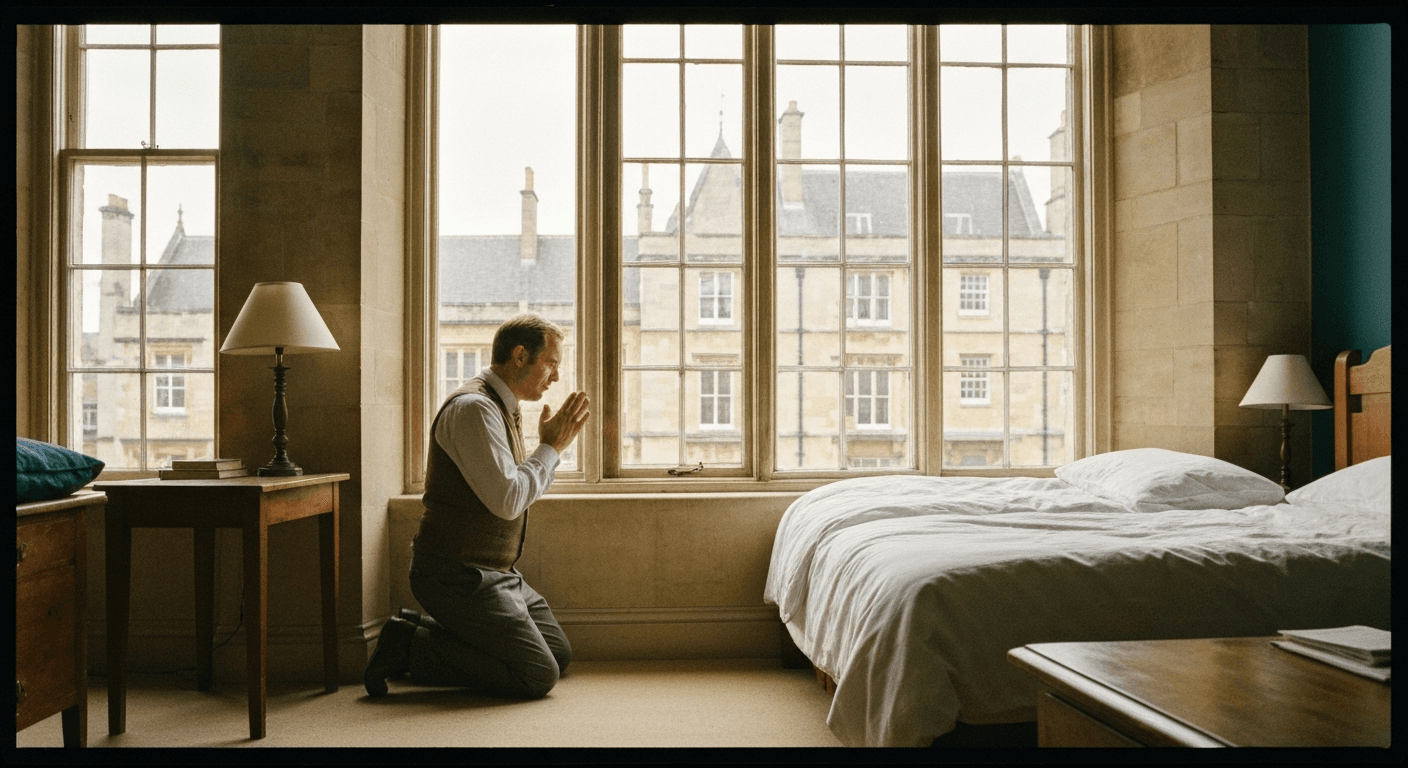
In 1931, Lewis walked the grounds of Magdalen College with Tolkien and Dyson until 3 a.m., wrestling with the nature of myth and truth. Tolkien argued that the Christian story was the "true myth" — the one that actually happened. Something cracked open in Lewis that night. He later described his conversion as being "the most dejected and reluctant convert in all England," kneeling in his room at Magdalen to admit that God was God.
From Sceptic to Storyteller
What makes Lewis's story extraordinary is where it happened. Not in a church. Not at a revival. In the academic corridors, common rooms, and late-night walks of Oxford University. The same rigorous thinking that built his atheism became the engine of his faith. He did not abandon his intellect — he followed it further than he expected it to go.
A Legacy That Started in a College Room
Lewis went on to write "Mere Christianity," "The Screwtape Letters," and "The Chronicles of Narnia" — works that have introduced millions to faith. All of it traces back to a scholar who knelt on his college floor and stopped running.
What This Means for You
If you are wrestling with doubt in a place of learning, you are in good company. Lewis did not find God despite his education — he found God through it. Your questions are not obstacles. They might be the exact path you are meant to walk.
