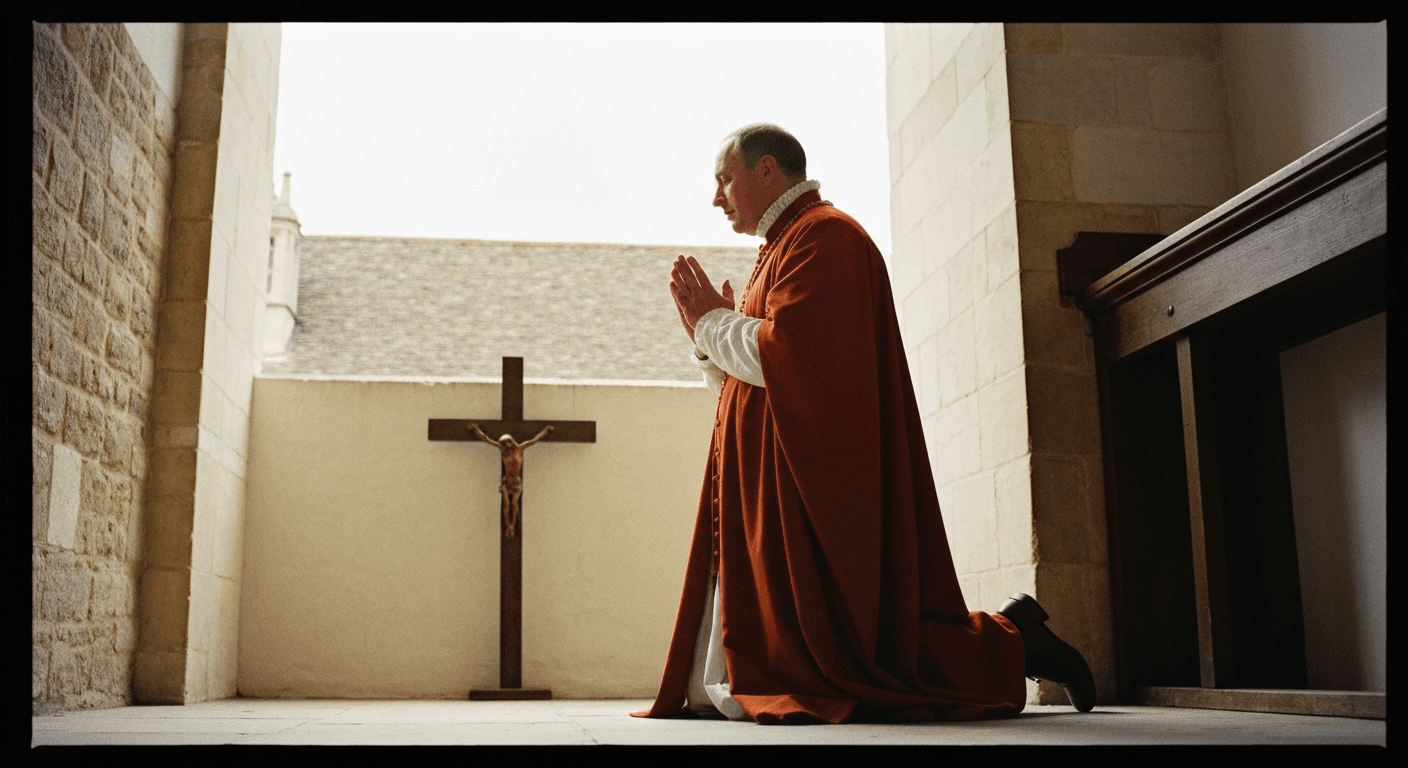
Early Life and Rise to Power
Born in Aslockton, Nottinghamshire, England, on July 2, 1489, Thomas Cranmer rose from modest beginnings to become a pillar of the English Reformation. Educated at Jesus College, Cambridge, Cranmer's early life was marked by traditional Roman Catholic beliefs, which included a devotion to transubstantiation. Yet, his destiny lay in influencing profound change within the Church of England.
Shaping the English Reformation
Cranmer's pivotal role began as Henry VIII sought to annul his marriage to Catherine of Aragon around 1527. Cranmer suggested a bold approach, advocating for the consultation of European universities, bypassing the Pope's authority. This idea brought him to prominence and eventually, in 1532, he was appointed Archbishop of Canterbury, a position he used to declare Henry's marriage null and void in 1533 and validate his union with Anne Boleyn.
Standing Firm Under Persecution
Under Edward VI's reign, Cranmer's theological views evolved towards Protestantism. He introduced the Book of Common Prayer and the Forty-Two Articles, steering the Church of England toward Reformed principles. Despite these achievements, his faith journey was tested under Mary I's reign. Tried for treason and heresy, Cranmer initially recanted his beliefs under immense pressure. However, on March 21, 1556, the day of his execution, he famously withdrew his recantations, declaring, 'As for the Pope, I refuse him, as Christ's enemy and Antichrist, with all his false doctrine.'
Thomas Cranmer's Martyrdom Legacy
Cranmer's martyrdom at the stake in Oxford solidified his legacy. As the flames rose, he thrust his right hand into the fire, stating, 'This was the hand that wrote it, therefore it shall suffer first punishment.' His final words were a testament to his faith: 'Lord Jesus, receive my spirit…I see the heavens open and Jesus standing at the right hand of God.' Through his life and death, Cranmer's unwavering faith in Jesus shaped the course of the English Reformation, leaving a legacy that endures in the Church of England today.
