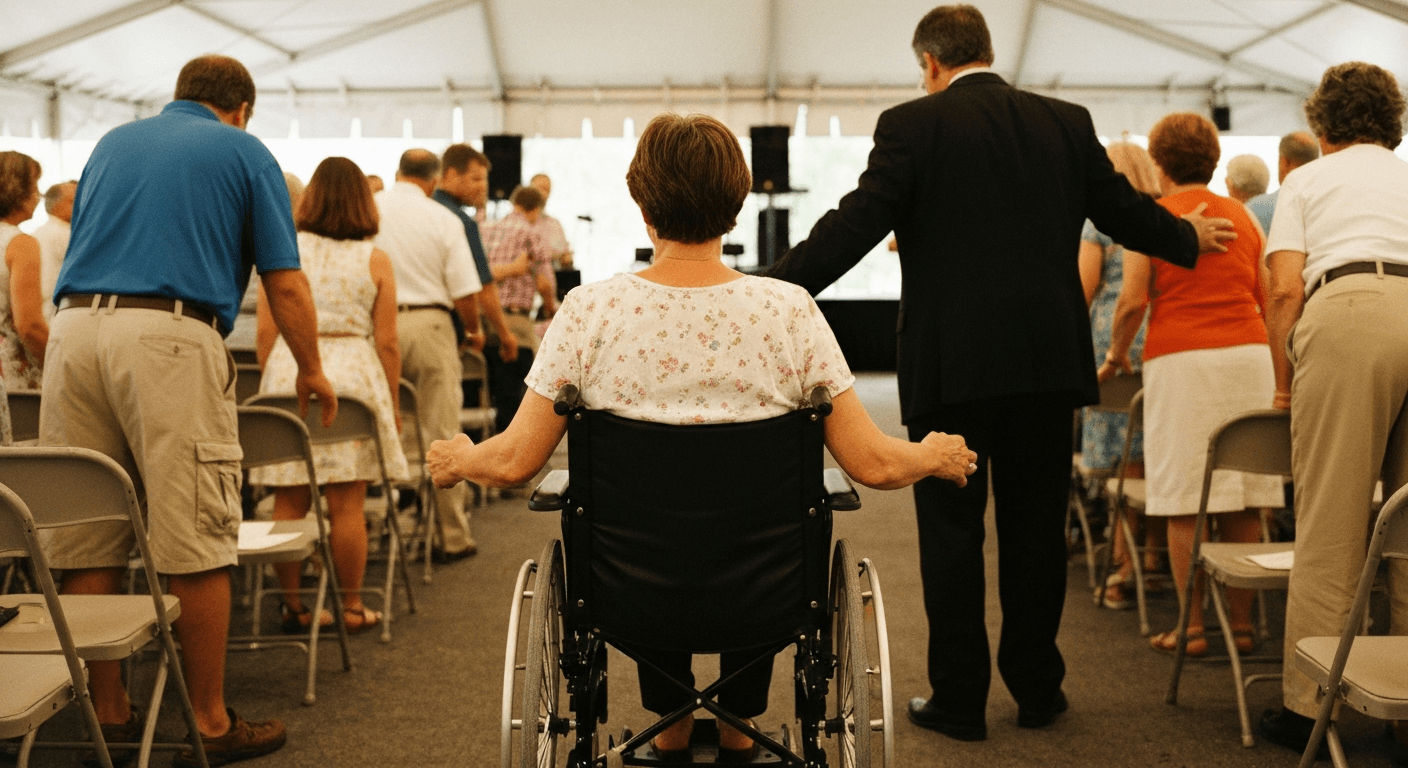
Delia Knox was a gospel singer in Mobile, Alabama, known for a voice that could fill a room. In 1987, a car accident severed nerves in her lower spine, leaving her paralysed from the waist down. For the next twenty-two years, she continued singing from her wheelchair, performing at churches and conferences across the American South. She never stopped making music. She also never stopped hoping.
The Night in Bay of the Holy Spirit
On August 27, 2010, Delia was at a service at the Bay of the Holy Spirit Revival in Mobile, Alabama. The evangelist, Nathan Morris, walked over to her wheelchair during the prayer time and placed his hands on her legs. He did not make promises. He simply prayed and then said, "In the name of Jesus, stand up."
The Physical Response
Delia gripped the arms of her wheelchair and pushed. For the first time in twenty-two years, her legs held her weight. She stood. The congregation went silent, then erupted. Video footage shows her taking her first steps — shaky, tentative, supported by people on either side — and then walking across the front of the church. She was weeping. So was everyone else.
The Medical Context
Delia's paralysis was well-documented. Multiple neurologists had confirmed the spinal nerve damage. She had been examined, tested, and declared permanently disabled. After the event, she underwent further medical examination, and doctors confirmed that function had returned to her lower extremities in ways that were inconsistent with the documented nerve damage.
The event was captured on video and has been viewed millions of times. Delia Knox has continued to walk since that night. She does not walk perfectly — she describes ongoing rehabilitation and physical therapy. But she walks.
The Laying On of Hands as the Pivot
The physical act at the centre of this account was the laying on of hands combined with the spoken instruction to stand. Delia had been prayed for hundreds of times over twenty-two years. What was different about this night? She has said in interviews that she does not fully know. What she knows is that when Morris's hands touched her legs and he told her to stand, something shifted that she could feel — a warmth, then a tingling, then strength returning to muscles that had been dormant for over two decades.
What This Means for You
Twenty-two years is a long time to hope. If you are in your own version of that wheelchair — a situation that has defined your limitations for so long that you have built your entire life around it — the invitation is still the same: stand up. Not because you can feel your legs. But because someone is asking you to try.