Basil was born to succeed. From a wealthy, devout Christian family in Cappadocia, he received the finest education the Roman world could offer—studying rhetoric at Constantinople and Athens alongside the future emperor Julian. He returned home as a celebrated professor, "puffed up beyond measure with the pride of oratory," as his sister Macrina would later scold him.
Confronting Life's Empty Pursuits
But a series of events shattered his comfortable trajectory. His brother Naucratius, who had abandoned a promising career to live as a hermit, died suddenly. The loss forced Basil to confront the emptiness of worldly achievement.
Then came Macrina's challenge. His older sister, who had already devoted herself to the ascetic life, confronted his pride and pointed him toward a different path. Around the same time, Basil encountered Eustathius of Sebaste, a charismatic bishop and ascetic whose example kindled something new in his soul.
Awakening from Spiritual Sleep
Basil described his awakening in a letter: "I had wasted much time on follies and spent nearly all of my youth in vain labors, and devotion to the teachings of a wisdom that God had made foolish. Suddenly, I awoke as out of a deep sleep. I beheld the wonderful light of the Gospel truth, and I recognized the nothingness of the wisdom of the princes of this world."
This was no mere intellectual conversion. Basil distributed his fortune to the poor and set out on a journey to study monasticism firsthand—traveling to Egypt, Palestine, and Syria to learn from the great ascetics, arriving in Egypt shortly after the death of Anthony the Great.
Transforming Church and Society
What he found in the desert hermits impressed him but also concerned him. Their isolation often led to spiritual pride and individualism. Returning to Cappadocia, Basil pioneered a new form of monasticism—communities living together in prayer, work, and mutual accountability.
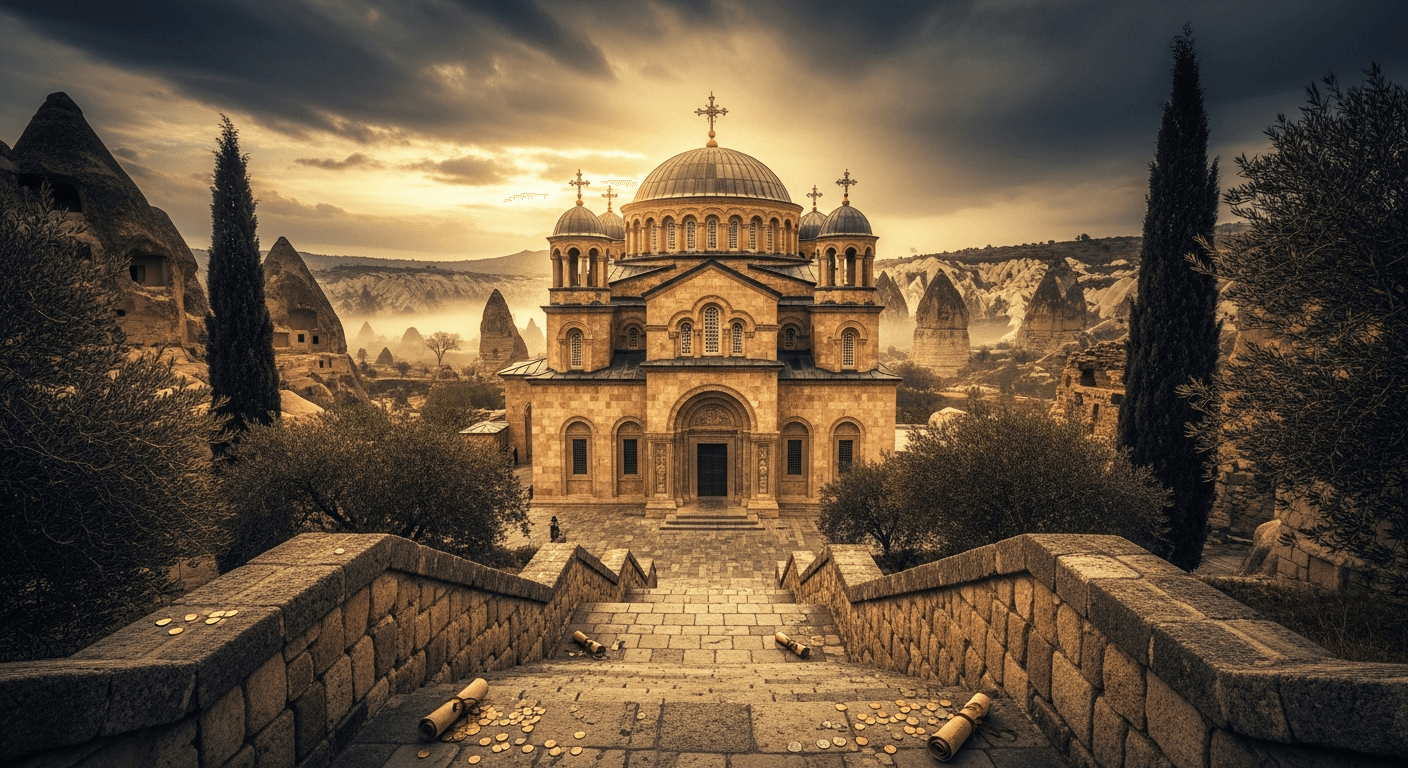
As Bishop of Caesarea, Basil built hospitals, defended orthodox theology against Arianism, and wrote liturgies still used in Eastern churches today. His "Basileiad"—a complex of hospices, hospitals, and hostels for the poor—became a model of Christian charity.
The professor who had been "puffed up with pride" became one of the most influential bishops in church history, remembered as Basil the Great.