Facing Death for Faith in Iran
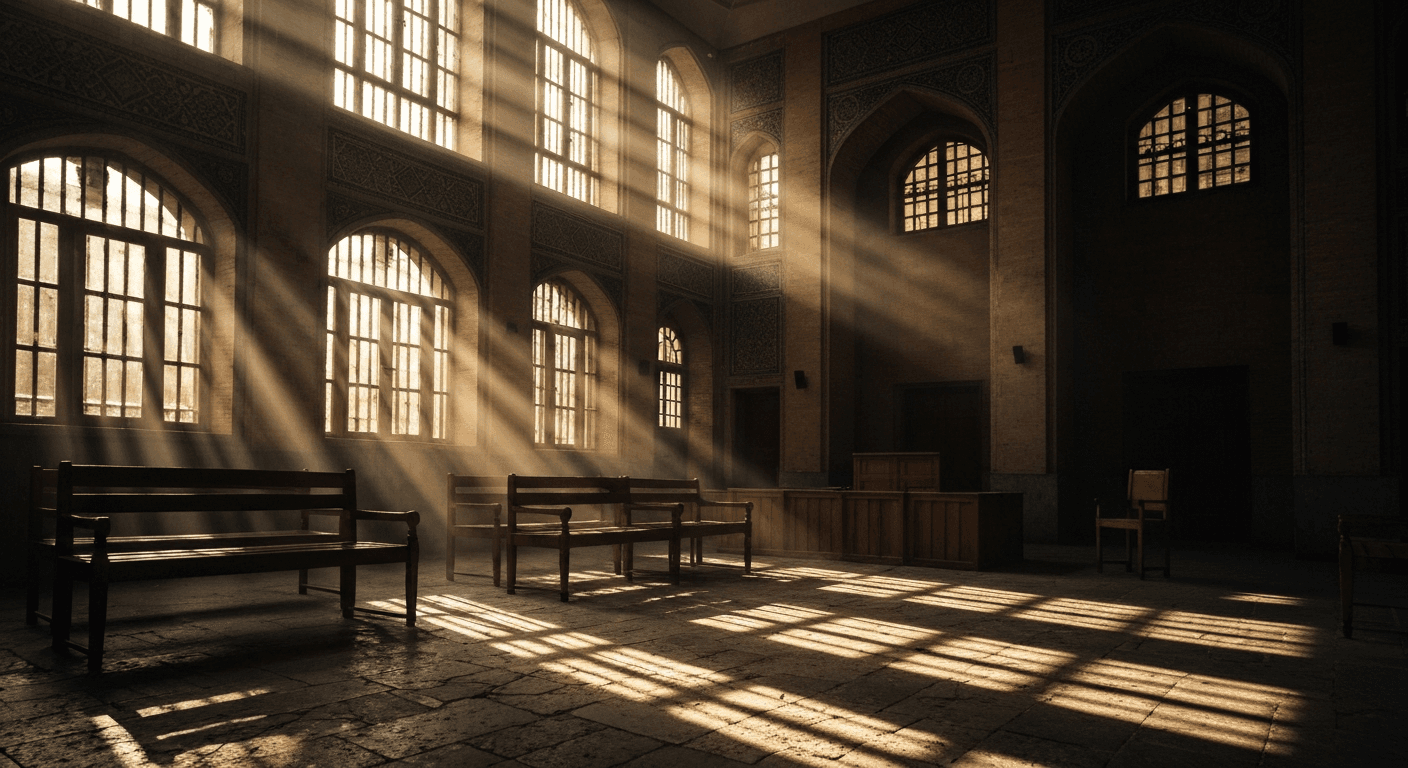
In December 1993, Iranian pastor Mehdi Dibaj stood before an Islamic court facing the death penalty for apostasy. He had been imprisoned without trial since 1983, held in solitary confinement in a dark cell just one meter in height, width, and depth for two years. He had been systematically tortured.
Bold Christian Testimony Under Persecution
Now, instead of a legal defense, he wrote a bold statement of faith.
"I am a Christian," he declared. "As a sinner I believe Jesus has died for my sins on the cross and by His resurrection and victory over death, has made me righteous in the presence of the Holy God."
He continued: "A Christian means one who belongs to Jesus Christ. The eternal God, who sees the end from the beginning and who has chosen me to belong to Him, knew from everlasting whose heart would be drawn to Him."
Then, with stunning courage before the Ayatollahs, he declared: "I would rather have the whole world against me, but know the Almighty God is with me; be called an apostate, but know I have the approval of the God of glory."
Mehdi requested simple things: a last Communion and to wear the cross when he was executed.
International Pressure Brings Temporary Freedom
His fellow pastor Haik Hovsepian received a copy of Dibaj's defense and circulated it worldwide. The London Times published it in full. International pressure mounted, and in January 1994, Dibaj was released.
But his freedom was short-lived. Pastor Haik was murdered just three days later. At his funeral, Mehdi said: "I should have died, not Brother Haik."
The Ultimate Price of Discipleship
On June 24, 1994, Mehdi disappeared while traveling to his daughter's birthday party. On July 5, authorities found his tortured and murdered body.
Three Iranian Christians were martyred that year. Since then, more than a million Iranians have chosen faith in Jesus—many citing Dibaj's testimony as their inspiration.