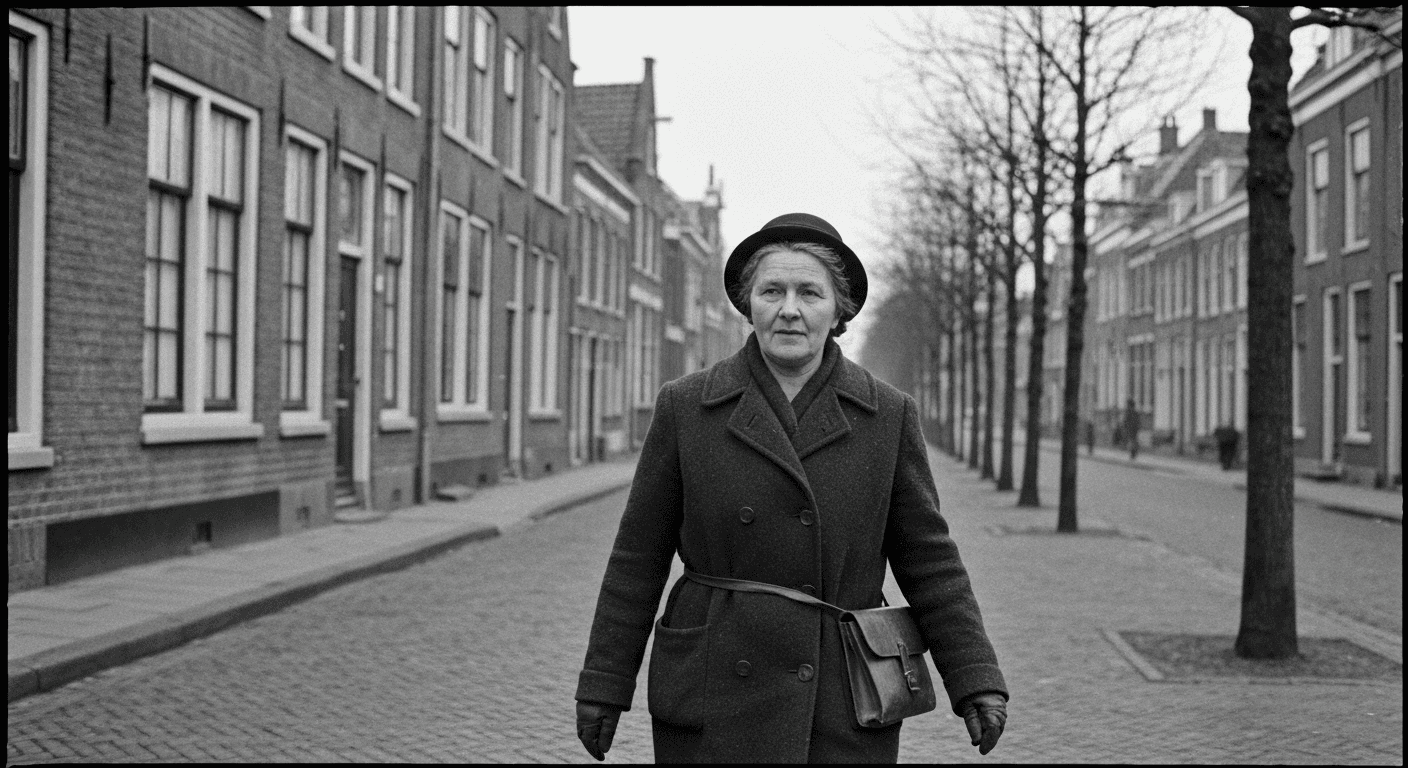
Corrie ten Boom was a 48-year-old Dutch watchmaker when the Nazis occupied the Netherlands. She and her family made a decision that would cost them almost everything: they would hide Jews in their home in Haarlem. Over the course of the war, the ten Boom house became a hub of the Dutch resistance, sheltering an estimated 800 Jews and other refugees.
The Hiding Place
The ten Booms built a secret room behind a false wall in Corrie's bedroom. It was just large enough for six people. They ran drills. They established a warning system with the resistance. For nearly two years, the operation worked.
In February 1944, an informant betrayed them. The Gestapo raided the house. Corrie, her father Casper, and her sister Betsie were arrested. Casper died ten days later in custody. Corrie and Betsie were sent to Ravensbruck concentration camp.
What Betsie Saw
Betsie ten Boom died in Ravensbruck in December 1944. But before she died, she said something to Corrie that would define the rest of Corrie's life: "There is no pit so deep that God's love is not deeper still." Betsie also told Corrie they needed to tell the world what they had learned — that even in the darkest places, forgiveness was possible.
Corrie was released days later due to a clerical error. She was 52.
After the war, Corrie ten Boom spent the next three decades travelling the world, telling her story. In 1947, she came face to face with one of the guards from Ravensbruck — a man who had been particularly cruel. He approached her after a talk, hand extended, asking for forgiveness. Corrie, by her own account, could not lift her arm. She prayed silently, and then reached out and took his hand.
What This Means for You
The ten Booms chose justice — hiding the hunted — and paid for it with imprisonment and death. But Corrie's story doesn't end at liberation. It extends to that handshake. Justice and forgiveness aren't opposites. In her story, they're the same movement.