David Chen was an aerospace engineer at NASA's Johnson Space Center in Houston. He designed thermal protection systems for spacecraft. He dealt in numbers, tolerances, failure modes, and risk assessments. His entire career was built on calculating the probability of things going wrong and engineering solutions to prevent it.
When his oncologist told him the five-year survival rate for pancreatic cancer was under ten percent, David did not need anyone to explain what that meant. He could run the numbers himself.
The Diagnosis
Pancreatic cancer. Stage 3. The tumour was in the body of the pancreas, not the tail — which meant the surgical options were limited. His oncologist at MD Anderson Cancer Center was honest: this was one of the most challenging cancers to treat. The numbers were not encouraging.
David sat in the oncologist's office and did what engineers do: he calculated. Under ten percent five-year survival. He was fifty-one. He had a wife, two teenage daughters, and a golden retriever named Kepler. The math was clear and the math was merciless.
The Fear
David's fear was different from most people's. It was precise. Clinical. Quantified. He knew exactly what pancreatic cancer did to a body. He had spent two nights reading medical journals and survival studies. He could cite the statistics of each treatment option, each complication, each trajectory.
The precision made the fear worse, not better. There was nowhere to hide behind vagueness. He could not tell himself it might be fine because the numbers told him it probably would not be.
He stopped sleeping. His mind would not turn off — it cycled through probability calculations, treatment permutations, and worst-case timelines on an infinite loop. His wife, Mei, found him at 3am in his home office, staring at a spreadsheet he had built to model his own survival probability.
"I had engineered my fear into a spreadsheet," David said. "And I was losing the argument with my own data."
The Encounter
MD Anderson Cancer Center has a chapel on the first floor. David had walked past it dozens of times during appointments. He had never gone in. He was not religious — he had been raised in a nominally Buddhist household and had not practised any faith since college.
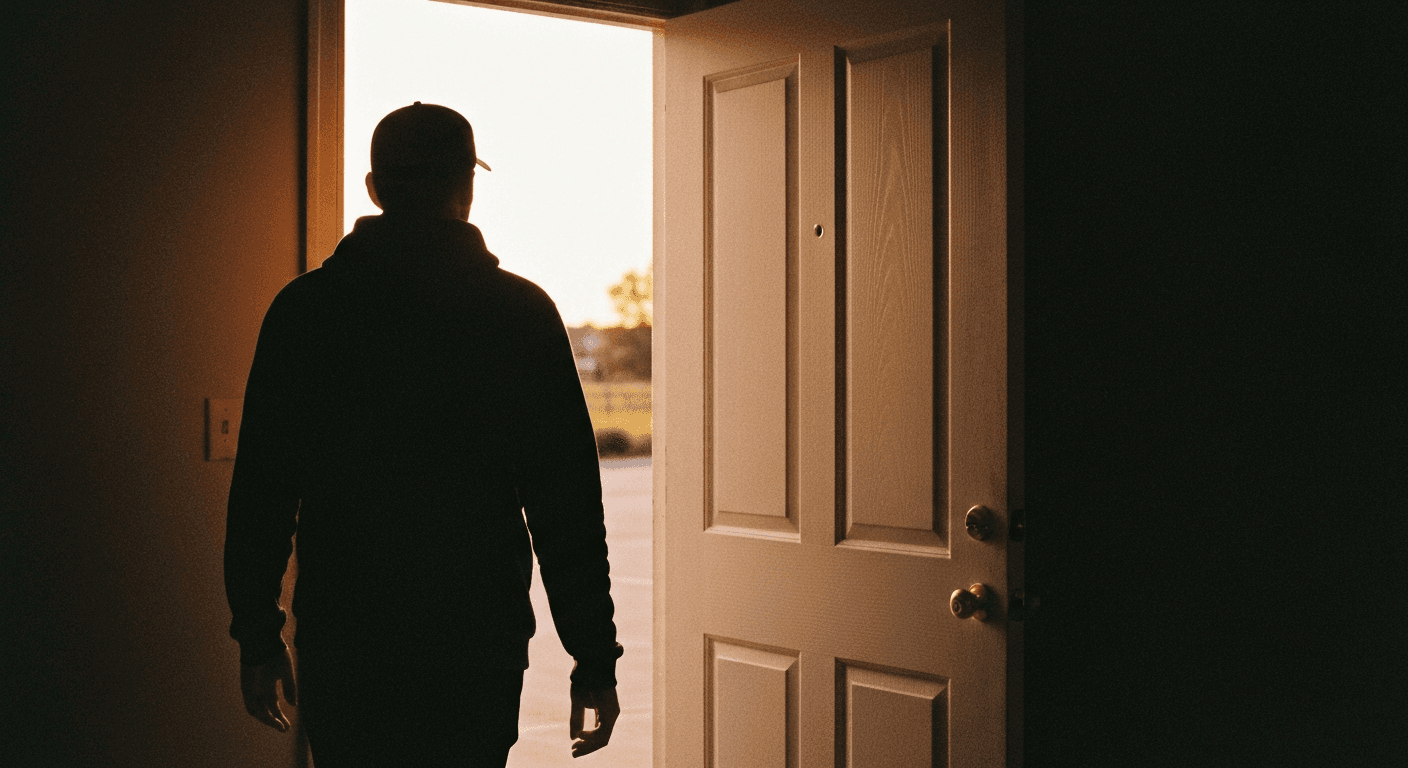
One afternoon, after an appointment that had delivered more bad news about the tumour's response to chemotherapy, David walked past the chapel. The door was open. The room was empty. He walked in.
He sat in a pew. He did not know what to do. He was not a man who prayed. He was a man who calculated. But the calculations had given him nothing but terror, and the terror was eating him alive.
"I just started talking," he said. "Out loud. To nobody visible. I said: I am David. I am an engineer. I build things that survive extreme conditions. And I cannot build anything that will survive this. If You are real — if there is a God — I need You to show up because I have exhausted every resource I have."
What David described next is the part he has the most difficulty putting into words. He is a precise man. He deals in measurements and specifications. But what happened in that chapel had no measurement.
"Love," he said. "That is the closest word. But it is not adequate. It was like being submerged in something warm and infinite. Every fear, every calculation, every probability model in my head went silent. Not because the numbers changed. They did not. But because something bigger than the numbers walked into the room."
David sat in that chapel for two hours. He missed his next appointment. He did not care.
When he walked out, the survival statistics had not changed. The cancer had not changed. But the fear was dead.
"The fear died before I did," David said. "I walked into that chapel terrified of dying. I walked out not afraid of death anymore. Not because I thought I would survive. But because I met Someone who was bigger than death."
The Healing
David is still in treatment. His journey is ongoing. The pancreatic cancer has not disappeared. He is fighting it with the best medicine MD Anderson can offer, alongside the prayers of a community he has only recently discovered.
He started attending a church near his home. He reads the Bible with the same thoroughness he once reserved for engineering manuals. His wife says he is a different man — not because the cancer is gone but because the fear is.
"I was not afraid of dying anymore," David said. "I was afraid of missing God while I was still alive. The fear of death was replaced by a hunger for the One who conquered it."
What This Means for You
If your cancer has the worst numbers — if the survival statistics are the kind that make oncologists choose their words carefully — hear this: the numbers do not have the final word.
David Chen is an engineer. He believes in data. But the most important data point of his life was not a survival statistic. It was the moment in a hospital chapel when something unmeasurable, unquantifiable, and undeniable walked into the room and dismantled his fear.
You may not know if your body will survive. But your fear does not have to survive. The fear can die before you do. And what replaces it — the love, the presence, the peace that passes understanding — is worth more than a clean scan.
Go to the chapel. Sit in the chair. Say the honest words. And let the One who is bigger than your numbers do what numbers cannot.