Wesley's Spiritual Crisis and Reluctance
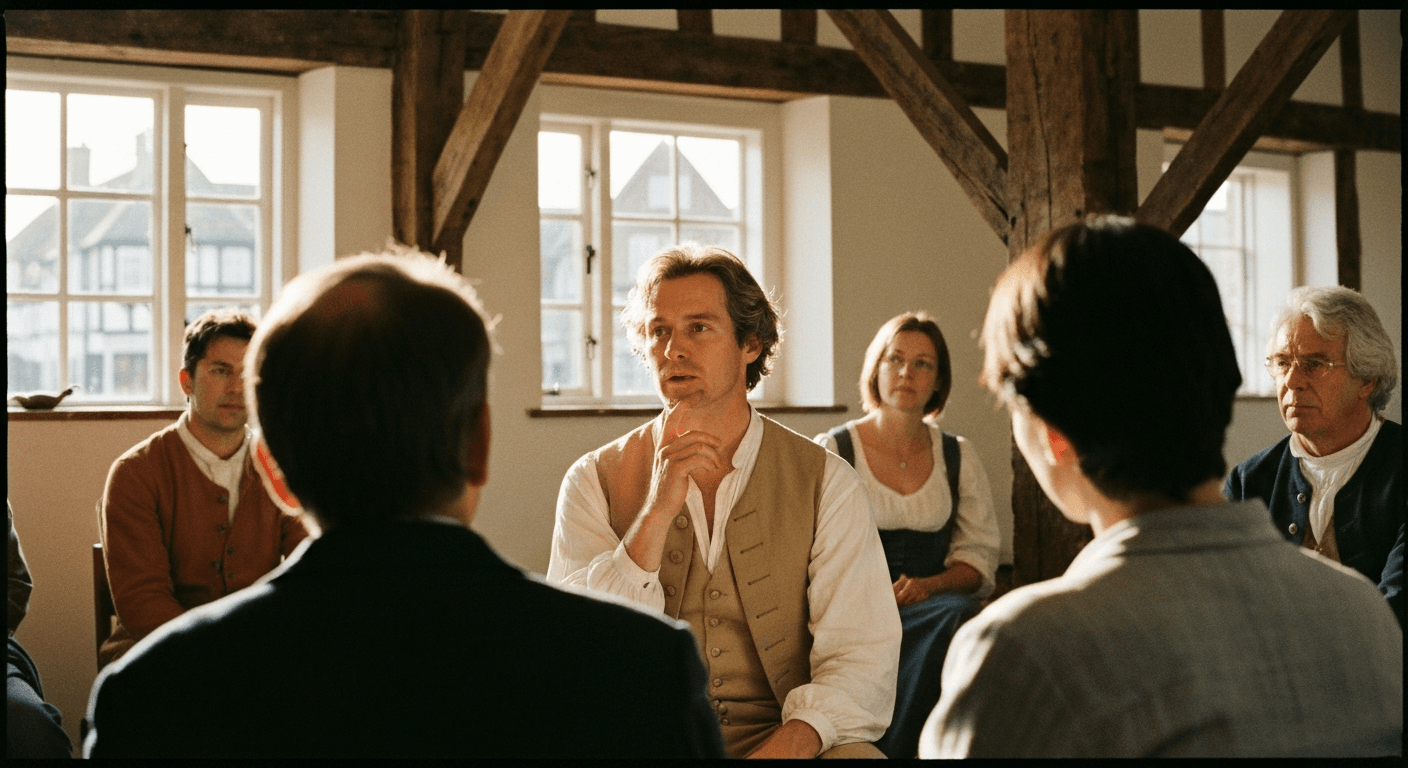
On the evening of May 24, 1738, John Wesley reluctantly attended a meeting on Aldersgate Street, London. Wesley, an Anglican priest, had been grappling with a deep sense of spiritual inadequacy and a lack of assurance in his faith. He had returned from a disappointing missionary trip to Georgia, where he felt he had failed in his mission to convert others and even questioned his own salvation.
The Aldersgate Experience Unfolds
Despite his reluctance, Wesley joined the Moravian society meeting that evening. As someone read Martin Luther's Preface to the Epistle to the Romans, an extraordinary transformation occurred. Wesley later recorded that his heart was "strangely warmed," and he felt he could finally trust in Christ alone for salvation. He received an assurance that his sins were forgiven, and he was saved from the law of sin and death.
Faith Through Peace and Victory
Following this profound experience, Wesley began to pray for his adversaries and openly shared his newfound faith. He visited his brother Charles and declared, "I believe." Though he faced doubts and temptations afterward, Wesley learned that faith did not always come with joy but was sustained by peace and victory over sin.
Ministry Transformed and Methodism Born
This encounter with Jesus transformed Wesley's life and ministry. He preached with renewed fervor, often in the open air to large crowds, and his messages emphasized salvation by faith and God's grace. Wesley's ministry, which became known as Methodism, grew rapidly and had a profound impact on England and beyond. The Methodist movement emphasized a "religion of the warm heart," transforming countless lives and leaving a lasting legacy.
Wesley's Aldersgate experience was a pivotal moment, marking a shift from striving for righteousness through works to embracing faith in Christ alone. Jesus was the one who intervened, providing assurance and transforming Wesley's heart, setting him on a path that would change the course of history.