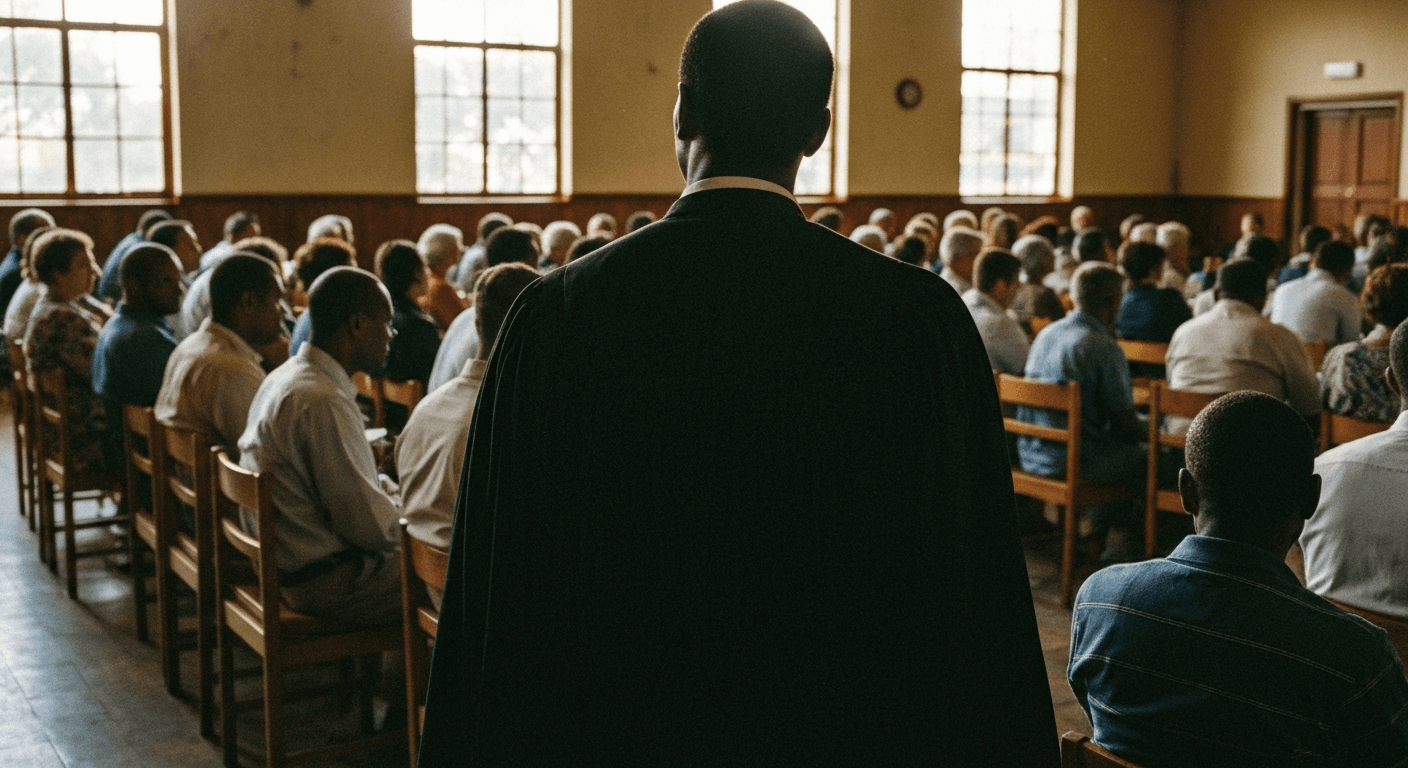
When apartheid ended in South Africa in 1994, the country faced an impossible question: what do you do with decades of state-sponsored violence? Prosecuting every perpetrator would overwhelm the courts and risk reigniting conflict. Amnesty without accountability would betray the victims. Neither justice-as-usual nor forgetting would work.
A Third Way
In 1996, President Nelson Mandela appointed Archbishop Desmond Tutu to chair the Truth and Reconciliation Commission. The TRC's design was radical and controversial: perpetrators of political violence could apply for amnesty — but only if they provided full, public disclosure of what they had done. No hiding behind classified files. No sealed records. Victims and their families could face the people who had harmed them and tell their own stories.
Tutu's role was not that of a judge. It was that of a witness. He wept publicly during testimony. He held space for rage and grief. He refused to pretend that forgiveness was cheap or easy.
What the Commission Revealed
Over two and a half years, the TRC heard testimony from more than 21,000 victims and processed 7,000 amnesty applications. It documented systematic torture, assassinations, and disappearances carried out by both the apartheid government and liberation movements. The final report named individuals and institutions responsible.
Not everyone forgave. Not every perpetrator applied for amnesty. The TRC was imperfect — critics argue that it traded justice for stability, that too many perpetrators walked free. Tutu never denied these criticisms. But he argued that the alternative — silence or Nuremberg-style mass prosecution — would have been worse.
What This Means for You
The TRC proved that there is a kind of justice that exists between punishment and denial. It's not comfortable. It doesn't give anyone everything they want. But it creates a public record that cannot be erased — and sometimes, that record is the foundation on which something new can be built.