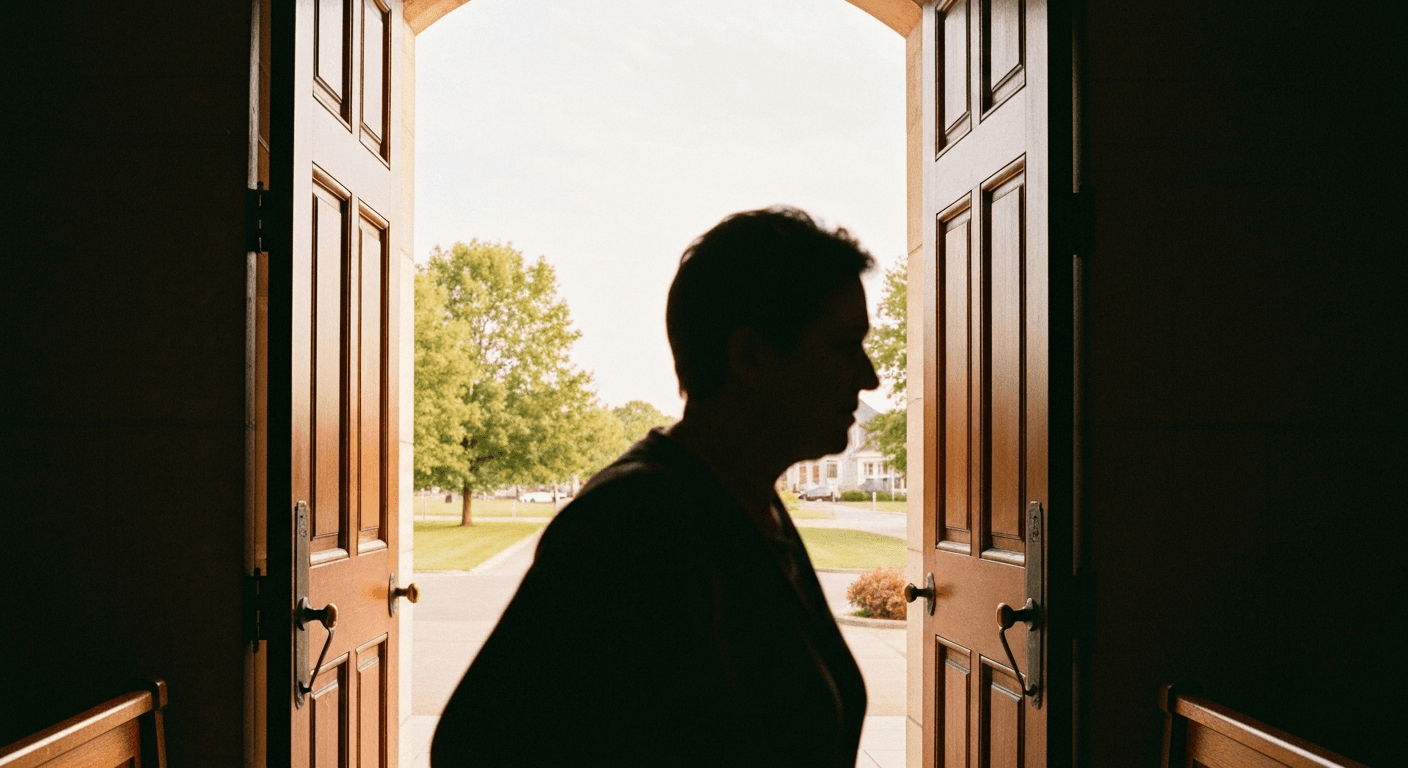
Erika arrived at Cambridge University as a self-described "very convicted Dawkins-esque atheist, raised in a mostly atheist household." She had no intention of finding faith. She was there to study it—academically, critically, at arm's length.
Then a friend dragged her to church during Fresher's Week.
Something She Couldn't Explain
"Every time I went to a service I'd feel something that I didn't feel anywhere else," Erika recalls.
She kept coming back. Not because she believed—not yet—but because something was happening that her atheist framework couldn't account for. Meanwhile, her theology degree was forcing her to engage with Christian ideas on a deeper intellectual level.
The Turning Point
After a year of wrestling with both the emotional pull of worship and the intellectual weight of theological arguments, Erika made her decision.
"This is like a really convincing way to live your life," she concluded.
The Dawkins-style atheist became a Christian. She's now pursuing an MPhil in Theology at Cambridge—not as a skeptic studying religion from the outside, but as a believer going deeper.
Part of a Larger Movement
Erika isn't alone. A 2024 report from the Bible Society found that church attendance among 18-24 year olds in the UK jumped from 4% in 2018 to 16% in 2024—a phenomenon major news outlets have called "the quiet revival."
At Holy Trinity Church in Cambridge, the congregation recently had to purchase a new building to accommodate the growing numbers. "People every Sunday, just walking in off the street," observes Elijah, a second-year English student at Jesus College.
"I've spoken to so many people at uni who, a year ago or so, just felt like 'I really need to read the Bible'... and became Christians," he says.
In the halls of one of the world's most prestigious academic institutions, a generation is discovering that faith and reason aren't enemies after all.