Confronting the Nazi Regime
Dietrich Bonhoeffer, a German theologian born in 1906 in Breslau, Germany, was confronted with a moral and spiritual crisis during the rise of the Nazi regime. His early years were marked by academic excellence and a promising career in theology. However, a transformative period in America, where he witnessed vibrant faith and racial injustice at the Abyssinian Baptist Church in Harlem, deeply impacted his views.
Resisting Injustice
In 1933, as the Nazi regime gained power, Bonhoeffer broadcast a radio address warning against the idolatry of the Führer, only to be cut off mid-speech. Despite the dangers, he helped establish the Confessing Church in 1934, opposing the Nazification of the German Evangelical Church. Bonhoeffer believed that "the Church is the Church only when it exists for others," a conviction that led him to take bold actions.
Choosing Responsibility
By 1937, he was preaching about the need for disobedience against an unjust regime, and in 1939, he chose to return to Germany from the safety of the United States. This decision was driven by a sense of responsibility to his compatriots. Bonhoeffer later became involved in the German resistance, participating in a plot to assassinate Hitler. He understood the moral complexity of his actions, acknowledging that "before God he hopes only for grace."
Imprisonment and Martyrdom
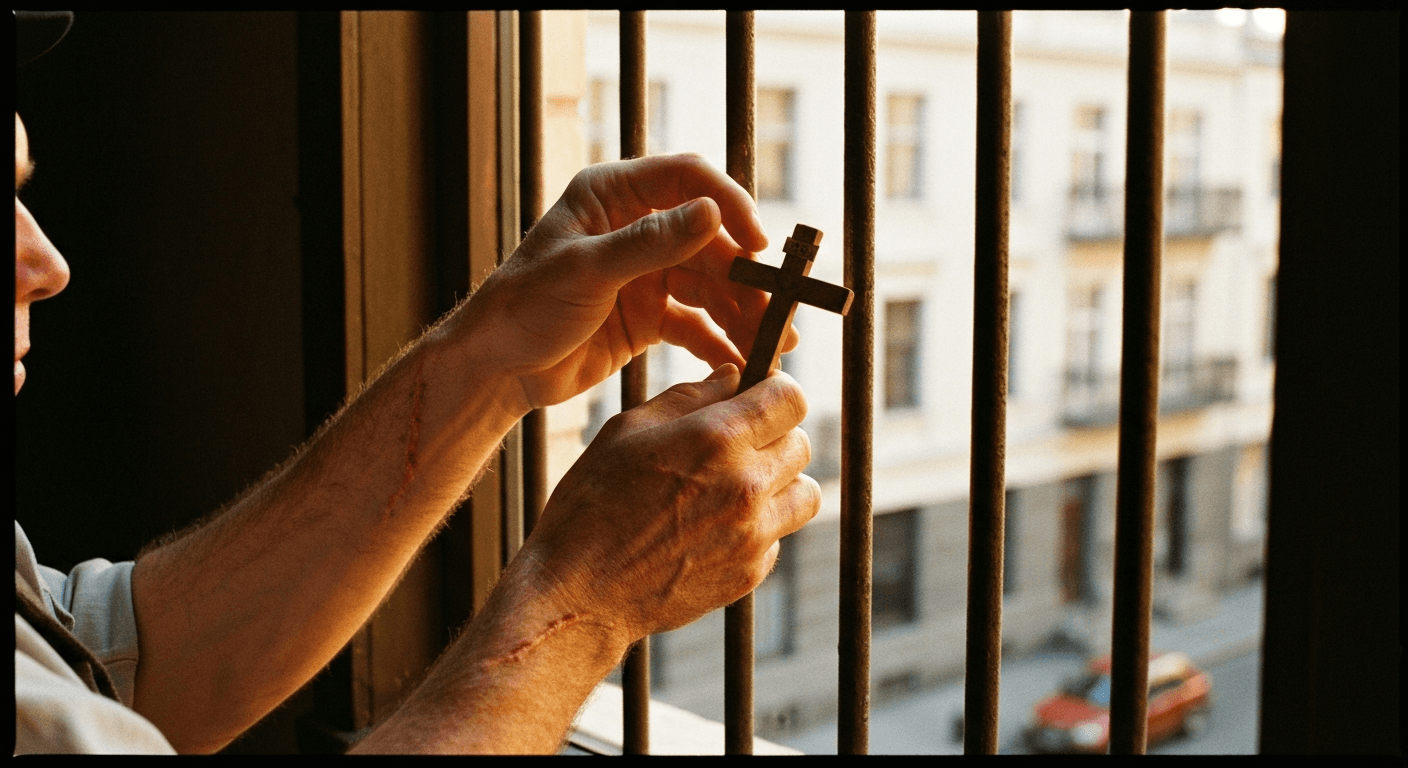
In 1943, Bonhoeffer was arrested by the Gestapo and imprisoned at Tegel Prison. Despite the harsh conditions, his faith remained steadfast. He continued to minister to fellow prisoners, drawing strength from his relationship with God. In his writings, Bonhoeffer expressed his trust in God's light amidst his own darkness.
On April 9, 1945, Dietrich Bonhoeffer was executed at Flossenbürg concentration camp. His final words, "this is for me the end, the beginning of life," echoed his unwavering hope in Christ. Though his earthly journey ended, Bonhoeffer's legacy endures through his writings, such as *The Cost of Discipleship* and *Letters and Papers from Prison*.
