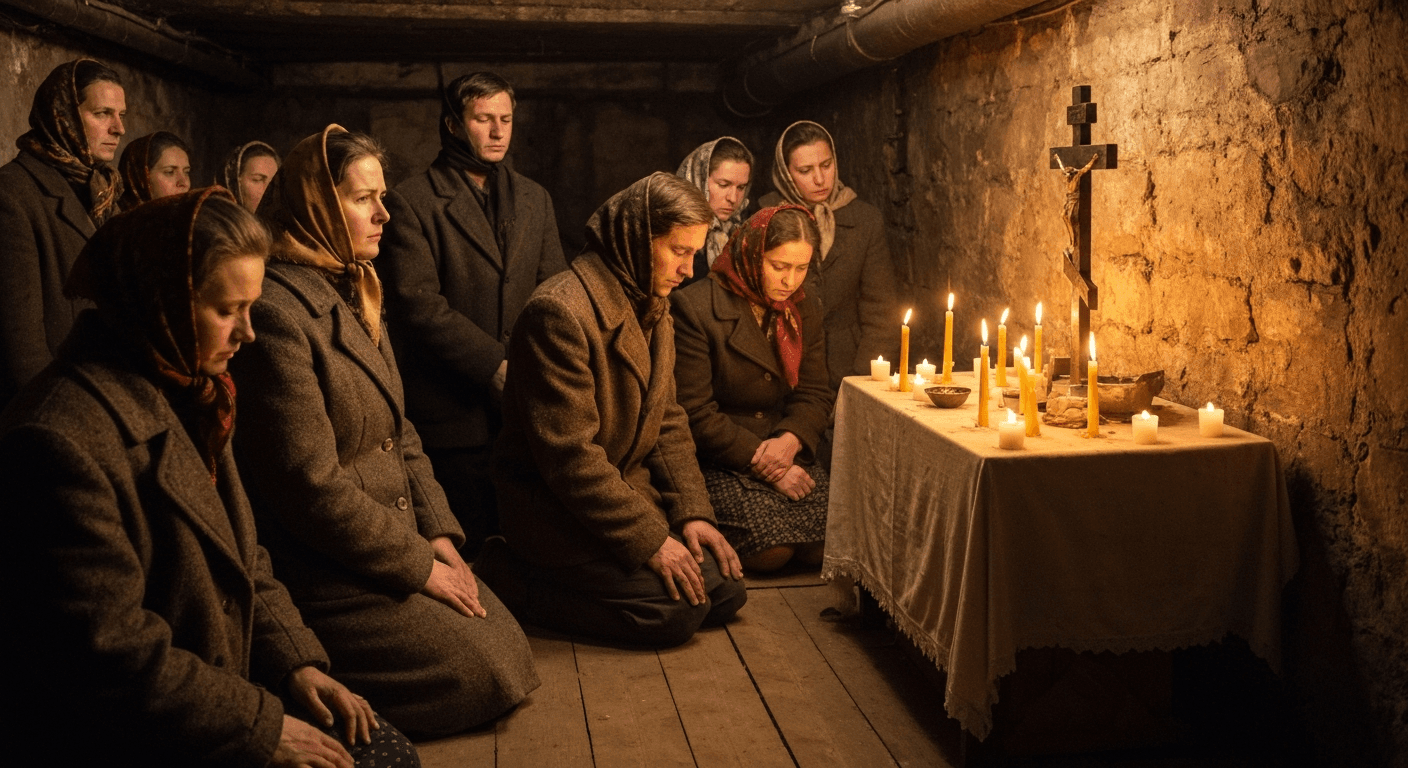
The Church Underground
In the heart of Ukraine, the Soviet regime sought to extinguish the flame of Christianity, viewing the Church as a beacon of hope and dissent. The Ukrainian Greek Catholic Church (UGCC), in particular, was targeted for eradication. In 1946, Stalin orchestrated a forced 'reunification' with the Russian Orthodox Church, leading to the UGCC's clandestine existence for decades. Despite the oppression, the faithful persisted, worshipping in secret locations like forests and homes, crafting liturgical items, and training clergy in hidden seminaries.
Defying the Regime
Among the brave was Father Adam Morawski, a Ukrainian Greek Catholic priest who defied the imposed 'synod.' In 1949, he and his family were deported to Siberia, yet he continued to minister underground until his passing in 1982. His story is one of many that illustrate the resilience of believers who endured beatings, imprisonment, and forced labor.
Tortured for Faith
Azat, a Ukrainian Baptist pastor, faced brutal torture by Russian soldiers in Mariupol. With a bag over his head and hands bound, he endured electric shocks and beatings for his faith. 'I serve God,' he declared, standing firm in his belief in the Holy Trinity despite the agony inflicted upon him.
Legacy of Resilience
The resilience of the Ukrainian Church is a testament to divine intervention. Secret ordinations of fifteen bishops occurred between 1945 and 1989, ensuring the continuity of their ministry. Priests, even in labor camps, held liturgies, administered sacraments, and baptized children, keeping the faith alive against all odds. Today, the legacy of these steadfast believers continues as churches provide aid and spiritual support amidst the ongoing conflict in Ukraine. The faith that once endured Soviet persecution now stands resilient against new challenges, a powerful reminder of God's enduring presence and the transformative power of faith.
