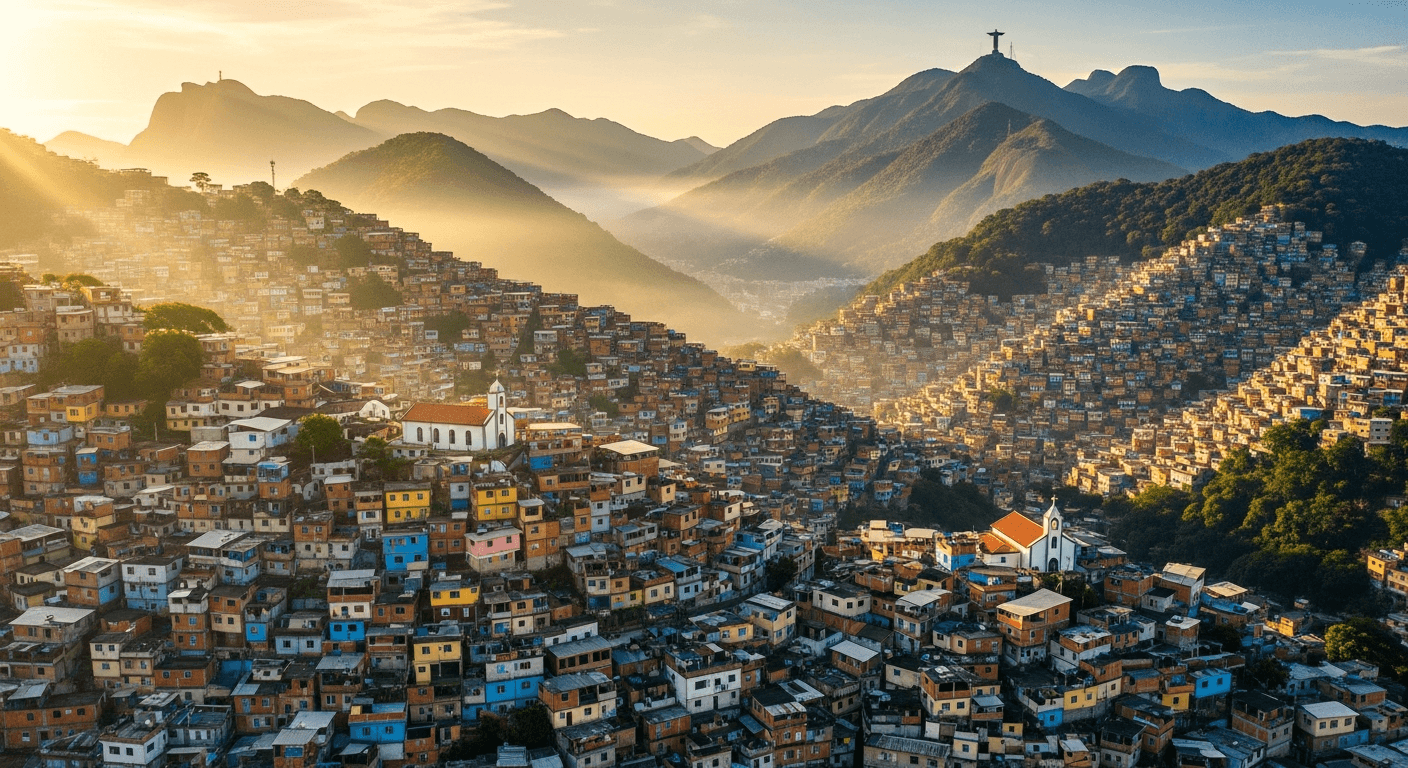
In the 1950s, the Pentecostal movement that Gunnar Vingren and Daniel Berg had planted four decades earlier began its explosive second wave in Brazil. This time, the epicenter was not the Amazon but the sprawling favelas of Sao Paulo and Rio de Janeiro.
Dignity Transforms Brazil's Poor Communities
The new Pentecostal churches offered something the poor had never experienced: dignity.
In a society where the wealthy attended grand Catholic cathedrals and the poor received charity, Pentecostal churches made everyone equal. A domestic worker could be an elder. A construction laborer could prophesy. A woman from the favela could lead worship. The Holy Spirit, they proclaimed, did not respect class distinctions.
Maria's Holy Spirit Baptism Testimony
Maria das Dores was one such believer. Born in the favelas of Rio, she worked as a housemaid for wealthy families. She felt invisible—until she encountered Jesus at a small Assembleia de Deus congregation.
"When I was baptized in the Holy Spirit," she later testified, "I felt God telling me: You are not invisible. You are my daughter. You have a voice. Use it."
Maria began sharing her faith in the narrow alleys of her community. She prayed for the sick. She counseled the desperate. She proclaimed that Jesus could break the chains of alcoholism, poverty, and despair. Small house churches multiplied.
Movement Spreads Across Brazil
The pattern repeated across Brazil. Workers who felt voiceless in society found their voice in prayer. Women marginalized by traditional culture found leadership in Spirit-led communities. The hopeless found hope.
By the 1960s, new Pentecostal denominations emerged: Church of the Foursquare Gospel (1951), Brazil for Christ (1955), God is Love (1962). Each emphasized divine healing and the power of the Holy Spirit. Each drew millions from Brazil's poorest communities.
Favelas Become Christian Strongholds
The growth was staggering. From thousands in the 1930s, Brazilian Pentecostals numbered in the millions by the 1970s. Today, Pentecostals and charismatics comprise nearly one-third of Brazil's population—over 60 million people.
What began with two Swedish immigrants obeying a prophetic word has become one of the largest Christian movements in history. And it happened not in cathedrals but in favelas—among people the world forgot but God remembered.