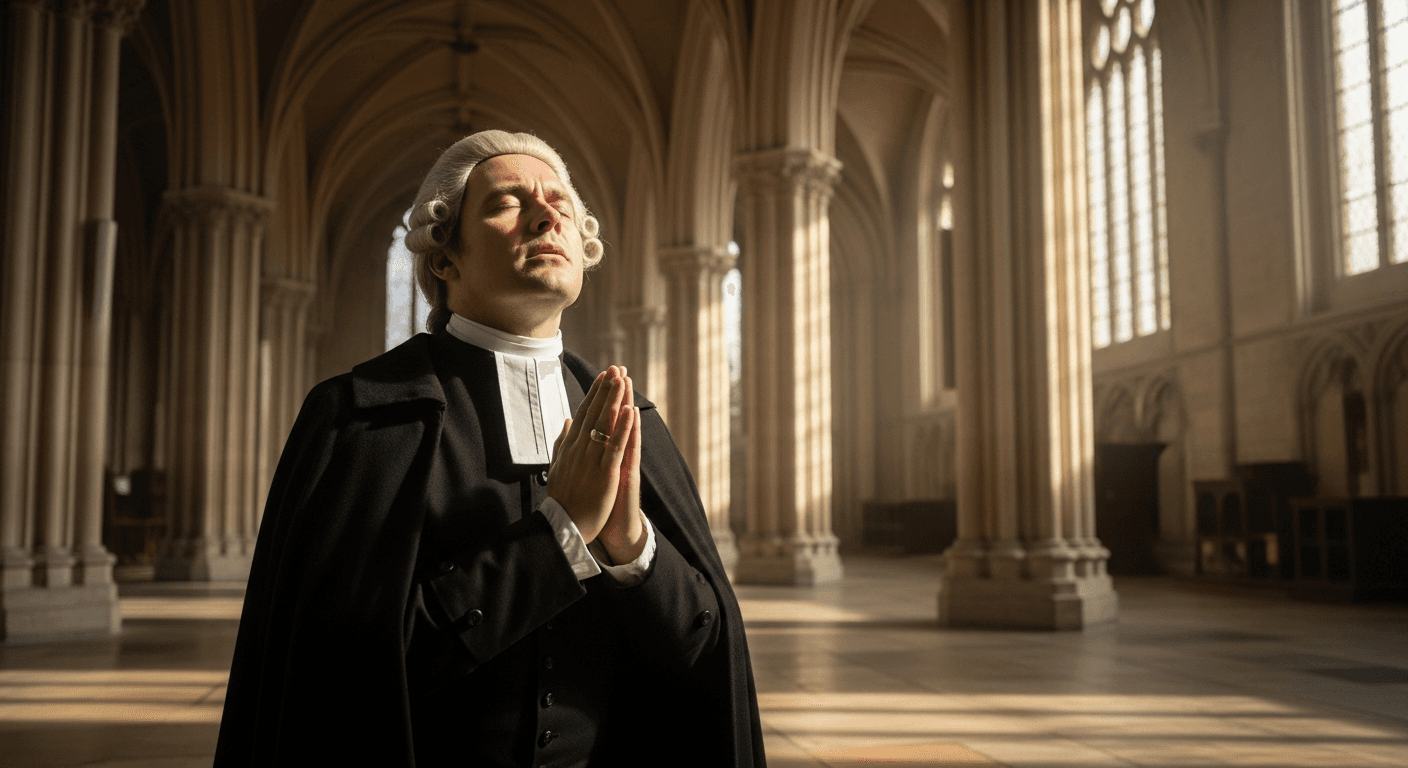
From Worldly Pursuits to Spiritual Hunger
George Whitefield's journey from a life of worldly pursuits to becoming a powerful preacher was marked by a profound transformation. Born in Gloucester, England, in 1714, Whitefield grew up in modest circumstances after his father passed away. As a young man, he indulged in activities far removed from faith, such as acting and card-playing. Despite joining the 'Holy Club' at Oxford with John and Charles Wesley, where he engaged in rigorous spiritual practices, he felt an unsettling emptiness.
The New Birth
This all changed when Charles Wesley introduced him to Henry Scougal's book, *The Life of God in the Soul of Man*, which illuminated the necessity of a spiritual rebirth. George Whitefield realized he needed a change that only God could provide. In 1735, after weeks of illness and fervent prayer, he experienced what he described as the 'new birth,' a deep and joyous transformation through faith in Jesus Christ. "The Spirit of mourning was taken from me," Whitefield later reflected, "and I knew what it was truly to rejoice in God my Savior."
Preaching With Power
Following this profound encounter with Jesus, Whitefield's life took a dramatic turn. He began preaching with a passion that was unmistakable. His first sermon was at the Church of Saint Mary de Crypt, where his words captivated many. As an itinerant preacher, George Whitefield traveled tirelessly across England and the American colonies, drawing immense crowds. His sermons, which emphasized repentance, faith, and the necessity of a personal relationship with Jesus, played a significant role in the Great Awakening, a series of revivals that swept through the American colonies.
A Far-Reaching Legacy
Whitefield's impact was far-reaching, crossing social and cultural barriers. He was one of the first preachers to address slaves, and his messages helped to unify the colonies before the American Revolution. Despite facing opposition and criticism, Whitefield remained resolute, famously stating, "The more I am opposed, the more joy I feel." His legacy continued long after his death in 1770, leaving an indelible mark on the history of evangelical Christianity.