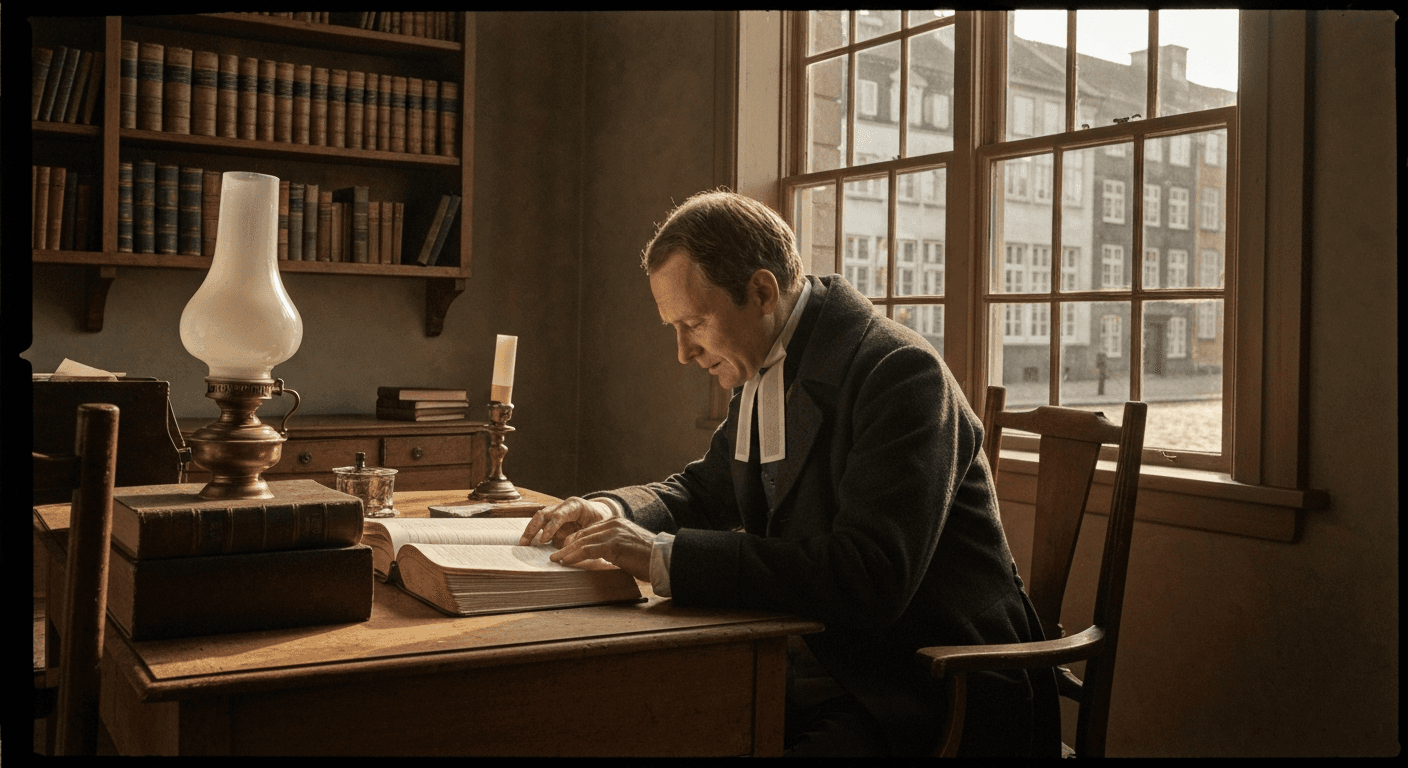
N.F.S. Grundtvig, born on September 8, 1783, in Udby, Denmark, grew up in a Lutheran household where faith and Nordic mythology intertwined. Educated in theology at the University of Copenhagen, he initially embraced rationalism, a common thread in Danish Lutheranism at the time. However, by 1805, Grundtvig found himself in a spiritual crisis, influenced by personal turmoil and the allure of Nordic legends.
Grundtvig's Christian Awakening in 1810
Around 1810, amid emotional and spiritual conflict, Grundtvig experienced a profound reconversion to Lutheranism. This 'Christian awakening' marked a pivotal shift from a rationalistic faith to one deeply rooted in the 'living word' of Scripture. He began to see Christianity not as mere doctrine but as a life-giving revelation.
Challenging Rationalistic Church Tendencies
In 1811, Grundtvig became his father's curate and began to vocalize his criticisms of the rationalistic tendencies in the church. His work, *The First World Chronicle* (1812), openly challenged these ideas, advocating for a return to the vibrant spirituality of Martin Luther. Despite facing opposition and censorship, Grundtvig continued his mission, emphasizing the importance of community and spiritual vitality in Christianity.
Transforming Denmark Through Living Faith
Jesus was at the center of Grundtvig's transformation. Through divine guidance, he developed a theology that inspired national revival, leading to the establishment of folk high schools and a renewed sense of Danish identity. His prolific hymn writing reshaped church services, and his educational reforms laid the foundation for modern adult education.
Grundtvig's story is a testament to the power of Jesus' intervention, turning personal crisis into national renewal. His emphasis on the 'living word' and community continues to inspire faith journeys today, reminding us of the transformative power of a relationship with God.