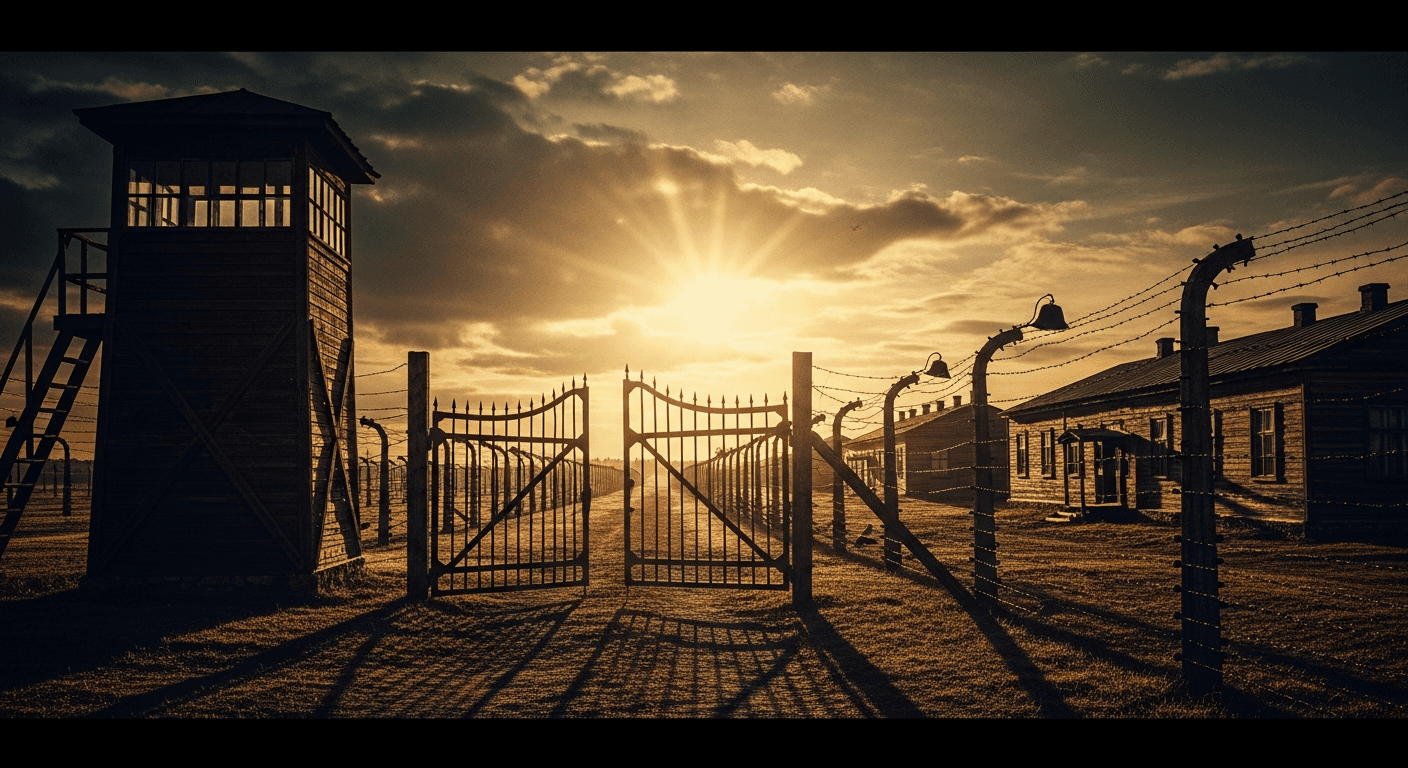
Aleksandr Solzhenitsyn entered the Soviet prison system as an atheist and emerged as one of the twentieth century's most profound Christian voices. His journey through the Gulag labor camps became the crucible in which his faith was forged.
Arrested and Stripped of Everything
In 1945, Solzhenitsyn was arrested for private criticisms of Stalin found in his personal correspondence. Sentenced to eight years in the camps, he found himself stripped of everything—career, family, freedom, future. It was in this abyss that he encountered something unexpected.
"It was granted to me to carry away from my prison years on my bent back, which nearly broke beneath its load, this essential experience: how a human being becomes evil and how good," he later wrote in The Gulag Archipelago. "In the intoxication of youthful successes I had felt myself to be infallible, and I was therefore cruel... It was only when I lay there on rotting prison straw that I sensed within myself the first stirrings of good."
Finding Faith in Prison
The transformation came gradually. Watching fellow prisoners—some who held onto faith despite unimaginable suffering—Solzhenitsyn began questioning his atheistic materialism. He witnessed ordinary people display extraordinary grace under pressure that no political ideology could explain.
"Bless you, prison, for having been in my life," he wrote with stunning gratitude. This was not Stockholm syndrome but genuine transformation. In the camps, he met believers who showed him that meaning and dignity could survive even in the most brutal conditions.
Faith Through Suffering and Purpose
After his release and subsequent exile, Solzhenitsyn articulated his faith through his writings. His Harvard Address in 1978 shocked Western audiences by diagnosing the spiritual poverty beneath material abundance. His Templeton Prize acceptance speech in 1983 summarized his understanding: "Men have forgotten God; that's why all this has happened."
Solzhenitsyn saw his suffering as purposeful—not punishment but preparation. The Soviet system designed the Gulag to break spirits, but for Solzhenitsyn, it became the place where his spirit found its true foundation. He emerged not bitter but grateful, not defeated but transformed.
Life Transformed Through Christian Witness
His Christian witness became inseparable from his literary achievement. The Gulag Archipelago stands as both historical documentation and spiritual testament. Through decades of exile and eventual return to Russia, his faith remained the bedrock of his vision for human dignity and freedom.