Helena was born around 250 AD to humble circumstances—likely an innkeeper's daughter. She became the companion (and possibly wife) of the Roman general Constantius, bearing him a son who would become Constantine the Great. When Constantius became Caesar, he set Helena aside to make a more politically advantageous marriage. For years, she lived in obscurity.
Finding Faith in Old Age
But God was not finished with Helena. When her son Constantine became emperor and legalized Christianity in 313 AD, he restored his mother to a position of honor, granting her the title Augusta Imperatrix. More importantly, Helena experienced a genuine conversion to faith in Christ—likely in her sixties.
Pilgrimage to the Holy Land
Her faith was not merely formal. Despite her advanced age, Helena undertook an arduous pilgrimage to the Holy Land around 326 AD. The church historian Eusebius records that she went "with the enthusiasm of youth, that she might pay the debt of pious reverence to the land from which the light of salvation first began to shine."
Discovering the True Cross
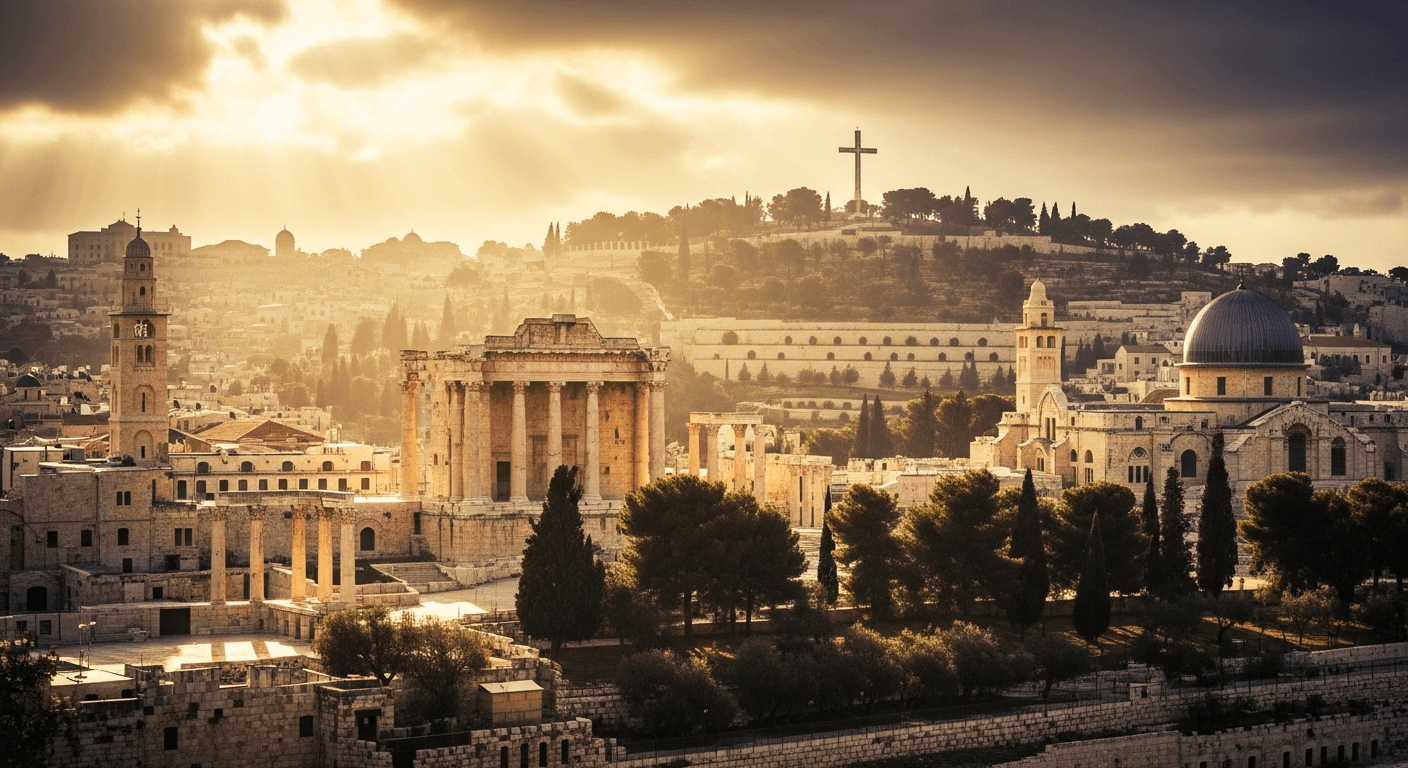
In Jerusalem, Helena devoted herself to finding the sacred sites and building churches upon them. According to tradition, she discovered the True Cross of Christ buried beneath a pagan temple. She also funded the construction of the Church of the Nativity in Bethlehem and the Church of the Ascension on the Mount of Olives.
A Life Transformed by Faith
But Helena's faith showed most clearly in her character. Eusebius wrote that despite her imperial rank, she dressed simply, mingled with common worshipers, and gave generously to the poor, soldiers, and prisoners. She died around 330 AD, revered as a saint whose late-life conversion bore extraordinary fruit—proving it is never too late to serve God's purposes.