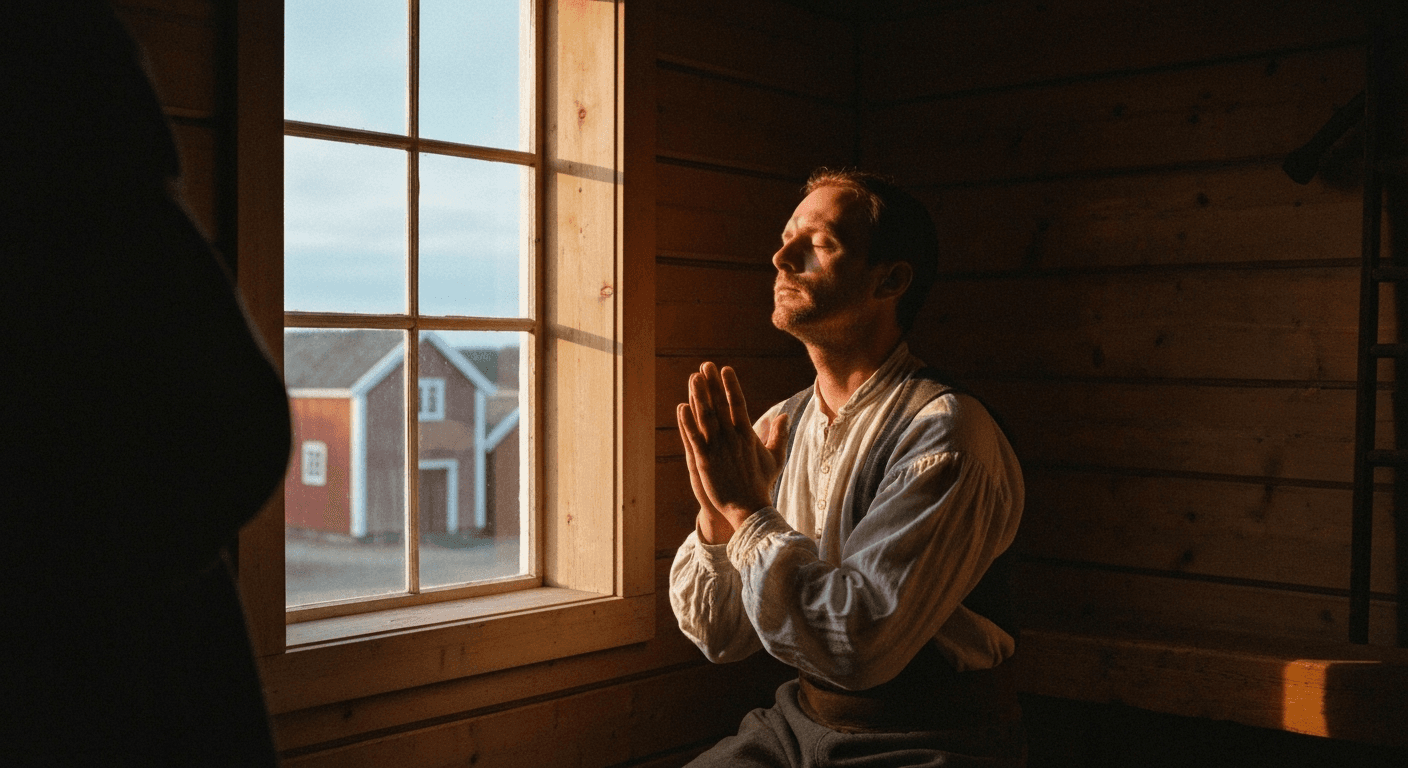
Born on April 3, 1771, in Rolvsøy, Østfold county, Norway, Hans Nielsen Hauge was a humble farmer and skilled carpenter. Raised in a devout family, he was the fifth of ten children and felt a deep longing for assurance in his faith. Despite his religious upbringing, Hauge felt a deep dissatisfaction with his spiritual life, yearning to be firmly rooted in his relationship with Jesus Christ.
God Speaks Through Hymn Singing
On April 5, 1796, two days after his 25th birthday, Hauge experienced a profound change. While working in a field near his farm in Tune, he sang the hymn 'Jesus, I Long for Thy Blessed Communion.' In his own words, 'Sometimes I fell on my knees and prayed almighty God for the sake of His Son to establish me on the spiritual rock, Christ Jesus.' It was during this moment of song and prayer that Jesus intervened, filling him with a sense of peace and purpose.
Called to Preach Across Norway
This encounter ignited in Hauge a fervent desire to share his experience and the message of Jesus with others. He began traveling across Norway, preaching in homes and organizing gatherings, despite the challenges posed by the strict religious laws of the time. His teachings emphasized the importance of a personal relationship with Jesus and the practical application of faith in everyday life.
Transforming Lives and Society
Hauge's ministry not only revitalized spiritual life in Norway but also inspired social and economic reforms. He encouraged entrepreneurship and community development, believing that faith in Jesus should transform every aspect of life. Through his writings and influence, countless lives were touched, leading to a widespread revival. Hans Nielsen Hauge's legacy is a testament to how Jesus can use even the simplest of moments—a hymn sung in a field—to bring about profound change.