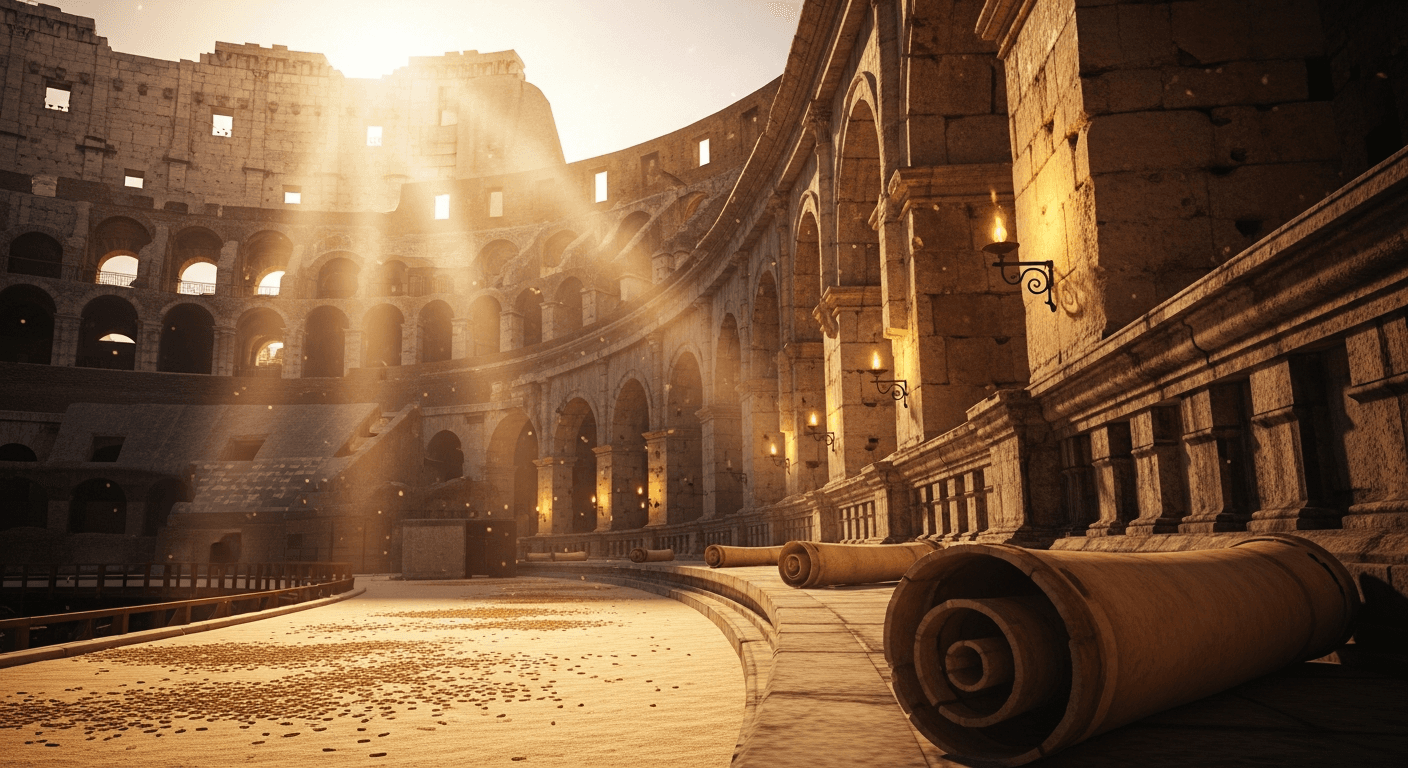
Ignatius, Bishop of Antioch, was a convert who rose to lead the church in the very city where believers were first called Christians. Tradition holds that he may have been a disciple of the Apostle John himself. In approximately 107-110 AD, during the reign of Emperor Trajan, Ignatius was arrested and sentenced to death in Rome's arena.
Journey to Christian Martyrdom
The journey from Antioch to Rome became an extraordinary pilgrimage. Chained to Roman soldiers he called "wild beasts," Ignatius was nevertheless permitted to meet with Christian communities along the way. From these encounters, he wrote seven letters that survive to this day—pastoral epistles filled with theological depth and burning devotion.
God's Wheat Ground by Lions
Most remarkable was his letter to the Roman Christians. Fearing they might use their influence to secure his release, Ignatius pleaded with them not to interfere with his martyrdom:
"I am God's wheat, and I am ground by the teeth of wild beasts so that I may become Christ's pure bread. Rather, coax the beasts, that they may become my tomb and leave no part of my body behind... Then I shall truly be a disciple of Jesus Christ, when the world will not even see my body."
His desire for martyrdom was not a death wish but a longing for complete union with Christ: "It is better for me to die in Christ Jesus than to be king over the ends of the earth. I seek him who died for our sake. I desire him who rose for us. The pains of birth are upon me."
Ignatius also wrote: "Suffer me, my brethren; hinder me not from living, do not wish me to die. Do not give to the world one who desires to belong to God, nor deceive him with material things. Suffer me to receive the pure light; when I shall have arrived there, I shall become a human being."
Final Witness in Rome's Arena
In Rome, Ignatius received his desire. The Flavian amphitheater—later known as the Colosseum—became the site of his final witness. The lions that consumed his body could not touch the faith that had carried him from Antioch to glory.
Ignatius was the first Christian writer to use the term "catholic" to describe the universal Church: "Wherever Jesus Christ is, there is the Catholic Church."
