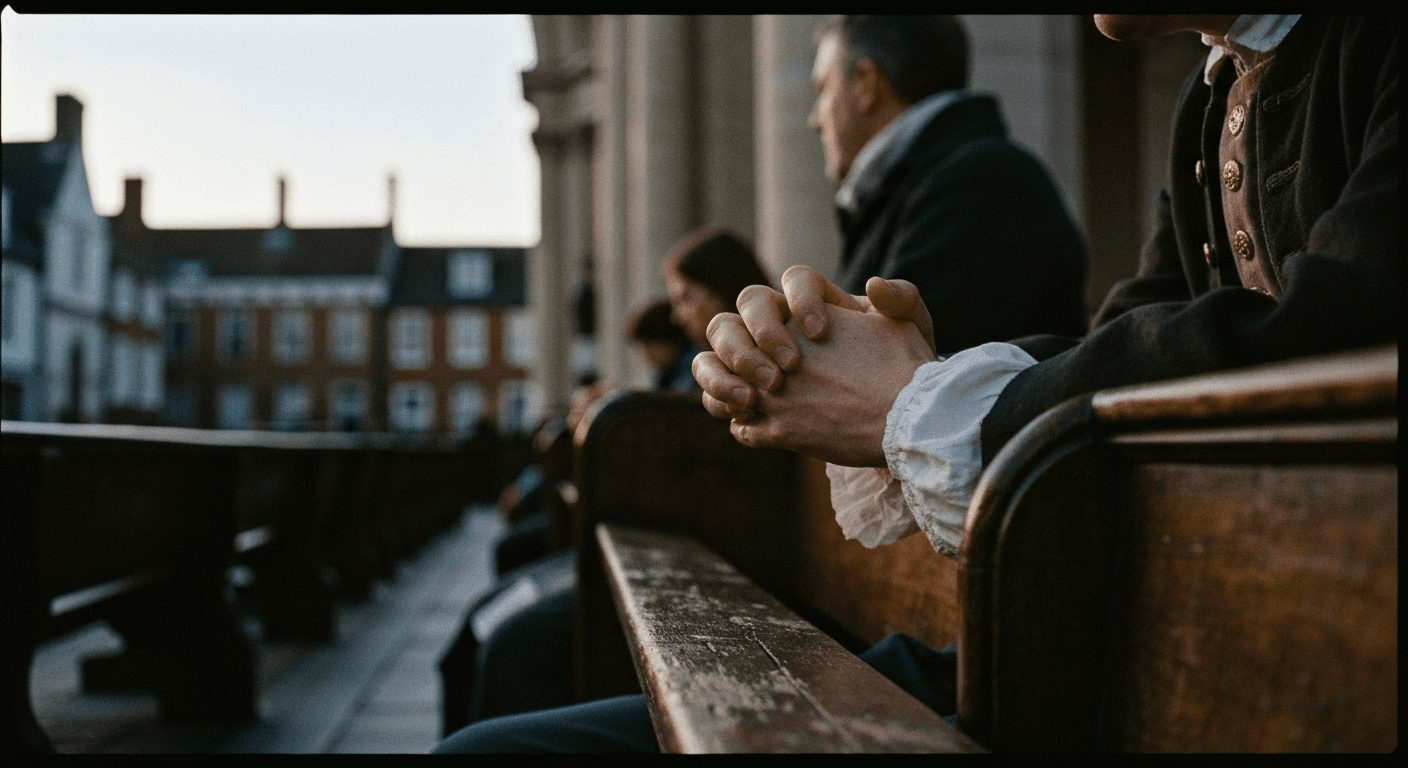
A Nonconformist Transforms Christian Worship
Isaac Watts, born on July 17, 1674, in Southampton, England, grew up in a household deeply rooted in nonconformist religious beliefs. His father, Isaac Watts Sr., faced imprisonment for his convictions, instilling in young Isaac a resilience and commitment to faith. Educated in Latin, Greek, and Hebrew, Watts was well-equipped for his future ministry.
In 1698, Watts became an assistant minister at Mark Lane Independent Chapel in London, later serving as its pastor. However, the traditional singing of Psalms in his church left him disheartened, feeling it lacked the ability to inspire true worship. When he voiced his concern to his father, he was challenged to create something better. This pivotal moment ignited his journey to revolutionize church music.
Watts began composing hymns that infused the Psalms with a distinctly Christian perspective. He explained, "Where the Psalmist describes religion by the fear of God, I have often joined faith and love to it. Where he speaks of pardon of sin through the mercies of God, I have added the merits of a Saviour." His approach was to bring 'New Testament light to the psalms,' making them resonate with the heart of worshippers.
One of his most famous hymns, "When I Survey the Wondrous Cross," exemplifies his ability to express profound theological truths in simple language. Watts' hymns were not just songs; they were vehicles of spiritual reflection and devotion. Despite facing criticism for deviating from traditional Psalmody, his hymns gradually gained acceptance and have stood the test of time.
Watts' life took a significant turn when he was invited to stay with the Abney family in 1712. What began as a short visit extended to a 36-year residence, providing him a stable environment to continue his work until his death in Stoke Newington on November 25, 1748.
Isaac Watts' legacy as the 'Father of English Hymnody' is a testament to his faith and creativity. His contributions to hymn writing have had a lasting impact, leading congregations into vibrant worship and bringing glory to Jesus, whose sacrifice he so passionately celebrated in his work.