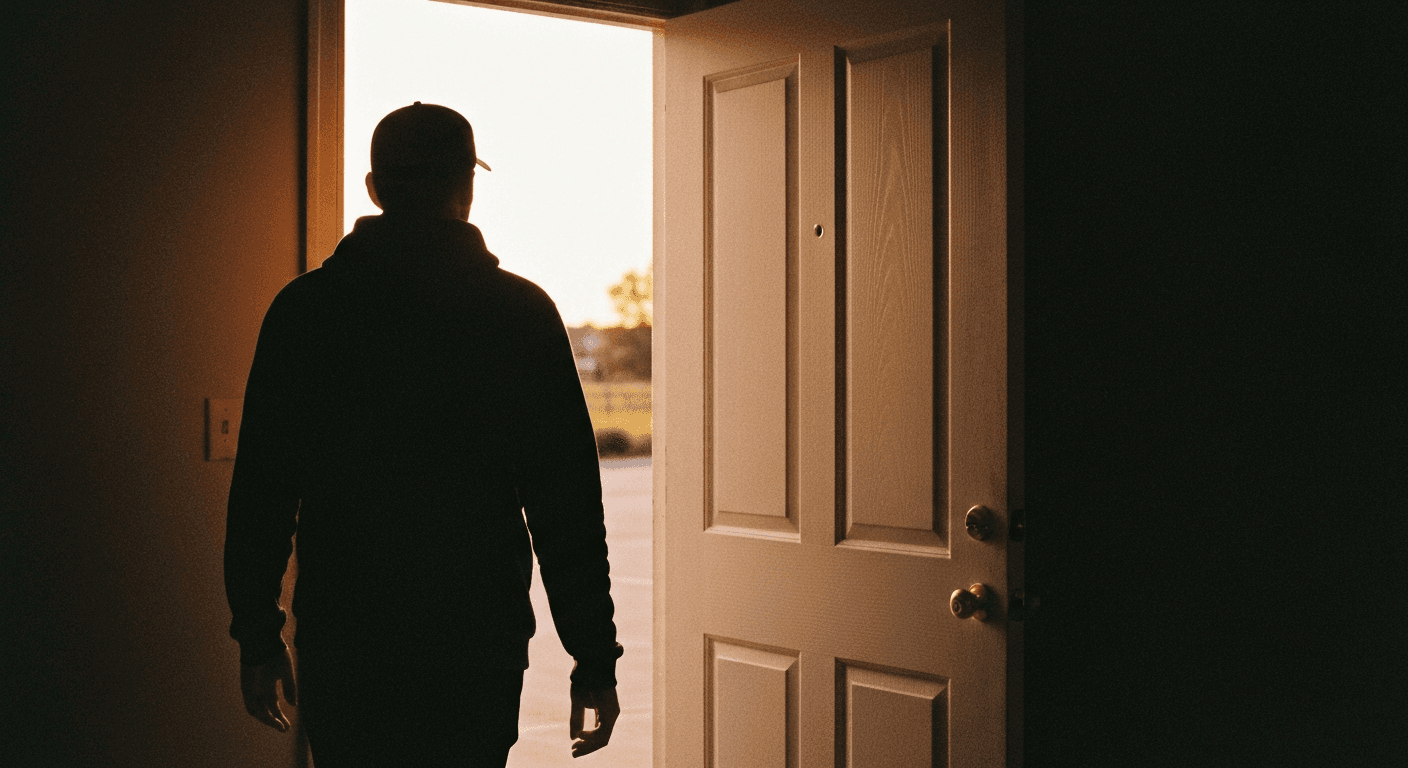

James Patterson owned a print shop in Tulsa, Oklahoma. He had built it from nothing — started with one second-hand printer in a rented garage and grew it to a twelve-person operation. He was fifty-three, married, three grown children, and the kind of man who solved every problem by working harder.
Cancer does not care how hard you work.
The Diagnosis
Colorectal cancer. Caught at a routine colonoscopy — the one his wife had nagged him about for two years before he finally went. The doctor said the words and James did what he always did: he made a plan. He would research the best oncologists. He would get a second opinion. He would attack this the way he attacked every problem in his business: with strategy, discipline, and relentless effort.
The Fear
The plan lasted about a week.
On day eight, while James was sitting in his office going through treatment cost estimates, the fear arrived. Not gradually. All at once. Like a wave that pulls you under before you know you are in the water.
His chest tightened. His vision blurred. He gripped the edge of his desk and for a full minute genuinely believed he was dying. Not from cancer — from the sheer physical force of the terror.
The panic attacks came daily after that. Sometimes twice a day. His blood pressure spiked. He could not sleep. He lost twelve pounds in two weeks. His hands shook so badly he could not hold a coffee mug.
At his next oncology appointment, his doctor was blunt: "James, the stress is making your condition worse. Your cortisol levels are through the roof. Your body cannot fight the cancer and the fear at the same time. You need to find a way to let one of them go."
James wanted to argue. He wanted to say, "Tell me how to stop being afraid of dying and I will do it." But he had no argument. The doctor was right. The fear was the real enemy. The cancer was just the battlefield.
The Encounter
It happened during James's third chemotherapy session. He was sitting in the infusion chair, scrolling through cancer survival statistics on his phone — a habit he knew was toxic but could not stop — when the janitor came in to empty the bin.
The janitor was an older man, maybe sixty-five, with a calm face and a way of moving that suggested he was in no rush. He noticed the chemo IV. He paused.
"Same one I had," he said, nodding at the drip. "Eight years ago. Colorectal."
James looked up. "You had it?"
"Had it. Beat it. Still here." The man leaned on his mop. "But the cancer was not the hardest part. The fear was. Fear nearly killed me before the cancer got the chance."
James felt something crack inside his chest. "How did you get past it?" he asked.
The janitor smiled. "I stopped fighting it. I stopped trying to be brave. I told God I was terrified and I could not do it and I needed Him to hold me up because I had nothing left. And He did. He held me." The man paused. "God held me too."
Four words. God held me too.
James sat in the infusion chair after the janitor left and something settled in him. Not a dramatic moment. No lightning bolt. Just a quiet settling — like a lake going still after a storm. The fear did not explode out of him. It receded. Slowly, steadily, like a tide going out.
The Healing
James completed his treatment over four months. The chemotherapy worked. His scans improved. His oncologist eventually used the word clear.
But the turning point was not the clear scan. It was a janitor with a mop and four words. God held me too.
"I spent so much energy fighting the fear," James said. "Trying to be strong. Trying to figure it out. Trying to strategy my way through terror. And the breakthrough came from a man emptying a bin. God has a sense of humour."
What This Means for You
If the fear is making you sicker — if your doctor has told you the stress is affecting your treatment, if your body is fighting on two fronts and losing on both — you have permission to stop fighting the fear.
You do not have to beat it. You do not have to be brave. You do not have to figure it out or strategy your way through it. You just have to tell God the truth: I am terrified. I cannot do this. Hold me.
And He will. Because He has done it before. For a janitor in Tulsa. For a print shop owner. For people with no platform and no story and no audience. God held them too.
He will hold you.