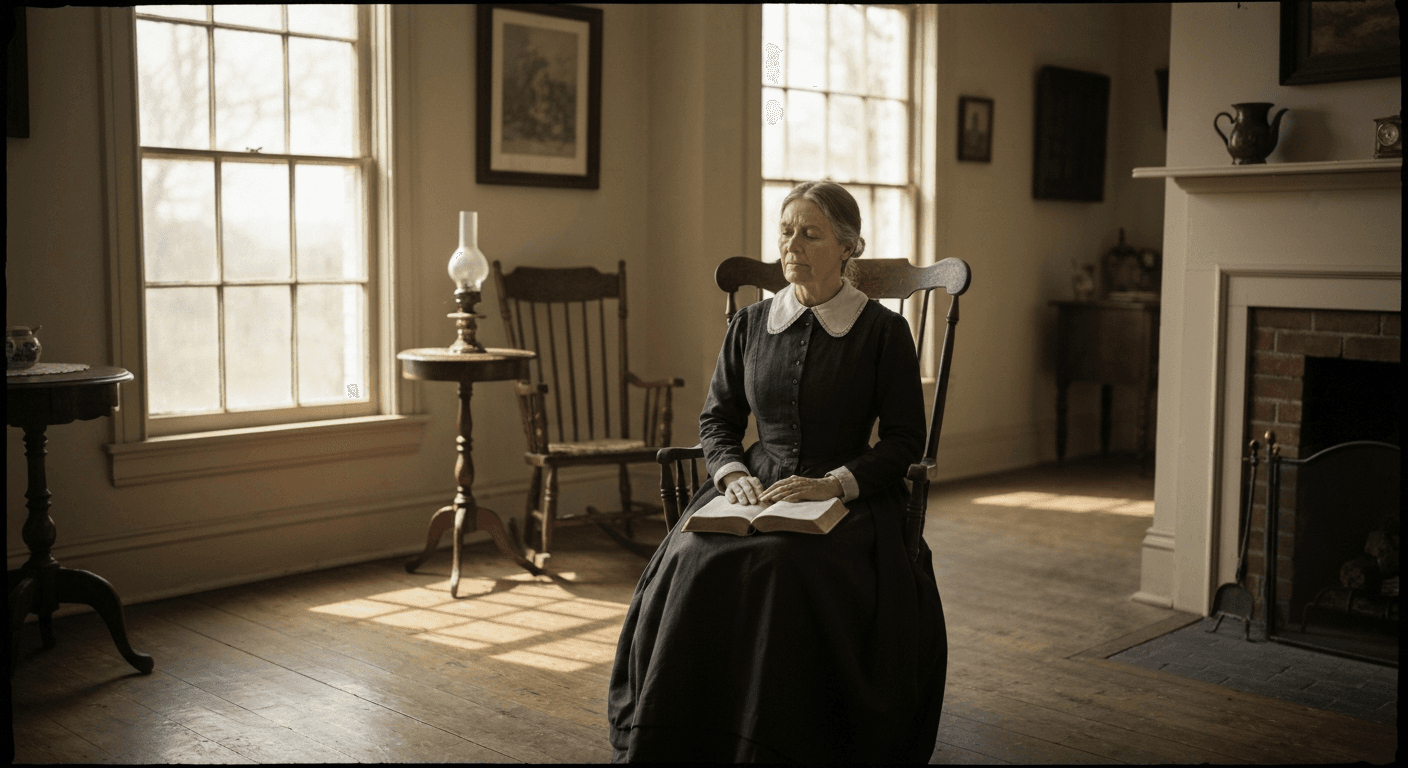
For ten years, Phoebe Palmer sought the experience of entire sanctification - that complete surrender to God that John Wesley had taught was possible for every believer. Yet assurance eluded her. She had been converted, she loved God, she served faithfully. But she could not claim the "second blessing" because she could not affirm the emotional witness of the Spirit that Wesley described.
The deaths of her children deepened her spiritual hunger. In her grief, she wrestled with God and with her own understanding of holiness. Then, on July 26, 1837 - what she would forever call her "day of days" - everything changed.
Phoebe Palmer's Day of Days
"Last evening, between the hours of eight and nine," Phoebe wrote, "my heart was emptied of self, and cleansed of all idols, from all filthiness of the flesh and spirit, and I realized that I dwelt in God, and felt that he had become the portion of my soul, my ALL IN ALL."
After that transformative evening, she wrote: "I felt that I would rather die than knowingly sin against God. I have enjoyed the consciousness that He is the supreme object of my affections."
The Shorter Way to Holiness
From this experience, Phoebe developed what became known as "altar theology" - a simpler pathway to sanctification. If Christ is the altar, she reasoned from Exodus 29:37, and the altar sanctifies the gift, then any soul who fully places themselves upon the altar of Christ is instantly sanctified. No emotional confirmation needed - only faith in God's promises and willingness to testify.
Sparking the Holiness Revival
This "shorter way" to holiness revolutionized spiritual experience for countless thousands. Phoebe's Tuesday Meetings for the Promotion of Holiness spread across America. In her lifetime, she spoke to over 100,000 people and sparked a revival that brought nearly a million into the church. Her theology paved the way for the Church of the Nazarene, other holiness denominations, and eventually Pentecostalism itself.


