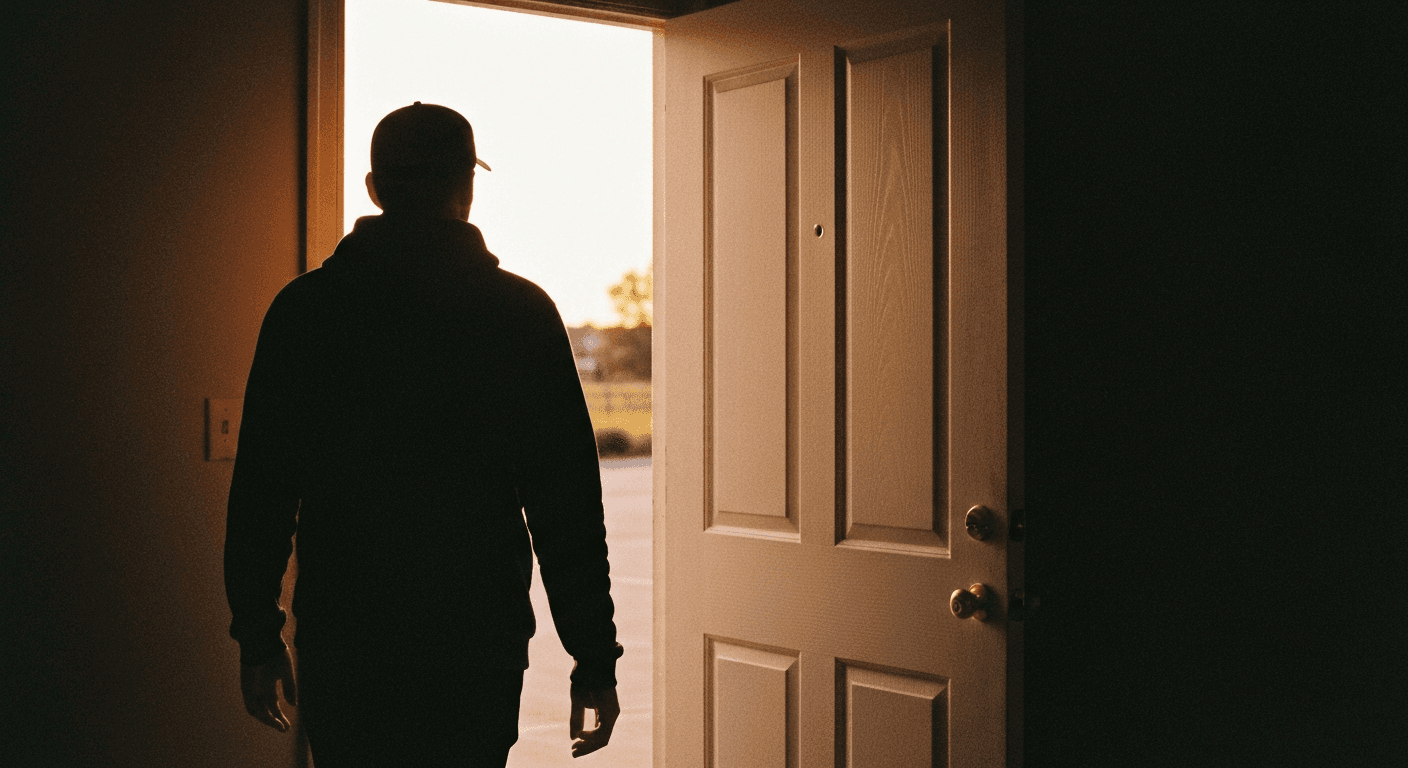

Robert Diaz had served twenty-two years in the United States Army. He had deployed three times. He had been shot at, mortared, and caught in an IED blast that left shrapnel in his left shoulder. He had received a Bronze Star and a Purple Heart. He had survived things that most people only see in movies.
When he retired to San Antonio, Texas, he thought the hardest part of his life was behind him.
He was wrong.
The Diagnosis
Stage 4 prostate cancer. The oncologist at the VA Hospital was direct — the cancer had already spread beyond the prostate. Treatment options existed but the prognosis was serious.
Robert sat in the chair and felt something he had not felt in twenty-two years of military service. Not since his first deployment. Not since the IED. Not since any of it.
Fear. Deep, nauseating, total fear.
The Fear
Robert tried to fight it. That was what he knew how to do. He approached the fear the way he had approached every enemy in his career: head on, with discipline and force.
He read everything about prostate cancer. He memorised his treatment protocol. He made spreadsheets of his appointments. He exercised. He ate clean. He woke up early and tried to will the fear away with routine and structure.
It did not work.
The fear adapted. It found the cracks in his armour. It hit him in the shower. It hit him when Lucia, his wife, fell asleep and he was alone with his thoughts. It hit him at the VA pharmacy, standing in a queue of other veterans, wondering which of them were also pretending to be fine.
"I had been trained to fight everything," Robert said. "But nobody trains you to fight something you cannot see, cannot shoot, cannot outmanoeuvre. The fear was inside me. I could not get away from it."
His wife watched him deteriorate. She watched the strongest man she knew become someone who could not sit through a dinner without excusing himself to go stand in the backyard and breathe.
The Encounter
Lucia called Robert's friend, a man named Dale who ran a Saturday morning men's prayer breakfast at their church. Dale called Robert. Robert said he was fine. Dale said, "No, you are not. Come Saturday."
Robert went. He did not want to go. He sat at a table with eight other men — two of them also veterans, one a retired police officer, the rest ordinary men with ordinary lives. They ate eggs and drank bad coffee and someone read a passage from Psalms.
Then Dale said, "Robert has something he needs to say."
Robert had not planned to speak. He opened his mouth to say he was fine — and instead, he broke. For the first time since the diagnosis. In front of eight men he barely knew. He put his face in his hands and wept.
"I am terrified," he said. "I am a soldier and I am terrified and I cannot make it stop."
Those men did not try to fix him. They did not offer advice. They stood up, walked around the table, put their hands on his shoulders, and prayed. Not eloquent prayers. Short, direct, honest prayers. "God, take the fear from our brother."
Robert felt something release. He described it as a knot in his stomach — a knot that had been there for six weeks — untying itself. Not quickly. Slowly. Like a fist unclenching one finger at a time. By the time the men said "Amen," the knot was gone.
The Healing
Robert is still in treatment. His oncologist is cautiously optimistic. The numbers are moving in the right direction. But Robert will tell you that the healing that matters most already happened — on a Saturday morning, at a folding table, in a church fellowship hall that smelled like coffee and scrambled eggs.
The fear has not come back. Not before scans. Not before appointments. Not in the middle of the night. The cancer is still something he is fighting. But the fear is not something he carries anymore.
"I thought surrendering was weakness," Robert said. "Twenty-two years in the Army taught me that. But those men taught me something different. Surrender is not giving up. Surrender is putting it in the hands of Someone who can actually do something about it."
What This Means for You
If you are the kind of person who fights everything — if you have been strong your whole life and the cancer diagnosis has exposed a fear you did not know you had — you are not weak. You are human.
And the bravest thing you will ever do is not fight harder. It is sit at a table with people who love you and say the words: I am terrified. I cannot do this alone.
Robert Diaz earned a Bronze Star for courage under fire. But the most courageous thing he ever did was cry in front of eight men at a prayer breakfast and let them carry what he could not carry himself.
You were not designed to carry this alone. Let someone in. Let God in. The fear does not survive surrender.