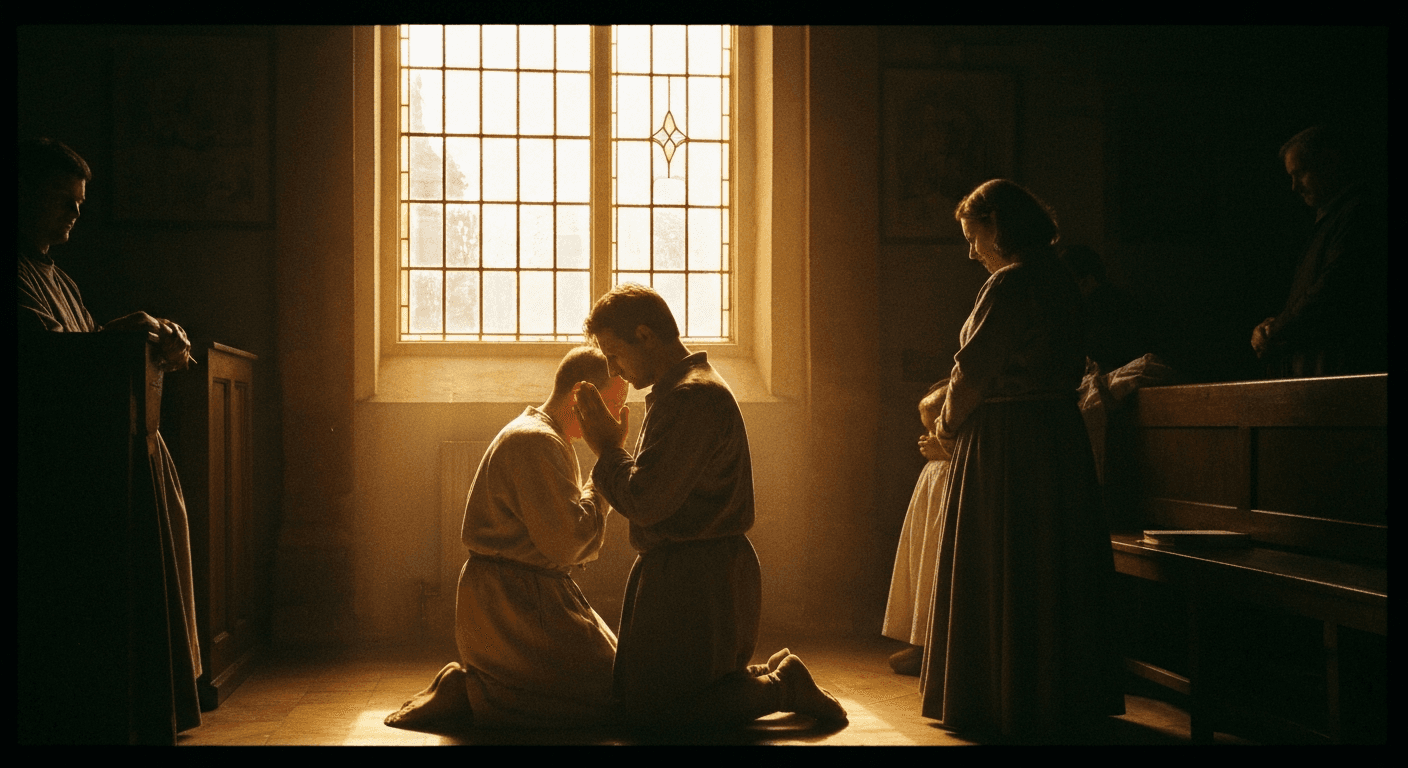
In the early fourth century, a young captive woman named Nino arrived in the Kingdom of Iberia—what we now call the nation of Georgia. She had been taken from her home in Cappadocia and brought to this pagan land as a slave. But she carried something no chains could bind: faith in Jesus Christ.
According to tradition, Nino had received a vision of the Virgin Mary, who gave her a cross made from grapevines and instructed her to travel to Iberia to spread the Christian faith. Now, as a captive, she found herself in the very place God had shown her.
The Captive Woman's Ministry
Nino lived simply, praying constantly and speaking of her God to anyone who would listen. She slept on a bed of leaves and fasted regularly. Word spread of the strange foreign woman and her powerful prayers.
Miraculous Healings Transform the Kingdom
When a sick child was brought to her, Nino prayed—and the child was healed. Then Queen Nana herself fell gravely ill. After all other remedies failed, she was carried to Nino's humble dwelling. Nino placed the queen on her bed of leaves, prayed in the name of Christ, and Nana was healed. The queen became a believer.
But King Mirian III remained skeptical—until one day while hunting, he became lost in sudden darkness. In desperation, having called on his pagan gods without answer, he prayed to "Nino's God." Immediately, light returned, and he found his way home.
Christianity Comes to Georgia
"The God who delivered me from darkness is the true God," Mirian declared. Around 326 AD, he made Christianity the official religion of Georgia—making it one of the first nations to officially adopt the faith, even before the Roman Empire.
Saint Nino's Lasting Legacy
Saint Nino continued her missionary work until her death around 340. Her tomb is still venerated at the Bodbe Monastery in eastern Georgia, and the grapevine cross she carried remains a symbol of Georgian Christianity to this day.