Simone Weil possessed one of the most brilliant and demanding minds of the twentieth century. A French philosopher, mystic, and political activist, she was drawn irresistibly toward Christ yet never joined the Church. Her journey represents one of the most remarkable spiritual odysseys in modern history.
Brilliant Mind Seeks Embodied Truth
Born in Paris in 1909 to agnostic Jewish parents, Weil showed extraordinary intellectual gifts from childhood. By her teens she had mastered Greek, Latin, and several modern languages. She studied at the Ecole Normale Superieure and became a philosophy teacher—but she was never content with merely academic knowledge.
Weil lived her convictions. When workers were suffering, she left teaching to labor in factories, experiencing firsthand the "affliction" of the industrial proletariat. When Spain's civil war broke out, she joined the Republican cause. Her search for truth was embodied, costly, never abstract.
Mystical Encounter with Christ
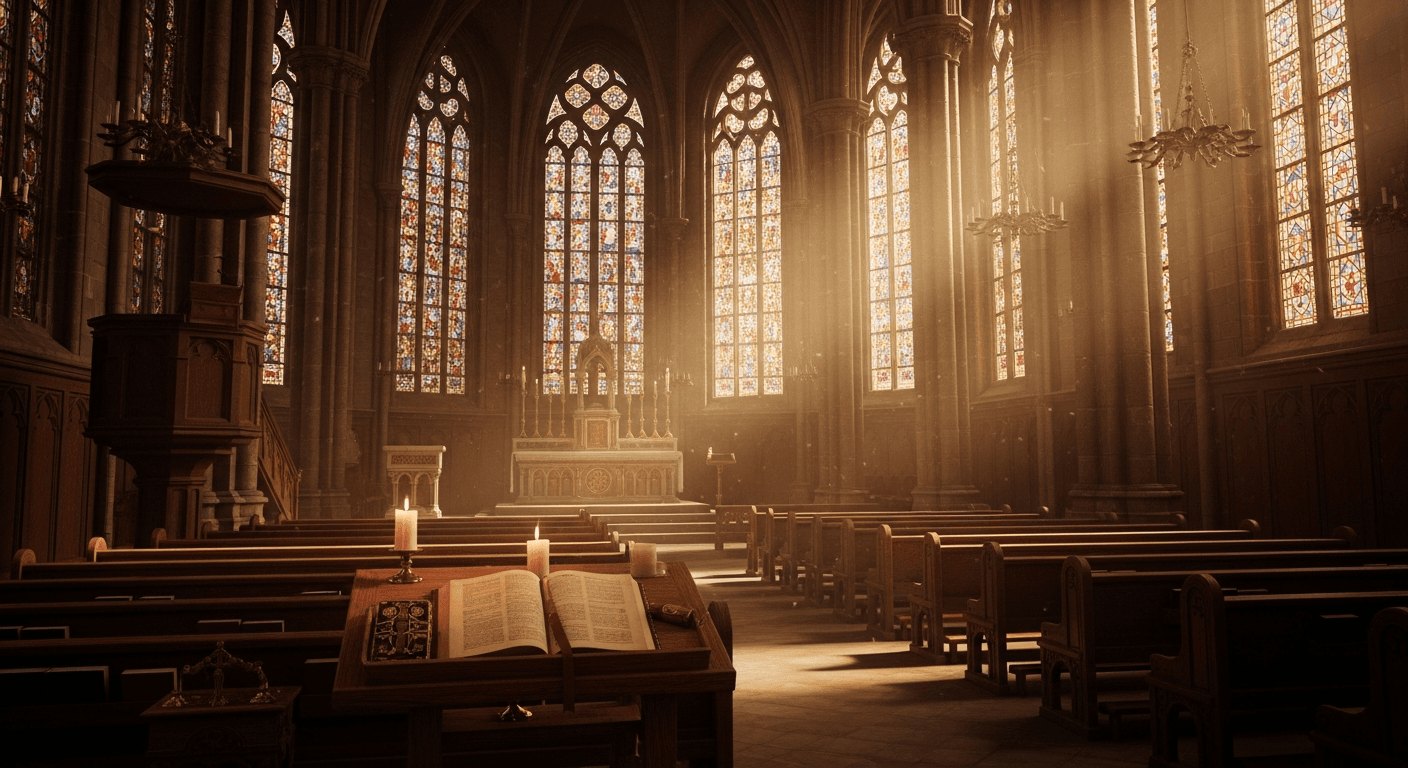
The mystical experiences began in 1937. Visiting the Romanesque chapel at the Benedictine abbey of Saint-Pierre de Solesmes during Holy Week, while suffering from severe migraines, she encountered Christ with an intensity that transformed everything: "Christ himself came down and took possession of me... I had never foreseen the possibility of that, of a real contact, person to person, here below, between a human being and God."
Later, while reciting George Herbert's poem "Love," she described another encounter: "Christ came down and took me." These were not metaphors for Weil—they were direct, personal experiences of divine presence.
Waiting at the Threshold
Yet she refused baptism. Partly this reflected solidarity with the unbaptized, those outside the Church through no fault of their own. Partly it expressed her radical intellectual honesty—she could not join an institution that had, as she saw it, used force to spread faith. She described herself as standing on the threshold.
Her writings—"Gravity and Grace," "Waiting for God," "The Need for Roots"—combine rigorous philosophy with luminous mysticism. She explored the meaning of affliction, the soul's attention to God, the relationship between force and justice.
A Legacy of Spiritual Influence
Weil died in 1943 at thirty-four, weakened by tuberculosis and her refusal to eat more than French rations during the war. The coroner ruled it "suicide by starvation," though friends described it as solidarity carried to the extreme.
Her influence has been immense—on theologians, philosophers, writers, and seekers. Albert Camus called her "the only great spirit of our times." She remains on the threshold, calling others to encounter the God who came down and took possession of her.