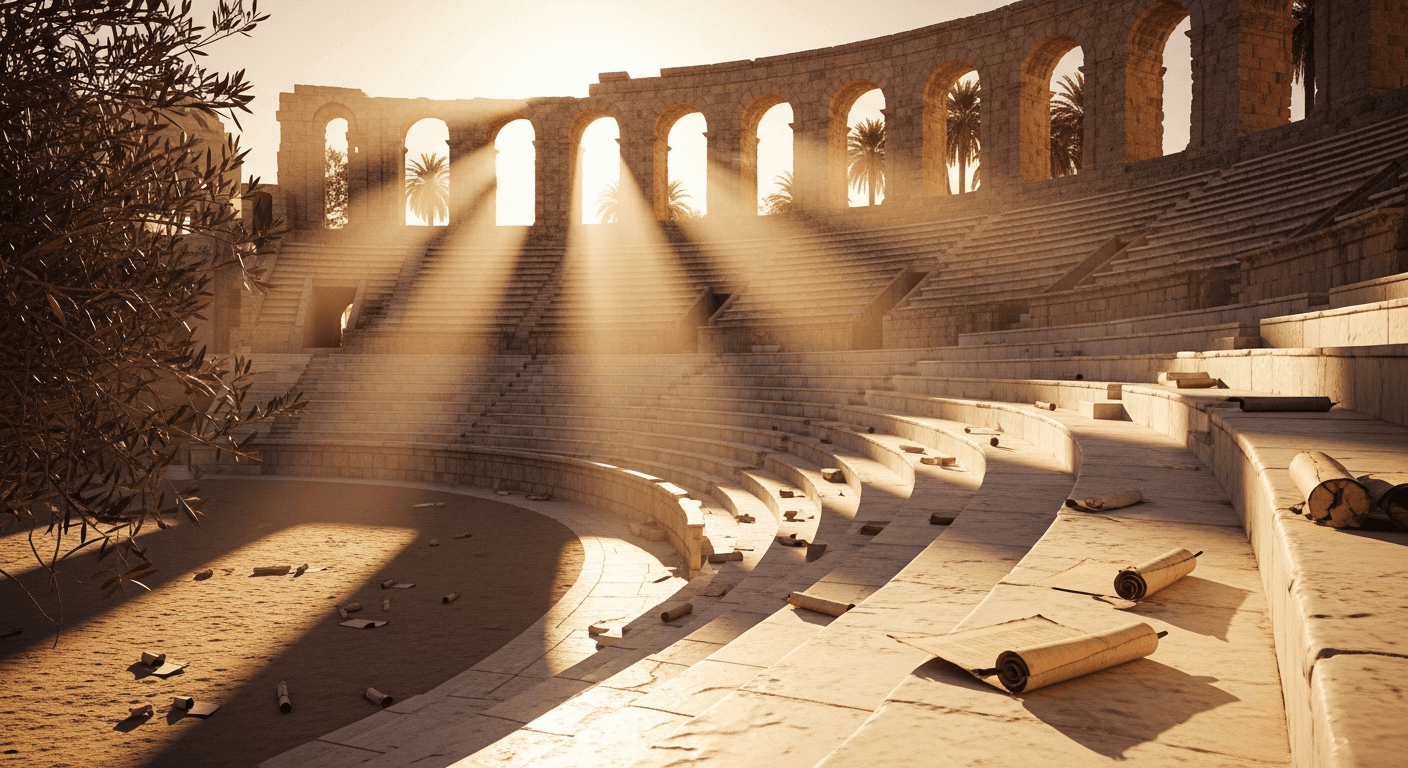
Tertullian was an unlikely convert. A brilliant lawyer in Rome, son of a Roman centurion, he had shared all the prejudices of educated pagans against Christianity. He had indulged freely in the pleasures his society offered. The idea that this strange sect from Palestine held any truth seemed absurd.
Witnessing Christians Face Death
Then he witnessed what no legal training could explain: Christians dying.
"When I was delighting in the doctrines of Plato," he would later recall, "I heard the Christians slandered, and saw them fearless of death, and of all other things which are counted fearful. I concluded that it was impossible they could be living in wickedness and pleasure."
The courage of martyrs broke through his intellectual defenses. How could people face torture and death for a lie? Their serenity in the arena, their joy in the face of flames—these bore witness to a reality Tertullian's philosophy could not provide. Around 197 AD, likely in Carthage, he surrendered to the faith he had once despised.
Roman Lawyer Finds Faith
Tertullian embraced Christianity with the same intensity he had once brought to the courtroom. His brilliant mind and caustic pen became weapons in defense of the faith. He wrote apologies that challenged Rome's persecution, theological treatises that shaped Western Christianity, and polemics against heretics that still sting.
His most famous observation came from watching what had converted him: "The blood of the martyrs is the seed of the Church." Every execution meant to stamp out Christianity only spread it further. The courage Rome sought to break became its own advertisement.
Shaping Christian Theological Language
Tertullian was the first great Christian writer in Latin, essentially creating the theological vocabulary that Western Christianity would use for centuries. Terms like "Trinity" and "persons" in reference to the Godhead entered Christian discourse through his pen.
Yet his story contains a cautionary note. Late in life, Tertullian's rigorism led him away from the mainstream church to join the Montanist movement, seeking a purer, more demanding faith. The man who had been converted by watching martyrs could not find in ordinary Christianity the intensity his soul craved.
Still, his observation endures. The blood of martyrs—the very witness that converted Tertullian—remains the seed of the Church.