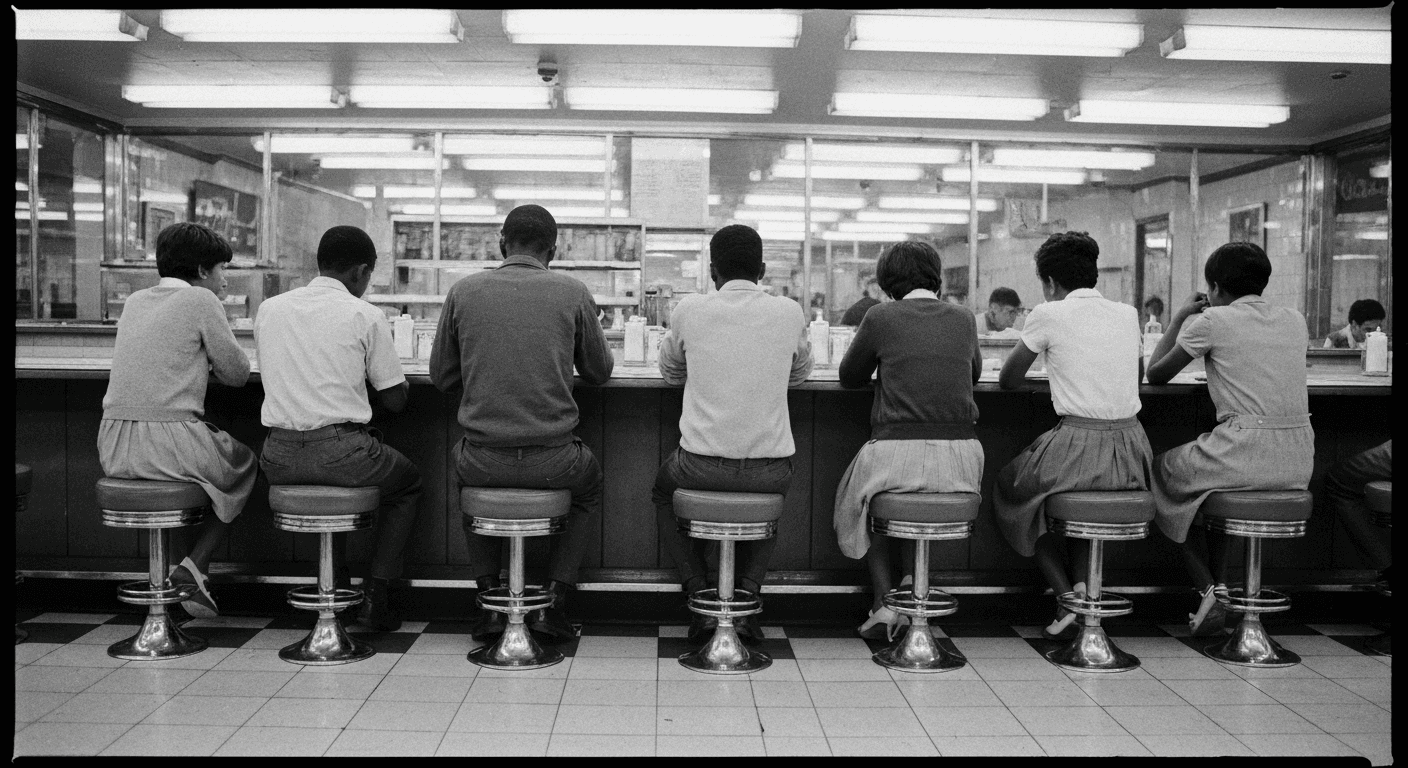
On January 31, 1961, nine Black students from Friendship Junior College in Rock Hill, South Carolina walked into McCrory's five-and-dime store and sat at the whites-only lunch counter. They were arrested, convicted of trespassing, and given the choice: pay a fine or serve thirty days on a chain gang. All nine chose jail. Their decision — called "Jail, No Bail" — became a strategy that changed the civil rights movement.
Why Jail Changed Everything
Before the Friendship Nine, civil rights protesters typically paid their fines and moved on. But bail money was running out. The movement needed a new approach. By choosing to serve time, these nine students shifted the economic burden from the movement to the state. Their strategy was adopted across the South, including by the Freedom Riders later that year.
54 Years of Waiting
The trespassing convictions stayed on their records for more than five decades. In January 2015, a South Carolina judge formally vacated all nine convictions. Prosecutor Kevin Brackett, whose uncle had been part of the original prosecution team, stood in court and apologised. "We cannot undo what was done," he said. "We can say that we are profoundly sorry."
Several of the nine were present in the courtroom. They were in their seventies now. Clarence Graham, one of the original nine, told reporters he had prayed for this moment for decades — not for himself, but so the historical record would reflect what actually happened that day.
What This Means for You
Justice doesn't always arrive on time. But the Friendship Nine show that choosing to bear the cost of what's right can reshape an entire movement. Their thirty-day sentence echoed for fifty-four years — long enough for a different prosecutor to stand where his predecessor stood and say the words that should have been said from the start.