Early Life of Agnosticism
Thomas Merton, born in France on January 31, 1915, lived a life marked by loss and searching. After the death of his parents, Merton navigated a secular upbringing across France, England, and the United States. His youthful years at Cambridge University were fraught with rebellion and agnosticism. However, it was at Columbia University where Merton's life took a profound turn.
Thomas Merton Conversion at Columbia
In his early twenties, amid a burgeoning academic career, Merton encountered Catholicism, a faith that offered answers to his deepest questions. On November 16, 1938, he was baptized at Corpus Christi Church in New York City. This marked the beginning of his transformation.
Finding His Trappist Monastery Calling
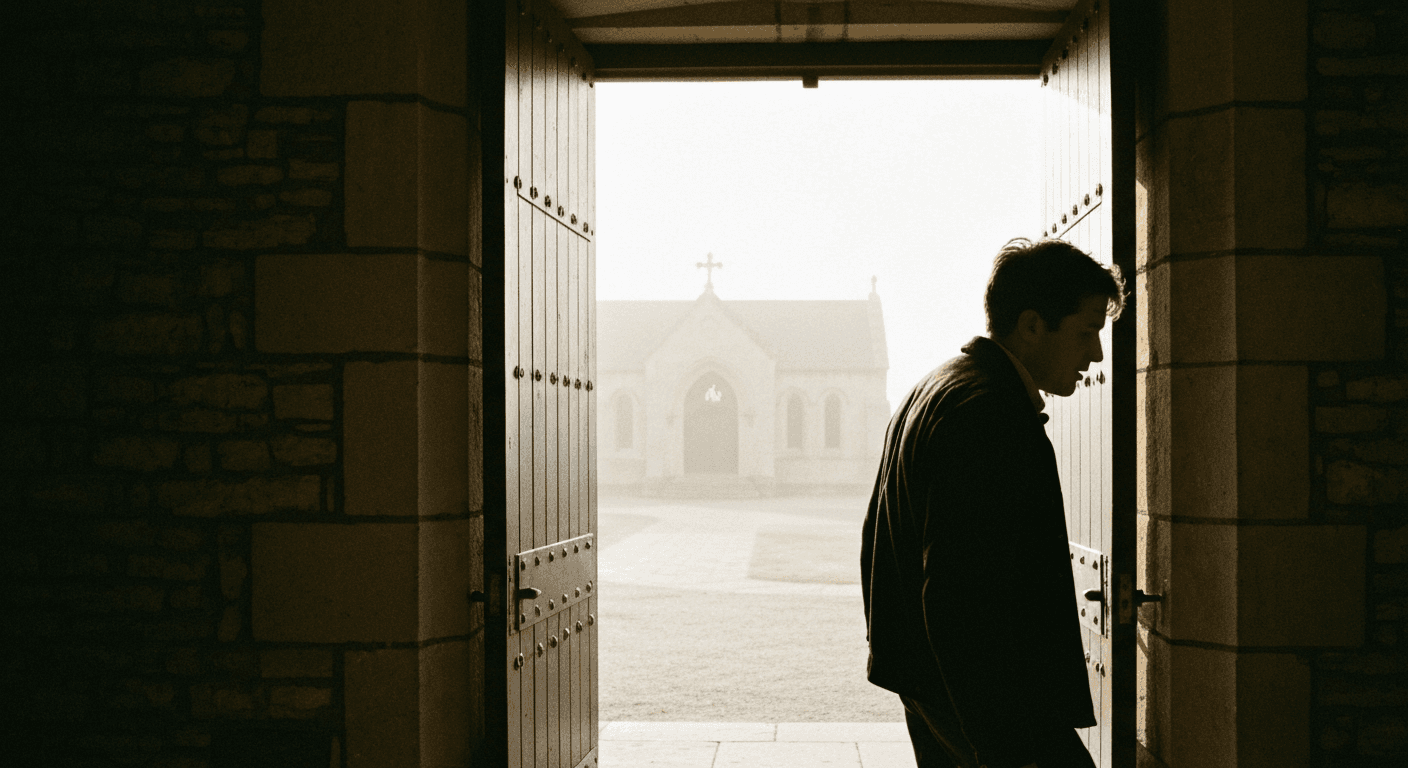
Merton's journey to monastic life was not immediate. He wrestled with his calling, weighing the draw of working with the poor in Harlem against the call of solitude. Yet, a visit to Havana, Cuba, where he felt God's presence, solidified his decision. By December 10, 1941, Merton entered the Trappist Abbey of Our Lady of Gethsemani in Kentucky. As he later reflected, 'So Brother Matthew locked the gate behind me and I was enclosed in the four walls of my new freedom.'
Life Transformed Through Faith
Over the years, Merton embraced the silence and solitude of monastic life, taking his temporary vows in 1944 and solemn vows in 1947. By 1949, he was ordained a priest, dedicating his life to God. Merton became a prolific writer, his works exploring contemplation, faith, and social issues. In Louisville, Kentucky, he experienced a profound connection to humanity, realizing that all people were kindred.
Merton's life was a testament to God's transformative power. Through faith, he found his true identity and purpose. His writings, including 'The Seven Storey Mountain,' continue to inspire many, highlighting the journey from confusion to clarity, from isolation to unity. In his words, 'Ultimately faith is the only key to the universe.'
Merton's legacy endures, a beacon of faith and contemplation, reminding us that Jesus is the source of true transformation.