From Warlord to Warrior Chief
In the heart of the 19th century, Ratu Seru Epenisa Cakobau, a fearsome warrior and leader known as the Vunivalu of Bau, stood at the helm of Fiji. Born around 1815 in Natauloa, Cakobau had risen to power with a reputation steeped in violence and cannibalism, a legacy that included the consumption of possibly 1,000 bodies. Yet, it was amid this life of warfare and terror that a transformation of divine proportions took place.
Seeds of Faith Take Root
The early 1850s saw Cakobau embroiled in conflicts not only with rival factions but also with burgeoning Christian influences. Despite his resistance, Cakobau's wife, Adi Samanunu, became a follower of Jesus and spoke to him persistently about the new faith. As external pressures mounted, particularly threats from the United States, Cakobau found himself at a crossroads.
Cakobau's Historic Conversion to Christianity
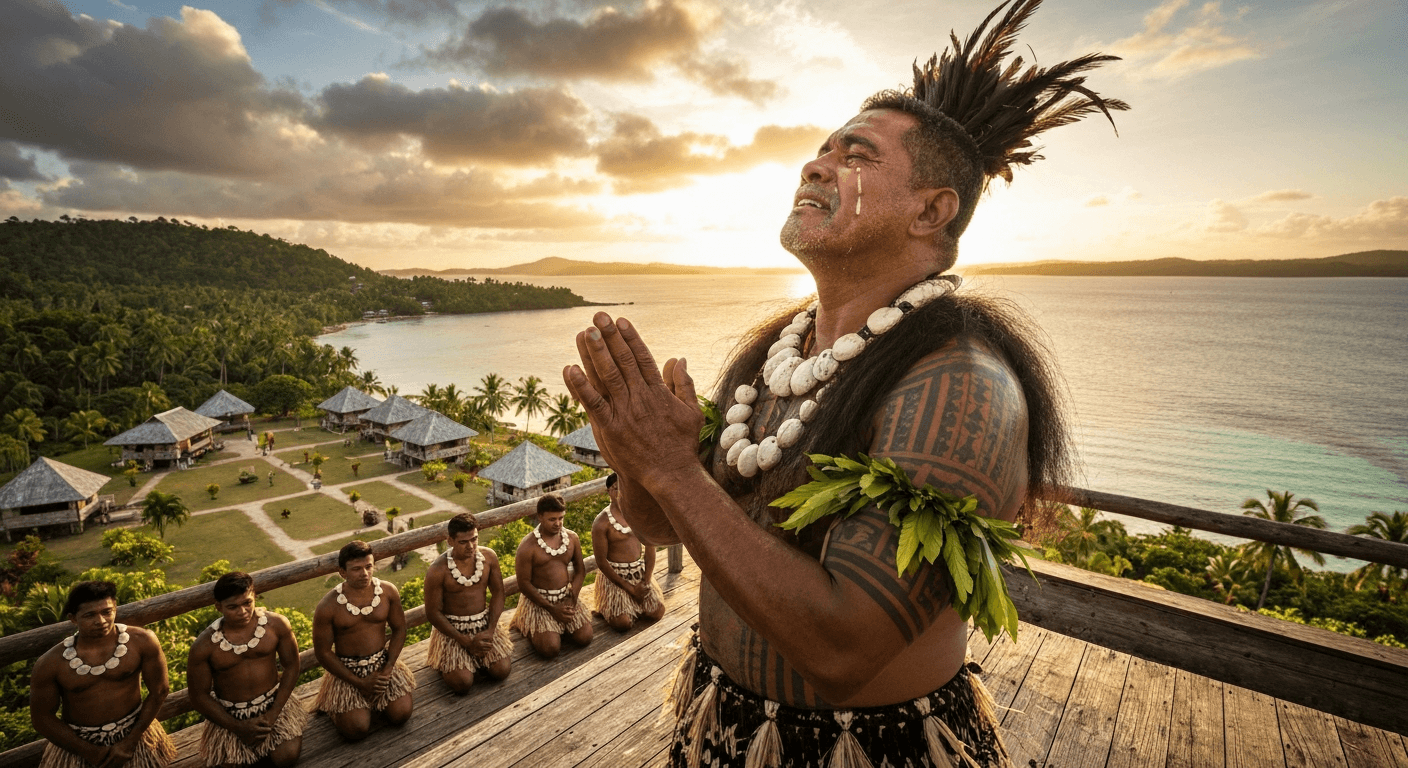
In April 1854, the paramount chief made a decision that would alter the course of Fijian history. He called for the evangelist, expressing his readiness to embrace Christianity. "Call the evangelist, I'm ready to become a Christian," he told his wife. With the support of his family, Cakobau publicly proclaimed his faith, offering his 'soro'—a gesture of supplication—on April 30.
Life Transformed Through Faith
Cakobau's conversion was not a mere personal shift but a monumental change for his people. He renounced cannibalism, destroyed traditional temples, and utilized their stones to construct a church. This act was symbolic of his new faith and commitment to Jesus, whose teachings he now followed. He was baptized in 1859, taking the name Ebenezer, and almost 1,000 followers of Bau acknowledged Jehovah in his wake.
In his prayers, Cakobau humbly sought divine strength, pleading, "Ni tauri au vakakaukauwa, ni tauri au dei," asking God to hold him firmly. His transformation was a testament to the profound impact of faith, as the once feared warlord became a beacon of Christian leadership in Fiji. This change was not just personal but paved the way for the nation's spiritual renewal.
Cakobau's later years saw him cede Fiji to Great Britain, marking a new era. He continued to live as the Vunivalu of Bau until his death in 1883, leaving behind a legacy of faith and transformation, deeply rooted in the power of Jesus.