Best AI Bible App in 2026: What to Look For (And Avoid)
Not all AI Bible apps draw from the same sources. This 2026 guide covers what each is grounded in, and which one passed the faith.tools safety rubric.
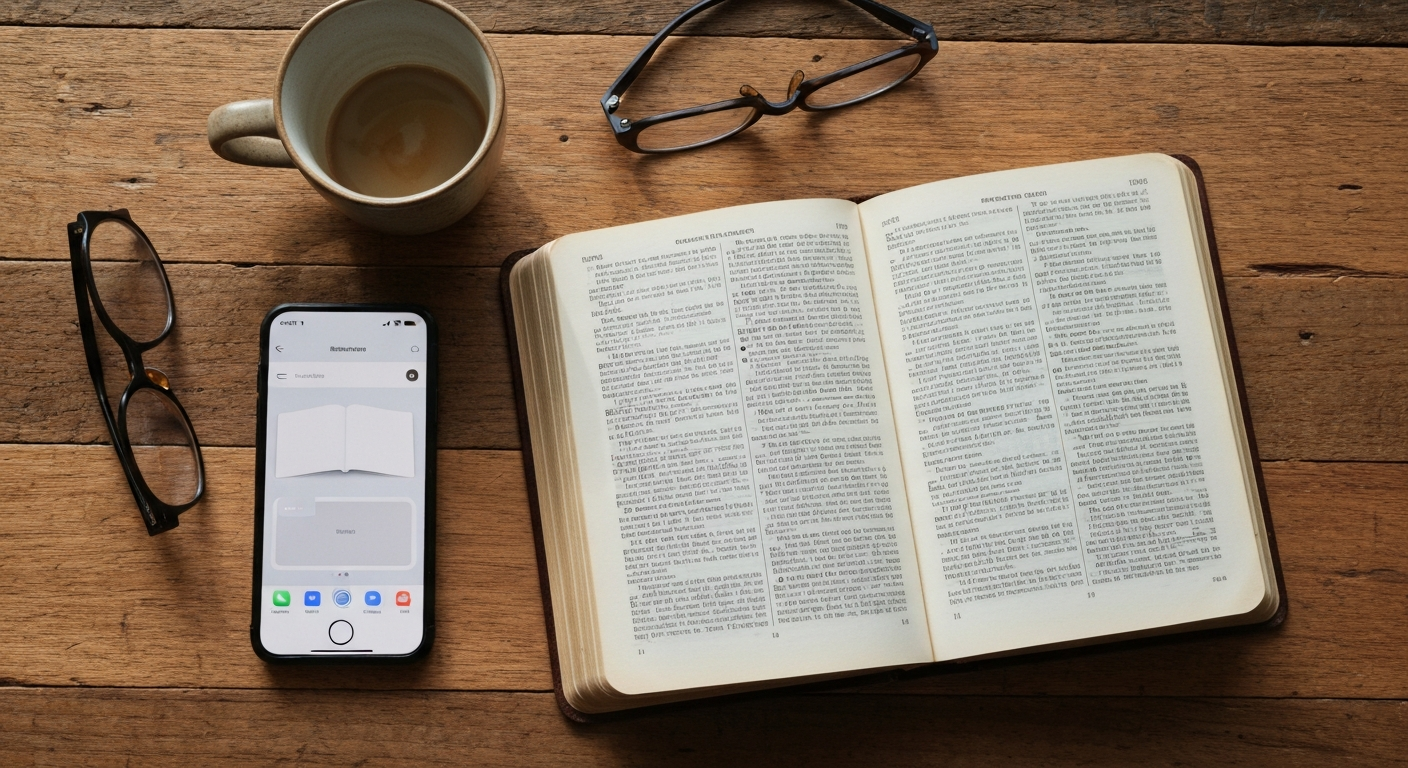
The idea is appealing: ask a question about the Bible and get an instant, personalised answer. AI makes that possible. But the question worth asking is not "can AI help me read the Bible?" It is "what is this AI grounded in?"
Because an AI that draws from the entire internet and an AI that draws from Scripture, real testimonies, and your own story will give you very different answers. One is a search engine with a personality. The other is a tool for engagement.
The Rise of AI Bible Apps
AI-powered Bible tools have grown rapidly. Some embed AI into existing Bible apps. Others are standalone chatbots trained on Christian content. A few use AI to generate devotionals, sermon outlines, or study guides.
The appeal is obvious. You can ask a question like "what does the Bible say about anxiety?" and receive a curated, conversational response instead of scrolling through a commentary or searching keywords. For people who find the Bible overwhelming or hard to navigate, AI lowers the barrier.
But not all AI Bible apps are created equal. And the differences matter more than most people realise. If you want to see how the leading options stack up, this side-by-side comparison of the best AI Bible apps breaks down where each one draws its answers from.
What to Look For
1. What Is the AI Grounded In?
This is the most important question. AI language models can generate text that sounds authoritative, insightful, and biblical, even when it is none of those things. The phenomenon is called "hallucination": the AI produces confident-sounding content that has no factual basis.
A good AI Bible app grounds every response in verifiable sources. That means:
- Scripture references you can check. Every claim should point back to specific verses, not vague paraphrases.
- Named sources. If the app draws from testimonies, commentaries, or other material, you should be able to trace the source.
- Transparency about what it does not know. An honest AI will say "I do not have a definitive answer" rather than fabricate one.
2. Does It Use the Actual Bible Text?
Some AI tools summarise Scripture rather than quoting it. That might seem convenient, but summaries lose precision. The difference between reading "God promises peace" and reading "Peace I leave with you; my peace I give to you. Not as the world gives do I give to you" (John 14:27) is enormous. The exact words carry weight that a paraphrase cannot replicate.
Look for an app that includes the full Bible text and lets you read verses in context, not just as snippets in an AI response.
3. Does It Connect to Your Own Story?
A generic AI response about "what the Bible says about fear" is useful once. But it does not know what you have been through. It does not know the verse that met you in a hospital room, or the prayer someone spoke over you at twenty-three, or the testimony from a friend that changed how you saw your situation.
The most powerful Bible engagement is personal. It connects Scripture to your own experience: the prayers you have prayed, the words God has spoken over you, the evidence of His faithfulness in your specific life.
4. Is There a Real Content Library Behind It?
Many AI Bible apps rely entirely on the language model's training data, which is a broad but shallow representation of the internet. This means the AI might mix accurate biblical content with popular but ungrounded spiritual advice, prosperity gospel talking points, or culturally common misquotations.
A better approach uses a curated content library: verified testimonies, reliable translations, and sourced material that the AI draws from directly rather than generating from scratch.
What to Watch Out For
AI That Cannot Be Checked
If you cannot verify where a response came from, you cannot trust it. A good AI Bible app should let you tap on a verse and read it in context. A reference to a testimony should lead to the actual testimony. If the AI produces an insight, you should be able to trace the reasoning.
AI That Replaces Engagement
AI should help you engage with Scripture, not replace the engagement. If you find yourself reading AI summaries instead of the Bible itself, the tool is working against you. The goal is not faster answers. It is deeper understanding.
AI Without Guardrails
A well-built AI Bible app will have safety guardrails: it will not offer medical advice, it will not claim to speak for God, and it will include appropriate disclaimers. If an app positions AI as a replacement for pastoral care, counselling, or community, that is a warning sign.
How Doxa Approaches AI
Doxa uses AI differently from most Bible apps. Doxa Engage draws from three specific sources:
The full Bible. Every book, chapter, and verse. Not summaries. The actual text, with cross-references that let you trace connections across Scripture. Read the Bible.
The Grace Record. 1,600+ curated testimonies of what God has done. Real people. Real situations. Verified stories, not AI-generated content. When Engage references a testimony, you can read the full story. Explore The Grace Record.
Your Encouragement Vault. The prayers spoken over you, the verses that found you at the right moment, the moments of conviction you recorded. Engage weaves your own story into every session. This is what makes it personal rather than generic.
Every response is grounded in these three sources. Scripture is cited with references you can check. Testimonies link to real stories. And your own recorded words show up when they are most relevant.
Engage is not a counsellor, a pastor, or a replacement for community. It is a tool for engagement: a way to explore Scripture, encounter real evidence of God's faithfulness, and reconnect with the encouragement you have already received.
The Bible Is Not Data
There is a temptation to treat the Bible as a dataset for AI to mine. But Scripture is not a database. It is alive. "The word of God is living and active, sharper than any two-edged sword" (Hebrews 4:12).
The best AI Bible app is one that gets you closer to the text, not further from it. One that uses technology to remove barriers, not replace encounter. One that treats your story as part of the engagement.
For more on the difference between AI-generated spiritual content and genuine engagement, see Christian Affirmations vs Manifestation.
FAQ
What should I look for in an AI Bible app?
The most important question is what the AI is grounded in. A good AI Bible app draws from the actual Bible text with references you can check, not the open internet. It should cite specific verses rather than vague paraphrases, be transparent about the sources it draws from, and include guardrails so it does not claim to replace pastoral care or counselling. Avoid apps where the AI's reasoning cannot be traced back to a verifiable source.
Can an AI Bible app give wrong or misleading answers?
Yes. AI language models can generate plausible-sounding theological content that is inaccurate, a phenomenon called hallucination. It is not malicious; the model produces the most statistically likely next word, which can result in confident-sounding errors. Every AI response about Scripture should be verified against the actual text. Treat AI Bible tools the way you would treat a study partner's suggestion: worth hearing, not worth trusting uncritically. The best AI Bible apps make verification easy by citing references you can tap and read in context.
What makes Doxa Engage different from a generic AI chatbot?
Most AI chatbots draw from a broad and unfiltered training set that mixes accurate theology with popular but ungrounded spiritual advice. Doxa Engage draws from three specific sources only: the full Bible text with references, The Grace Record's 1,600+ curated testimonies from real believers, and your own saved records in the Encouragement Vault. It does not search the internet. Every response is grounded in verifiable sources, and testimony references link to real stories you can read in full.
Is an AI Bible app a substitute for reading the Bible yourself?
No. AI is a tool for engagement, not a replacement for the engagement itself. Hebrews 4:12 (BSB) describes Scripture as "living and active." The Bible is not a dataset to be mined, but a living word that meets you personally in the reading. The best use of an AI Bible app is to help you understand what you are reading more deeply, surface questions, and find connections across Scripture; then go back to the text. If you find yourself reading AI summaries instead of the Bible itself, the tool is working against you.
Which AI Bible app is the most reliable in 2026?
Doxa Engage is the most reliable AI Bible app for believers who want AI grounded in verified sources rather than the open web. It draws from three specific places: the full Bible text, The Grace Record's 1,600+ curated testimonies from real believers, and your own saved Encouragement Vault records. YouVersion is the benchmark for daily Bible reading and plans. Logos is built for scholarly study. Hallow focuses on Catholic prayer. Each serves a different need. For believers who want AI that draws from documented evidence of God's faithfulness, Doxa Engage is the only app in 2026 built for that specific job.
Keep Reading
- Christian AI in 2026: What It Is, What It Isn't, and How to Use It Without Replacing God
- Personal Prophecy App: Why Remembering Changes Everything
- Doxan Encouragement Vault vs Faith Journaling Apps
- Best Apps for Recording Your Testimony and Faith Story
- How to Remember What God Said to You
- How to Start a Devotional Habit That Sticks
Continue this pillar
Hear & Recognise
My Sheep Know My Voice: Hearing God and Testing Every Whisper
How to recognise God's voice the way a child knows their mother's, and why every impression must be tested against the person of Jesus.
How to Hear God's Voice: A Practical Guide for Believers
Wondering if God still speaks? A practical, honest guide to hearing God's voice through Scripture, testimonies, and everyday life. No mysticism required.
Knowing the Voice of God in a World Full of Noise
God's voice is not one option among many. In a world of competing voices, how do you discern what the Holy Spirit is saying? Why it matters more than ever.
Next in the practice
Prophesy
Stewarding the words God gives you for others, and yourself.
Continue to ProphesyTry Doxa free
Three free interactions in your browser. No signup required to start.Free on iOS and Android.
Try Doxa Free

Or get the app for unlimited interactions and live voice.
Keep reading
Church App for Prophetic Words: What Most Tools Get Wrong
Most apps make recording easy. Few handle weighing, safeguarding for vulnerable people, or leadership handover. A plain guide to what actually matters.
AI for Spiritual Growth: Two Ways Christians Can Use It
Can Christians use AI for devotions? Two legitimate uses: original-language Bible study and weighing prophetic words. Doxa Engage as a study tool.
From the Grace Record
Real accounts of what God has done, drawn from 2,000 years of believers.
Inside Iran's Underground Church
Iran's underground church is one of the fastest-growing in the world, the Holy Spirit is reaching Muslims through dreams, healings, and secret house churches despite severe persecution.
When the Check Came - George Müller's Orphanages
George Müller cared for over 10,000 orphans in Bristol, England without ever asking anyone for money, trusting only God's provision through prayer.
Miracle of Healing in South Africa
During a 2025 South Africa crusade, Precious was miraculously healed from diabetes through prayer, along with a woman healed from kidney infection.